

Choosing a small animal sitter in Staffordshire involves more than finding someone nearby. Rabbits, guinea pigs and other small pets can have particular feeding, cleaning and handling routines, so it helps to choose an arrangement that fits your animal’s day-to-day needs. If you’re weighing up visits at home against care elsewhere, start with the routine your pet already knows and the tasks that need covering.
This guide will help you compare common sitting arrangements and prepare for a clear handover. You’ll find practical ways to think about home visits and boarding, details to include in a care brief, and questions to consider when comparing local options. Keeping your pet’s familiar routine at the centre of the plan makes it easier to explain what good care looks like for your household.
Key Takeaways
- Choose a small animal sitter in Staffordshire by considering your pet’s routine, surroundings and individual needs, not just location.
- Write down feeding, cleaning and handling instructions, including anything that has recently changed.
- Compare sitting, home visits and boarding by looking at the setting, agreed tasks and communication.
- Prepare a handover with clear written instructions, access details and emergency contacts.
- Explore local pet-care support with a clear understanding of the service and the care arrangement you need.
What does a small animal sitter in Staffordshire do?
Leaving a small pet in someone else’s care can feel like a big ask. You know the little details that make an ordinary day feel familiar, from when food is offered to how your pet responds to handling. When comparing a small animal sitter in Staffordshire, look for an arrangement where the setting, tasks and instructions are clear from the start.
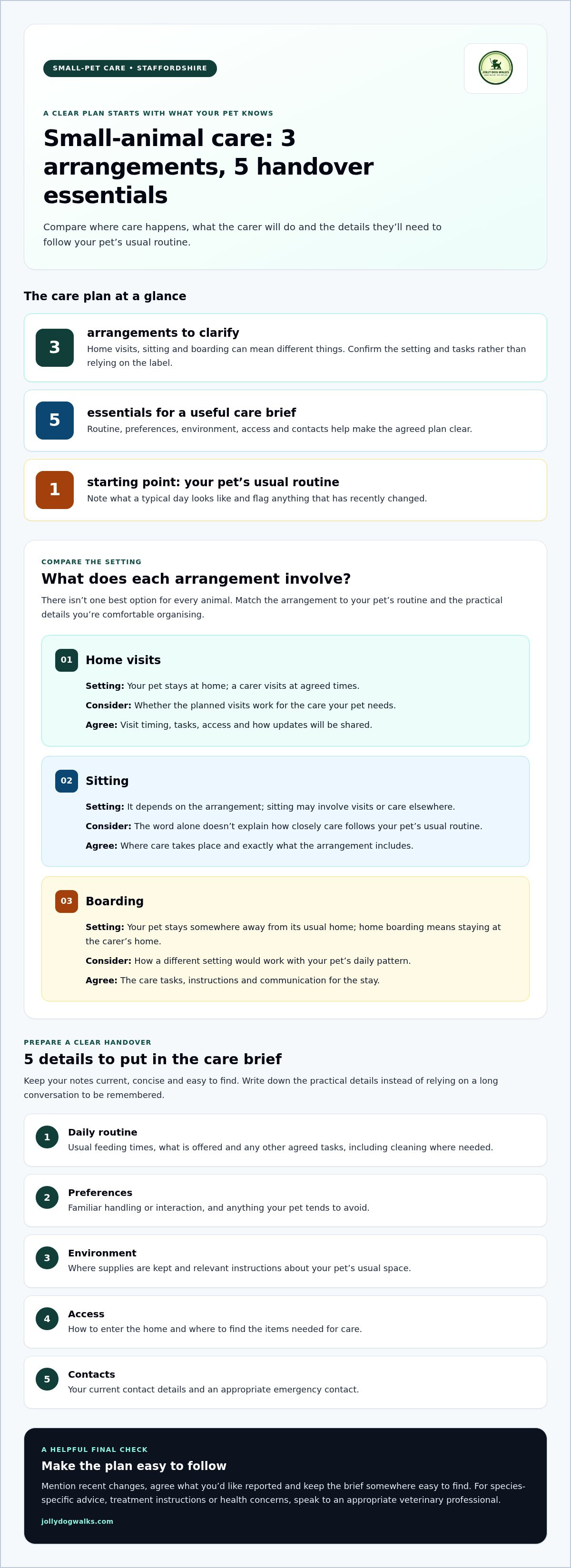
Small-animal sitting means care arranged around a pet’s usual routine while its owner is away. The phrase can describe different arrangements, so be specific about where the care takes place and what tasks are included. For an overview of the variety of pets people may mean, see Small mammals as pets.
The video below focuses on dog sitting, but its emphasis on thoughtful communication is a useful prompt when discussing care arrangements for any pet.
Which care arrangement might suit your pet?
There’s no single best option for every animal. With home visits, your pet stays in familiar surroundings while a carer visits at agreed times. With a stay elsewhere, the animal is cared for in a different setting. To decide between them, consider your pet’s usual routine, the practical arrangements and what you feel comfortable organising.
It helps to distinguish the terms: a home visit takes place where the animal lives; home boarding means the animal stays at the carer’s home. They describe different settings. Before settling on an arrangement, consider how each would work with your pet’s daily pattern and what you’d need to organise.
What makes a local sitter a practical choice?
Locality matters when it makes the care plan easier to organise. A manageable journey can help with coordinating access and sharing instructions. For owners in Staffordshire, including East Staffordshire, consider whether the location works for the planned care, rather than judging an option by distance alone.
Think about whether the journey fits the visit schedule, how the carer will receive instructions and how you’ll communicate if plans change. A nearby option may be convenient, but the practical details still matter. Agree the setting, tasks and timing so everyone understands what the arrangement involves.
Match small-animal care to your pet’s routine and needs
A useful care plan starts with your pet, not a standard checklist copied from somewhere else. Write down what a typical day looks like, which tasks the carer will need to do and anything that could affect those instructions while you’re away. Keep the notes current, especially if the routine has recently changed.
Keep the care setting in mind as you plan. Stafford Borough Council’s Animal Welfare Regulations 2018 page gives context on licensing for certain animal-related activities. The rules depend on the type of arrangement, so it’s worth understanding how the information relates to the care you’re considering.
What should go into a useful care brief?
Keep notes concise, current and easy to follow. Include the practical information someone needs to carry out the agreed care, rather than relying on them to remember a long conversation. A useful brief might cover:
- Daily routine: usual feeding times, what is offered and any other agreed tasks.
- Preferences: familiar handling or interaction, and anything your pet tends to avoid.
- Environment: where supplies are kept and any relevant instructions about the pet’s usual space.
- Access: how to enter the home and where to find the items needed for care.
- Contacts: your current contact details and an appropriate emergency contact.
Be straightforward about health or behaviour that could affect the care plan. For species-specific advice, treatment instructions or concerns about your pet’s health, speak to an appropriate veterinary professional. Your written notes should record the instructions you’ve agreed, not replace veterinary guidance.
How can you help care feel familiar?
Before the arrangement begins, explain what’s normal for your pet and mention any recent changes. That might be a different feeding routine, a rearranged room or an updated instruction about access to part of the home. Providing this context helps the carer follow the plan instead of having to guess whether something is usual.
Agree what you’d like reported, such as whether the planned tasks were completed or whether anything differed from your instructions. Keep the brief somewhere easy to find, and update it when circumstances change. Clear, familiar information makes the plan easier to follow, even though every animal may respond in its own way.
If you’re arranging care for a dog as well, Jolly Dog Walks’ pet drop-in visits are a local option around Barton-under-Needwood. When planning care for more than one pet, describe each animal’s routine and the tasks you want covered.
Compare small-animal sitting, home visits and boarding
Care labels can sound similar, but they can describe different arrangements. “Sitting” is a broad term for care while an owner is away. A drop-in visit is a visit to the pet’s home, while boarding means the pet stays somewhere away from its usual home. Compare the practical details instead of relying on the label alone.
| Arrangement | Setting | Routine fit and owner preferences | Communication to agree |
|---|---|---|---|
| Home visits | The pet stays in its own home, with a carer visiting at agreed times. | May suit owners who prefer care to happen in the pet’s familiar surroundings. Consider whether the agreed visits work for the care plan. | Set out visit timing, tasks, access and how updates will be shared. |
| Sitting | The setting depends on the arrangement. It may involve visits or care elsewhere. | The word alone doesn’t explain how closely care follows the usual routine. Clarify what the arrangement actually involves. | Agree the location, responsibilities, schedule and preferred contact method. |
| Boarding | The pet stays away from its usual home. | Consider how a different setting fits your preferences and the routine you want maintained. | Discuss what the pet will need to bring, the care plan and how information will be shared. |
No option is automatically better for every pet. Compare the setting, the tasks included and whether the plan fits your preferences and the animal’s routine. A clear conversation about those points can help avoid mismatched expectations.
When might home-based visits fit the owner’s plan?
Home visits are worth considering if you’d prefer your pet to remain at home while care takes place there. Think about what each visit needs to cover and how it fits the overall plan. Jolly Dog Walks’ pet drop-in visits are a distinct local service. For more on this type of care, see the pet drop-in visits guide.
How does boarding differ from sitting?
Boarding means a pet stays away from its usual home, whereas a home visit takes place where the pet lives. “Sitting” can refer to different arrangements, so clarify what it means in practice before comparing options. Focus on the setting, routine and agreed communication, rather than assuming that two listings with similar labels offer the same care.
When comparing a small animal sitter in Staffordshire, jot down what matters most to you: familiar surroundings, the shape of the visit plan or a stay elsewhere. Then compare each arrangement against those priorities. It keeps the decision grounded in your pet’s needs, rather than the name of the service.
Prepare a clear handover for a small-animal sitter
A calm handover makes it easier for everyone to understand what’s been agreed. Don’t rely on memory or a quick chat at the door. Write down the practical details, explain anything that has changed and make sure the carer knows how to reach you. Clear access instructions also prevent avoidable confusion, such as arriving without the right key or not knowing which entrance to use.
Use this simple sequence to get ready:
- Write the instructions: record the agreed tasks and any important order or timing.
- Organise access: explain how to enter, where to find supplies and what to do with keys afterwards.
- Share contacts: provide your details and an appropriate emergency contact.
- Agree updates: decide how and when you’d like confirmation that the visit has taken place, and what concerns should be raised promptly.
A useful handover covers the usual routine, feeding instructions, where supplies are kept, how to enter the home and who to contact if plans or circumstances change. Keep it somewhere easy to find, and make sure the carer has the latest version.
What information should owners share in advance?
Include clear, relevant instructions, and be open about anything that could affect the agreed care. If your pet’s routine or the home arrangements have changed, update the notes and explain what’s different. Share relevant health or behaviour information accurately, without guessing or leaving out details that may matter to the person caring for your pet. For health questions or species-specific guidance, follow advice from an appropriate professional.
Specific wording helps. “Food is in the labelled container in the kitchen cupboard” is more useful than “it’s somewhere in the kitchen”. Likewise, say which door to use and where a key is kept, rather than assuming the carer will work it out. Little details can save a lot of doorstep head-scratching.
What should owners agree about updates?
Decide in advance what a helpful update looks like. You might agree on a brief message after the visit, confirming that the planned tasks were completed and noting anything unusual. Explain how the carer should contact you with a concern, and identify a suitable alternative contact if you’re temporarily unavailable.
Keep communication proportionate: a concise update is often easier to use than a long account that buries the important point. Jolly Dog Walks provides pet drop-in visits as a local service alongside dog walking. To explore pet drop-in visits for your dog, visit Jolly Dog Walks.
Explore local pet-care support in Staffordshire
Choosing local support is about more than finding a name nearby. First, understand what care is being provided and how it fits your plans. If you’re in Staffordshire, a practical starting point is to describe the arrangement you need, then compare local services against that plan.
What local pet-care support does Jolly Dog Walks describe?
Jolly Dog Walks provides pet drop-in visits and dog-walking services around Barton-under-Needwood, Burton upon Trent and surrounding areas. These offer different types of support for dog owners. When comparing care for different pets, describe each animal’s needs and the tasks you’re looking to arrange.
Victoria brings a caring, professional perspective to Jolly Dog Walks, drawing on her background as a nurse and her attendance at IMDT masterclasses. For local context around Barton-under-Needwood, visit the Barton-under-Needwood service page. When searching for a small animal sitter in Staffordshire, be specific about the setting and care plan you have in mind.
Before exploring local services, write down what you need: a dog walk, a pet drop-in visit or another sitting arrangement for a small pet. A clear description makes it easier to compare what each service sets out to provide.
How can owners take a sensible next step?
Consider your animal’s routine, the care setting you prefer, the instructions a carer will need and how you’d like communication to work. Then compare your plan with the service being described. This gives you a practical way to assess visits at home, care elsewhere and dog walking as different arrangements.
For a small pet, base your plan on its routine and relevant professional guidance. For dog care, Jolly Dog Walks’ dog-walking services and pet drop-in visits provide local options for owners.
Take time to compare the details. A few thoughtful questions about routine, setting and communication can make local options easier to assess, whether you’re in Barton-under-Needwood, Branston, Burton upon Trent, Tatenhill, Yoxall, Rosliston, Tutbury, Drakelow, Stretton or elsewhere in Staffordshire.
Make your next care choice with confidence
Choosing a small animal sitter in Staffordshire starts with a clear picture of what your pet needs and what kind of arrangement you’re considering. Take time to make that decision before booking, rather than letting a familiar service label make the choice for you. A thoughtful plan helps you explain your expectations and prepare for the handover.
For local support with a dog, Jolly Dog Walks provides pet drop-in visits and dog-walking services. The business is fully insured and DBS-checked.
Make a note of the care you need and the questions you’d like answered. If you’re looking for local dog-walking or pet drop-in support, explore Jolly Dog Walks’ local pet-care services.
Frequently Asked Questions
What does a small animal sitter do?
A small-animal sitter carries out the care agreed with an owner while they’re away. Depending on the arrangement, that could include providing food as instructed, tending to the pet’s usual environment or spending time nearby. The exact tasks vary, so clarify what’s included rather than assuming “sitting” means the same thing in every listing. A sitter isn’t a substitute for veterinary advice if a health concern arises.
Is a small animal sitter better than boarding?
Neither option is automatically better; it depends on your preferences and the arrangement that suits your pet’s needs. You might prefer care at home, or feel a stay elsewhere works better for your plans. Compare the setting, agreed tasks and communication rather than relying on a label. If your pet has particular care needs, discuss them with an appropriate professional as part of your planning.
Can a small animal stay at home while I am away?
A pet can stay in its own home if you arrange suitable care there and the plan works for your circumstances. Think through what needs doing and how often, then make sure the person providing care understands the arrangement. Consider your pet’s needs when deciding what care to arrange. If you’re uncertain about your pet’s welfare needs while you’re away, seek advice from a veterinary professional.
How do I prepare my pet for a sitter?
Before care begins, make the agreed space and supplies easy to identify, and explain household details that could cause confusion. If practical, show the carer where items are kept and how the access arrangement works. Avoid unnecessary changes to the pet’s surroundings just before you leave. A familiar setup can make the handover easier to follow, though each animal may respond differently.
What information should I give a small animal sitter?
Give the sitter enough detail to understand the care you’ve agreed. Explain what your pet normally does, what would be unusual for them and any relevant health or behaviour information. Keep veterinary contact details accessible if appropriate. If instructions change before you go, update the carer directly so they aren’t relying on an out-of-date note.
Can a pet sitter visit my home in Staffordshire?
Some pet-care arrangements involve visits to an owner’s home. Agree the tasks and animals involved as part of your care plan. Jolly Dog Walks provides pet drop-in visits and dog-walking services in its local area, including Barton-under-Needwood and Burton upon Trent, as well as communities such as Branston, Tatenhill, Yoxall, Rosliston, Tutbury, Drakelow and Stretton.
How can I keep in touch with a sitter while I am away?
Agree a communication plan before the care starts. Decide how you’d like to receive an update, what it should cover and how the carer can reach you if something unexpected comes up. Keep your contact details current and name an alternative contact if you may be difficult to reach. A brief, agreed update can help you stay informed without leaving either person guessing about when to get in touch.
Article by
Victoria Cartwright
Hi, I’m Victoria, the proud owner of Jolly Dog Walks 🐾🐶
With a background in nursing and healthcare, alongside my professional training with the Institute of Modern Dog Trainers, I bring a unique combination of care, communication and understanding to my work with dogs and their owners. After leaving my nursing career, I found my true passion in working with animals, and I’ve never looked back!
❤️🐾
Disclaimer
Disclaimer: The views and experiences shared in this blog are based on my personal and professional experiences. They are intended for general information and enjoyment and should not replace individual advice from a qualified veterinary professional or appropriately qualified canine behaviourist/trainer where necessary.


