
A safe journey starts before a small pet goes into its carrier. Pet care for small caged animals in Walton-on-Trent means thoughtful handling, a secure and familiar carrier, and care that takes the animal’s needs and usual routine into account. For trips to a vet, groomer, kennel or cattery, calm preparation can help make the experience less unsettling.
It’s natural to worry when a rabbit, guinea pig or another small companion has to leave home. They may not show their nerves as clearly as a dog, so the details matter: how you approach them, prepare their carrier and help them stay settled during the journey.
This guide explains what careful handling and transport arrangements involve, what to share about your pet’s habits and needs, and how to plan everyday care at home. You’ll have a clearer idea of what to consider and how a calm, consistent routine can help your small pet feel secure.
Key Takeaways
- Choose housing, bedding and daily routines around your rabbit’s or guinea pig’s needs, rather than relying on a one-size-fits-all setup.
- Learn which foods belong in their regular diet and how to keep fresh water and exercise part of everyday care.
- Notice changes in appetite, droppings, movement or behaviour, as these can be useful clues that your pet needs attention.
- Plan ahead for care at home, and understand how Jolly Dog Walks’ pet drop-in visits and dog walks may fit into your wider pet-care routine.
What cage size, bedding, diet and daily exercise do rabbits and guinea pigs need?
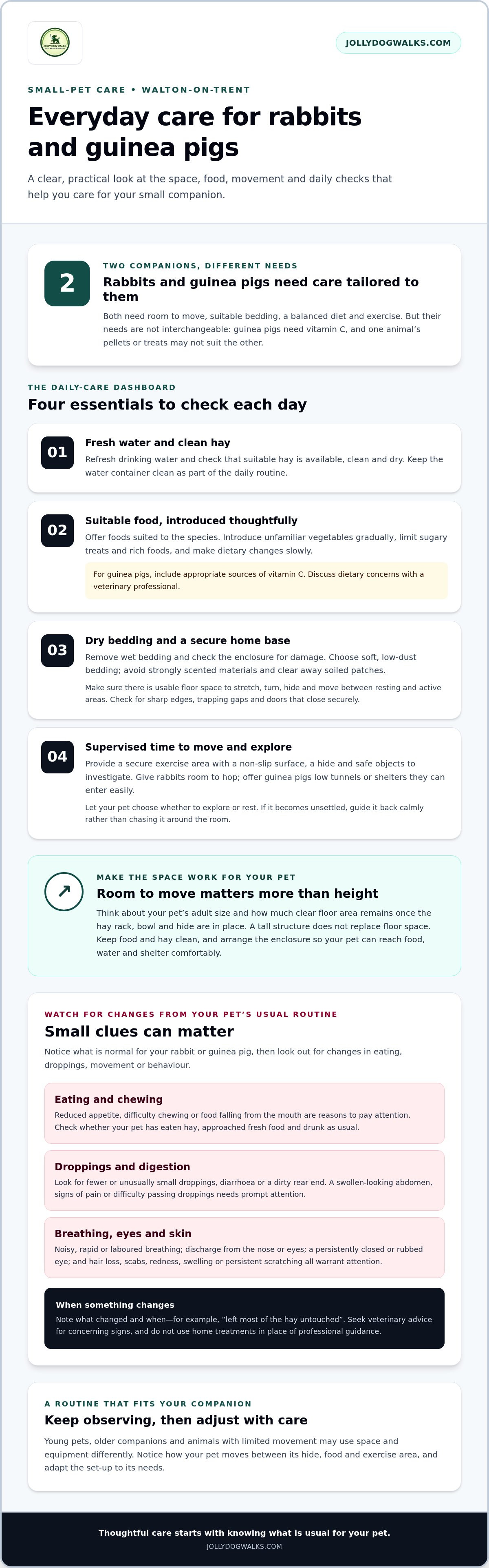
Rabbits and guinea pigs need more than a small cage: they need space to move, suitable bedding, a balanced diet and opportunities to exercise. For pet care for small caged animals in Walton-on-Trent, check whether your pet can stretch out, stand naturally, hide and move between resting and active areas.
For a practical look at preparing a guinea pig for a journey, watch this video:
Treat the enclosure as a home base, not the whole living space. A rabbit or guinea pig should have room to take comfortable steps, turn easily and reach food, water and shelter. Add a hide where it can retreat, along with clear floor space for moving about. Boxes or tunnels can add interest if they are stable and have safe openings.
When choosing a cage or pen, consider your pet’s adult size and how much usable floor area will remain after adding a hay rack, bowl and hide. A tall structure does not replace floor space, especially for animals that need room to roam. Check for sharp edges, gaps that could trap feet and doors that close securely. A larger, well-arranged enclosure is more useful than one crowded with accessories.
Bedding should provide a comfortable, dry surface and be easy to keep clean. Choose material that feels soft underfoot and creates little dust. Avoid strongly scented bedding, which can irritate sensitive noses, and remove damp or soiled patches during regular cleaning. Keep hay and food in a clean area; placing them beside a toilet corner can make daily tidying easier.
Hay is central to the everyday diet of rabbits and guinea pigs. Keep suitable hay available and check that it stays clean and dry. Provide fresh drinking water in a bottle or bowl your pet can use comfortably, and clean the container as part of the daily routine. Offer vegetables suited to the species, introducing unfamiliar foods gradually rather than changing the menu suddenly.
Guinea pigs need vitamin C in their diet, so choose appropriate foods and discuss dietary concerns with a veterinary professional. Rabbits and guinea pigs have different needs, so don’t assume that one animal’s pellets or treats are suitable for the other. Limit sugary treats and rich foods, and make dietary changes slowly. A simple food diary can help you track new items and notice whether your pet keeps eating normally.
Daily exercise gives both species the chance to move, explore and use natural behaviours. Set up a secure exercise area with a non-slip surface, a hide and safe objects to investigate. Let your pet choose whether to explore or rest; chasing it around the room can make exercise stressful. Give rabbits room to hop, and offer guinea pigs low tunnels or shelters they can enter easily.
A useful daily routine is straightforward:
- Refresh water and check that hay is clean and available.
- Remove wet bedding and look over the enclosure for damage.
- Offer suitable food, keeping each animal’s needs in mind.
- Provide supervised time to move and explore in a secure space.
For pet care for small caged animals in Walton-on-Trent, adapt the set-up to your individual pet. A young animal, an older companion or one with limited movement may use space and equipment differently. Notice how your rabbit or guinea pig moves between its hide, food and exercise area. These observations can help you adjust the layout and maintain a comfortable routine.
Create a safe exercise area with clear routes, familiar hiding places and objects to investigate, then let your pet choose whether to explore or rest. Secure the space, supervise activity and remove hazards. If your pet becomes unsettled, guide it back calmly. Keep fresh water accessible, make exercise a regular part of the routine, and notice whether your pet moves, eats and behaves as usual. Discuss changes with a veterinary professional. In The Waltons, Jim-Bob is responsible for the school guinea pig, Porthos, which dies while in his care. The story gives no explanation of the death, so it cannot guide a care routine; it does underline the importance of attending to an animal’s daily needs.
What common health risks and signs of illness should small-pet owners watch for?
Rabbits and guinea pigs may show illness through small changes in eating, droppings, movement or behaviour. Compare each pet with its usual routine instead of relying on a single symptom. A guinea pig that normally rushes for food but stays in its hide deserves attention. So does a rabbit whose droppings suddenly look different.
Appetite is a useful daily clue. Check whether your pet has eaten hay, approached fresh food and drunk as usual. Reduced appetite, difficulty chewing or food falling from the mouth can point to dental or other health problems. Don’t wait until your pet looks visibly weak to act.
Changes in digestion and droppings
Check the amount, size and appearance of droppings in the enclosure. Fewer or unusually small droppings, diarrhoea or a dirty rear end are reasons to seek veterinary advice. A rabbit or guinea pig with a swollen-looking abdomen, signs of pain or difficulty passing droppings needs prompt attention. Don’t try home treatments in place of professional guidance.
Digestive problems can occur alongside reduced eating, so note both changes. Write down when your pet last ate normally and when you first noticed a change in its droppings. Keep the details factual: “left most of the hay untouched” is more useful than “seemed a bit off”. This record helps the veterinary team understand what has changed.
Breathing, eyes, skin and movement
Listen for noisy, rapid or laboured breathing while your pet is resting. Sneezing with discharge from the nose or eyes also needs attention. Crust around an eye, repeated rubbing or an eye that suddenly stays closed should not be dismissed. Note whether one or both eyes are affected and whether the signs persist.
Check your pet’s coat and skin while it is relaxed. Hair loss, scabs, redness, swelling or persistent scratching may signal a problem that needs assessment. Avoid applying creams or using flea products intended for another species. Treatments for cats and dogs are not automatically suitable for rabbits or guinea pigs.
Movement can also reveal changes. Limping, reluctance to move, difficulty getting into a hide or a hunched posture may suggest pain or injury. Notice how your pet holds its head and whether it uses all four limbs. Don’t force handling to inspect a sore area; describe what you have seen to the vet.
Make a calm, useful health check
Build observation into familiar tasks, such as refreshing water or tidying bedding. Notice appetite, droppings, posture, breathing and interest in the surroundings. If you have several animals, check each one separately. Otherwise, it can be difficult to tell which pet ate less or produced unusual droppings.
- Record the first time you notice a change and what it looks like.
- Describe eating, drinking, droppings and movement in plain terms.
- Take a photo of visible changes, such as a skin patch or unusual droppings.
- Contact a veterinary practice promptly for breathing difficulty, collapse, severe pain or inability to eat.
For a vet visit, prepare a secure carrier and bring notes about symptoms, food and recent changes to the routine. Handle your rabbit or guinea pig gently, especially if it seems painful. Don’t give human medicine or leftover pet medication unless a veterinary professional directs you to. Clear observations and timely veterinary care help the team assess what your small companion needs.
Historical accounts offer examples of attention to animals’ surroundings, but they do not replace watching a rabbit or guinea pig for changes in appetite, droppings, breathing or movement. Le Ménagier de Paris advises regularly replenishing water for caged birds. Although that advice concerns birds, it highlights water as part of routine care; it is not a diagnosis or treatment for illness. Elizabeth finds a young raccoon named Pete and asks her father to help nurse him back to health. Gaston III, Comte de Foix, advised that hunting-dog kennels should be at least one foot above the ground. These accounts concern other animals, so keep their details separate from the signs described here. For a small pet, note changes from its usual pattern and share those observations with a veterinary team.
Jolly Dog Walks: 10-40 minute solo dog walks
Jolly Dog Walks can help keep your dog’s routine steady while you organise care for a small pet. If your household includes a rabbit or guinea pig and a dog, a 10-40 minute solo dog walk gives your dog individual exercise and attention. Pet drop-in visits can also support your dog’s everyday routine at home.
Jolly Dog Walks brings a caring, professional approach informed by IMDT training. Choose support that suits your dog, whether that means a shorter walk or a 60 Minute Solo Walk. Puppy visits provide dedicated care for young dogs during the day. Small pets have their own housing, diet and health needs, so keep their arrangements specific to them.
For a friendly chat about dog care, contact Jolly Dog Walks or visit jollydogwalks.com.
Make your next care plan feel manageable
Good care starts with a routine you can explain clearly and repeat at home. Keep your small pet’s feeding notes, familiar foods and signs of normal behaviour together so anyone helping can follow the same calm approach. If your household also includes a dog, plan its care separately around the day’s needs. That gives each companion attention suited to them, without expecting a rabbit or guinea pig to follow a dog’s routine.
For pet care for small caged animals in Walton-on-Trent, write down what support your household needs and when. Jolly Dog Walks offers dog walking and puppy visits, which can help keep your dog’s routine organised while you focus on your small pet’s care.
Contact Jolly Dog Walks to talk about support for your dog. A thoughtful plan can make everyday care feel simpler for the whole household.
Frequently Asked Questions
Which small-animal pet care services are available in Walton on Trent and nearby villages?
Arrange veterinary and daily care for rabbits and guinea pigs separately from dog services. Jolly Dog Walks provides dog walks, puppy visits and pet drop-in visits, supporting a dog’s routine in homes that also have small pets. For your rabbit or guinea pig, arrange a familiar carer or suitable boarding that follows its usual feeding and handling routine. Keep written care notes ready for anyone looking after your small companion.
How can owners find reputable small-animal vets, sitters and boarding services near Walton on Trent?
Choose care suited to your animal’s species, and ask how its routine will be followed. A useful handover covers familiar food, water, cleaning, handling preferences, hiding places and your veterinary practice’s contact details. Before agreeing to care, understand how updates will be shared and what happens if your pet’s behaviour or appetite changes. For a vet or boarding stay, provide clear notes and familiar supplies where practical.
Article by
Victoria Cartwright
Hi, I’m Victoria, the proud owner of Jolly Dog Walks 🐾🐶
With a background in nursing and healthcare, alongside my professional training with the Institute of Modern Dog Trainers, I bring a unique combination of care, communication and understanding to my work with dogs and their owners. After leaving my nursing career, I found my true passion in working with animals, and I’ve never looked back!
❤️🐾
Disclaimer
Disclaimer: The views and experiences shared in this blog are based on my personal and professional experiences. They are intended for general information and enjoyment and should not replace individual advice from a qualified veterinary professional or appropriately qualified canine behaviourist/trainer where necessary.


