

A cat-sitting visit is more than topping up a food bowl. A local cat sitter in Burton upon Trent can follow your cat’s routine by serving the food you provide, refreshing water, tending to the litter tray and offering play or calm company. A photo and clear update can help you feel connected while you’re away.
You want practical tasks handled properly and your cat to feel settled at home. The visit should suit your cat: a playful youngster may enjoy interaction, while a shy or older cat may prefer a gentle check-in and space to approach at their own pace.
Here, you’ll learn what to expect from feeding, playtime and litter care, how visit notes and photo updates support clear communication, and what details to share so care fits your cat’s routine. We’ll also look at how to think through visit frequency and what makes a reassuring arrangement for both you and your feline friend.
Key Takeaways
- Leave clear feeding instructions, including your cat’s usual routine, so visits can follow familiar habits.
- Share what your cat enjoys, from play to quiet company, and explain how you’d like the litter tray cared for.
- Agree how updates will be shared, such as a brief message or photo, to keep communication simple while you’re away.
- When assessing a sitter, look at insurance evidence and references, and understand what a DBS check does and doesn’t tell you.
- For dog care in the local area, Jolly Dog Walks offers 10-40 minute solo dog walks and pet drop-in visits.
Feeding, playtime and litter maintenance
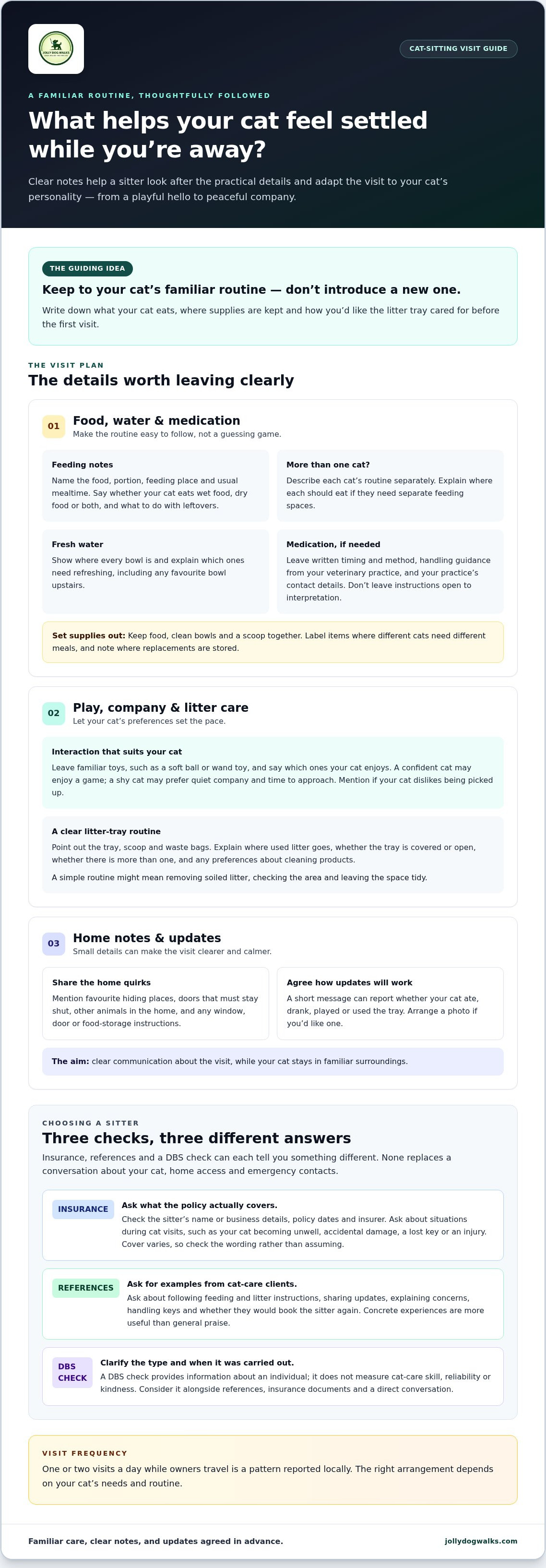
A cat-sitting visit should follow your cat’s familiar routine, not introduce a new one. Before booking, write down what your cat eats, where supplies are kept and how you’d like the litter tray handled. These practical notes help a sitter care for your cat at home, whether you live in Burton upon Trent, Barton-under-Needwood or Stretton.
For example, note the food brand, portion, feeding place and usual mealtime. Explain whether your cat eats wet food, dry food or both, and what to do with leftovers. If you have more than one cat, describe each cat’s routine separately. One or two visits a day while owners travel is a pattern reported locally, but the right arrangement depends on your cat’s needs and routine.
For an overview of preparing for time away, watch Jackson Galaxy’s advice about caring for cats during a holiday:
Food, water and medication
Set up feeding supplies before the first visit so instructions are easy to follow. Keep food, clean bowls and a scoop together, and label items if different cats need different meals. If your cats eat separately, explain where each should eat. Clear instructions help prevent confusion, especially when cats have different diets.
Include fresh water in the daily routine. Show the sitter each water bowl and explain where you’d like it refreshed. If your cat drinks from several places, list them, including a favourite bowl upstairs. Leave enough familiar supplies for the booked visits and explain where replacements are stored. A clear note is more useful than expecting someone to guess which cupboard holds the food.
If your cat takes medication, provide written instructions and explain where it is kept. Include the prescribed timing and method, along with any handling guidance from your veterinary practice. Don’t leave a sitter to interpret an unclear label or change treatment. Add your veterinary practice’s contact details to your care notes so they’re easy to find if a concern arises.
Play, company and litter care
Tailor playtime to your cat’s personality. Leave out familiar toys, such as a soft ball or wand toy, and explain which ones your cat enjoys. A confident cat might chase a toy for a while, while a shy cat may prefer quiet company. Let the sitter know if your cat dislikes being picked up or needs time to approach.
Give clear instructions for litter care before the first visit. Point out the tray, scoop and waste bags, and explain where used litter should go. Say whether you use a covered or open tray and whether there’s more than one. A simple routine could include removing soiled litter, checking the tray area and leaving the space tidy. Mention any preferences about cleaning products.
Share details that could affect the visit, such as a cat who hides under a particular bed, a door that must stay shut or a rabbit in another room. This helps the sitter respect each animal’s space without assuming the rabbit is part of the cat-care arrangement. Make window, door and food-storage instructions clear.
Agree how updates will work before you leave. A short message can say whether your cat ate, drank, played or used the tray, with a photo if arranged. Clear notes help tailor cat sitting to your cat’s routine, from feeding and fresh water to medication and litter care, while they stay in familiar surroundings.
How to check a cat sitter's insurance, references and DBS status in the UK
Before handing over keys, ask about insurance, references and DBS status. These checks answer different questions: insurance relates to cover if something goes wrong, references describe other owners’ experiences, and a DBS check provides information about an individual. None replaces a conversation about your cat’s routine, home access and emergency contacts.
Ask what the insurance covers
Ask to see current insurance documents and check that the sitter’s name or business details match. Note the policy dates and insurer’s name, and ask which situations the policy covers during cat visits. Cover varies, so don’t assume a policy includes every possible incident.
Ask a specific question: “If my cat becomes unwell during a visit, what does your policy cover, and what would I need to arrange?” You could also ask how the sitter handles accidental damage, a lost key or an injury involving your cat. These questions clarify practical limits beyond the policy label.
Read the documents together, or ask the sitter to point out the relevant wording. Check that the work described matches the service, such as visiting a cat in its own home. If a document uses unfamiliar terms, ask the insurer or policyholder to explain them. Keep a note of the insurer and policy dates with your booking details.
Speak directly with references
Ask for references from people who have used the sitter for cat care, rather than relying only on general praise. A brief conversation can reveal details about punctuality, communication and how instructions were followed. Ask whether they received visit updates and whether their cat seemed comfortable with the routine.
Questions can be simple and specific:
- Did the sitter follow feeding and litter instructions as agreed?
- How were updates shared, and were any concerns explained clearly?
- Did the sitter handle access arrangements and keys responsibly?
- Would you book the same person again, and why?
Look for concrete examples, such as a message explaining that a cat ate less than usual. A reference should describe an actual experience, not promise that every cat will react in the same way. If you speak by phone, note the person’s name and the service they received so you can compare feedback fairly.
Understand what a DBS check tells you
Ask whether the sitter has completed a DBS check, what type of check it was and when it was carried out. A DBS check does not measure cat-care skill, reliability or kindness. Consider it alongside references, insurance documents and a direct discussion about your cat’s needs.
If a sitter says they hold a check, ask how they can show evidence while respecting personal information. You don’t need to collect sensitive details to discuss its relevance. Clarify what the sitter means by “DBS checked” and whether the check relates to the work they’ll do in your home.
Arrange a meeting before the first visit. Introduce your cat, explain feeding and medication instructions, and notice how the sitter responds to your cat’s signals. A cat who retreats beneath a chair may need space, not coaxing. Discuss what to do if an issue arises, such as your cat refusing food, and agree how updates will reach you.
Keep the sitter’s answers, reference details and policy dates with your care notes. A written record gives you a clear basis for your decision and helps everyone understand the arrangement before your trip.
Jolly Dog Walks: 10-40 minute solo dog walks
Jolly Dog Walks can help keep your dog’s routine going whilst you arrange cat care. Its 10-40 minute solo dog walks give dogs individual attention, with the duration tailored to their needs. For a longer outing, 60 Minute Solo Walks are another option. Puppy visits and pet drop-in visits can also suit households needing care for a younger dog or a check-in for a pet.
Jolly Dog Walks brings a caring, professional approach to pet care, with Victoria’s background in care and ongoing learning that includes IMDT webinar training. If you’re planning time away from home, think about both pets’ routines: your cat’s visits and your dog’s exercise or care. Choosing suitable support for each helps keep their usual day in view.
Contact Jolly Dog Walks to talk about your dog’s routine.
Make your pets’ routine part of your plans
Before your next trip, prepare a simple care plan. Note who will visit, how updates will reach you and where essential instructions are kept. This makes it easier to find a local cat sitter in Burton upon Trent whose visits suit your cat’s routine and your preferences.
If you also need care for a dog, Jolly Dog Walks offers dog walking and pet drop-in visits. Plan support for each pet separately so their different routines and needs are clear while you’re away.
For a friendly conversation about dog care, contact Jolly Dog Walks. A thoughtful plan is a lovely first step towards time away that feels easier for you and your pets.
Frequently Asked Questions
What does a typical cat sitting visit involve?
A visit should follow the agreed care plan and include noticing how your cat is behaving, not just completing household tasks. The sitter can note whether your cat greets them, hides or seems less interested in familiar surroundings. Explain what is normal for your cat before you leave so updates from your local cat sitter in Burton upon Trent are specific and useful.
Do local cat sitters offer medication and special-needs care?
Some sitters can provide medication or adapt visits for cats with additional needs, but the arrangement depends on the care required. Explain the medication method, timing and any handling sensitivities in advance, and provide the veterinary instructions. For example, a cat who needs tablets hidden in food may need a different approach from one who accepts liquid medicine calmly. Agree how the sitter will report a refused dose or change in behaviour.
Cat sitter versus cattery costs and benefits in Burton upon Trent
Cat-sitting visits let your cat stay in familiar surroundings, with care shaped around their feeding, play and litter routine.
Article by
Victoria Cartwright
Hi, I’m Victoria, the proud owner of Jolly Dog Walks 🐾🐶
With a background in nursing and healthcare, alongside my professional training with the Institute of Modern Dog Trainers, I bring a unique combination of care, communication and understanding to my work with dogs and their owners. After leaving my nursing career, I found my true passion in working with animals, and I’ve never looked back!
❤️🐾
Disclaimer
Disclaimer: The views and experiences shared in this blog are based on my personal and professional experiences. They are intended for general information and enjoyment and should not replace individual advice from a qualified veterinary professional or appropriately qualified canine behaviourist/trainer where necessary.


