

A pet drop-in service in Branston means a sitter visits your home to care for your pet according to an agreed plan. Jolly Dog Walks offers dog and cat drop-in care visits, as well as dedicated puppy visits, with care provided at home.
It’s natural to want more than a quick hello: clear instructions help your sitter understand what makes your dog feel settled, from their usual routine to the care you’d like during each visit. The right arrangement depends on your dog and what you need help with, so quotes can reflect the details of your request. Here, you’ll find out how drop-ins work, what to consider when arranging care and how Jolly Dog Walks’ pet care services could fit into your plans.
Key Takeaways
- Choose care that suits your pet’s routine and the time you’ll be away, then share clear instructions with the sitter.
- Describe your pet’s needs when requesting a personalised quote so the proposed visits can reflect the care required.
- Agree which tasks matter for your pet, such as feeding, company or following familiar routines, before visits begin.
- Use reviews, ratings and references to help you assess a sitter’s experience and approach to caring for animals.
- Jolly Dog Walks offers pet drop-in visits, puppy visits and solo dog walks to support your dog’s care.
Services to help keep a pet
In Branston, a drop-in visit brings agreed care to your pet at home, rather than moving them into another setting. Start by matching the visit plan to your pet’s species, routine and needs, then set out the practical details for the sitter.
Pets cared for by drop-in sitters
Ask which animals a sitter is comfortable caring for before arranging visits. Cats and dogs feature in pet-sitting assignments around Branston, but that doesn’t mean every sitter takes every species. Share your pet’s age, temperament, routine and any particular needs so the sitter can understand what care involves.
For a dog, explain how they respond to unfamiliar people and whether they need time to settle. For a cat, describe their usual feeding and hiding habits. If you have more than one animal, list each pet separately and explain how they interact. These details help shape the visit plan.
Consider whether your pet needs company, a familiar routine or specific care while you’re away. A puppy may need a visit planned around their established routine, while an older pet may benefit from a calm approach. Describe what your pet is used to rather than assuming a standard visit will suit them.
Tasks included in a drop-in visit
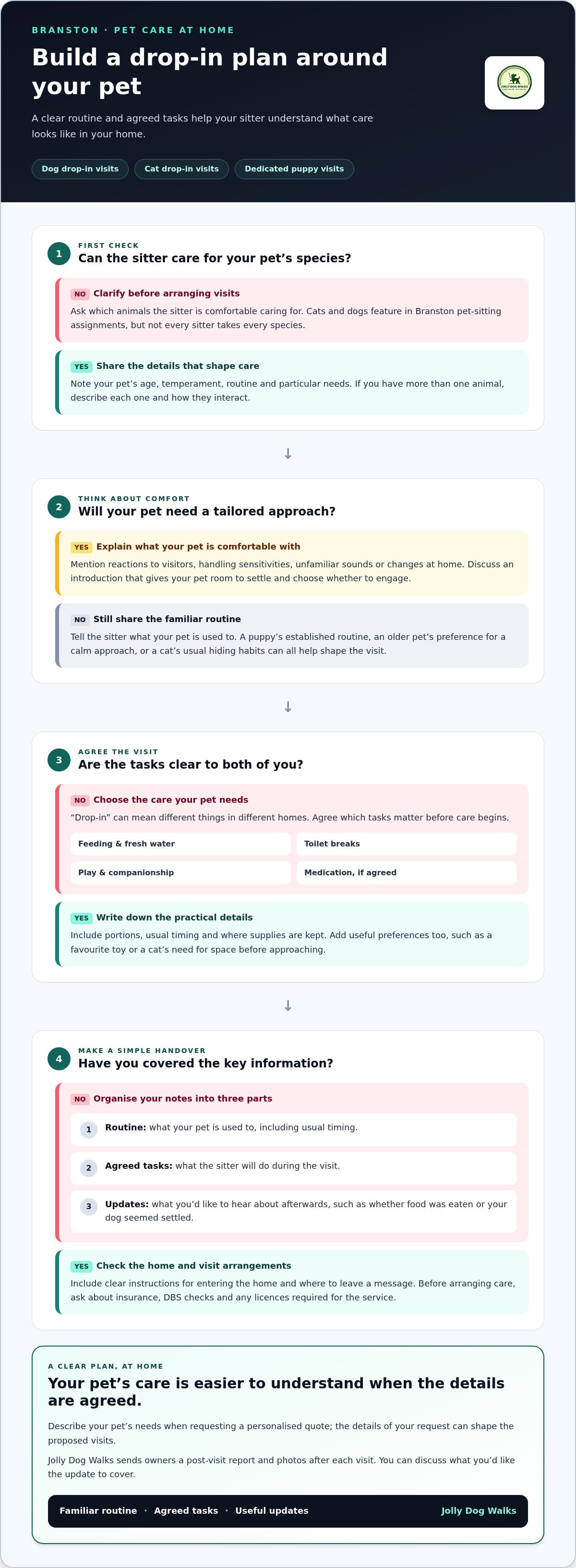
Agree the tasks before care begins, because “drop-in” can mean different things to different households. Jolly Dog Walks’ dog and cat drop-in visits can include feeding, fresh water, toilet breaks, play, medication and companionship. Set out your priorities so the visit follows your pet’s needs.
Explain portions, usual timing and where supplies are kept. If your dog has a favourite toy or your cat prefers space before approaching, include that detail. Also give clear instructions for entering the home and where to leave a message after the visit.
Organise your plan into three parts: your pet’s routine, the agreed tasks and the information you’d like after the visit. For example, note whether food was eaten and how your dog behaved during a toilet break. Share care instructions in writing, then talk through anything that needs extra explanation.
Jolly Dog Walks sends owners a post-visit report and photos after each visit. You can discuss what you’d like the update to cover, such as whether your pet ate or seemed settled. Clear expectations make messages useful and informative.
Before arranging pet care, discuss the details that affect your household. People arranging a pet drop in service Branston are advised to ask about insurance, DBS checks and any licences required for the service. Keep your notes practical: list your pet’s routine, the tasks agreed and the best way to share updates. This gives both you and the sitter a clear reference point.
Which pets do Branston drop-in sitters care for?
Pet sitters don’t all work with the same animals or have the same experience. Matching one to your pet means looking beyond species: consider the care setting, your pet’s comfort with visitors and any specialist handling involved. Describe what makes your animal’s needs distinctive, then assess whether the sitter’s experience and approach are a suitable fit.
Dogs with different routines and temperaments
For a dog, consider how they cope with someone entering their home and sharing their space. A dog who barks at the door, avoids unfamiliar people or becomes unsettled when separated from family may need a carefully planned introduction. Explain what you’ve observed so Victoria can discuss an appropriate way to meet your dog.
Think about handling, too. Some dogs are comfortable having a harness fitted by a new person, while others need their owner nearby. If your dog has a particular sensitivity, describe the situation clearly rather than using a broad label such as “difficult”. Specific context helps you discuss suitable care.
Cats and their individual preferences
For a cat, consider whether they tolerate visitors in their territory and how they signal discomfort. A cat might move away, crouch or choose a high perch instead of approaching. Share these observations when discussing care, and plan an approach that lets your cat keep its space without being coaxed into contact.
Some cats are relaxed around new people but wary of unfamiliar sounds or changes in the home. Explain what tends to unsettle yours, such as a noisy door or a carrier being moved. This gives Victoria useful context about your cat’s boundaries, without expecting every cat to welcome a visitor straight away.
Other species and specialist routines
If your household includes a species beyond dogs or cats, be clear about the kind of care involved. Small animals, birds and reptiles can have different handling needs and home environments. Explain whether care requires direct handling, access to specialist equipment or familiarity with a particular enclosure.
For a pet with a specific physical or behavioural need, describe what Victoria would encounter during an ordinary visit. For example, explain if your pet is uncomfortable being lifted or reacts strongly to changes in the home. This helps clarify the care required.
Households with more than one pet
In a home with several animals, consider how they affect each other when a visitor arrives. One pet might approach the door while another retreats or becomes protective of its space. Describe these interactions and explain whether the animals need separate areas during introductions.
Consider how each animal can receive appropriate attention during the visit. A household with different species or very different comfort levels may need a carefully considered plan, rather than assuming one approach will suit everyone.
Matching care to your pet
Think about the practical demands your pet presents, then share them openly before agreeing to care. Relevant details might include handling sensitivities, reactions to visitors or equipment Victoria would need to use. A good discussion leaves you both with a clear picture of your animal’s needs.
Notice how your pet responds during an introduction, but give them room to choose whether to engage. You can discuss what a gradual introduction might look like if your pet needs time. Matching care means respecting your animal’s comfort, not expecting them to become instantly sociable.
What tasks are included in a pet drop-in visit?
A visit should follow a clear plan for your pet, not an assumed checklist. In Branston, agree each task beforehand, including what the sitter should do, what to leave untouched and what to report afterwards.
Agree the visit plan in advance
Start with your pet’s routine and turn it into practical instructions. For example, specify whether your dog needs a garden toilet break, whether your cat should be left to approach first, or whether a puppy needs calm company. A written plan helps Victoria follow your preferences without guessing.
Separate essential tasks from optional extras. You might ask for food and water to be refreshed, then request play only if your dog is keen. If your pet is tired or unsettled, explain whether quiet company is a better choice. This gives Victoria a clear way to adapt while respecting your pet’s comfort.
Food, water and familiar routines
For feeding, write down the food type, portion and where it is stored. If your dog has a measured meal in a labelled container, say when it should be offered and whether anything must be added. For a cat, explain where their bowl belongs and how you usually keep the feeding area tidy.
Fresh water can be part of the agreed care, with the bowl’s usual location noted. Mention any specific household instruction, such as keeping a pet out of the kitchen while food is prepared. Clear details prevent an everyday task from becoming a guessing game.
Toilet breaks, play and gentle interaction
For a dog, describe the toilet routine and the part of the garden they normally use. If a lead or harness is involved, point out where it is kept and explain your preferred handling routine. Keep instructions suited to your dog, particularly if they become worried when hurried or approached suddenly.
Play should match the animal’s interest and energy. Name a familiar toy, such as a soft ball, and explain whether your dog enjoys a short game or prefers sniffing and quiet company. For a cat, a wand toy may suit an interactive pet, while a more reserved cat may prefer space.
Home checks and updates
Agree which simple home tasks belong in the visit. You could ask Victoria to wipe up a small water spill or leave used items in a named place. Explain which rooms are accessible and where cleaning supplies are stored. Avoid vague instructions such as “sort things out”, which can mean different things to different people.
Decide what information you’d like after each visit. A concise update might say whether your dog went outside, ate their meal or chose to rest. If a pet acts differently from their usual self, ask for a factual description of what the sitter observed. Specific notes are more useful than a general “all fine”.
Make the handover useful
Before the first visit, walk through the plan using your pet’s actual supplies and home layout. Show the food container, lead, preferred resting place and any door that should stay closed. Leave the same instructions in writing so details remain easy to follow during future visits.
Review the plan whenever your pet’s routine changes. A new food, a different toilet habit or a recently introduced toy can affect the visit. Keeping the instructions current helps each task remain appropriate for your pet and household.
Which Branston pet sitters have reviews, ratings, and references?
Reviews and ratings can help you understand a sitter’s approach, but they’re most useful when they describe actual pet care. Compare the details in each profile rather than relying on a star score alone. A review mentioning calm introductions with a nervous dog gives more context than a brief “great service”.
Read reviews for relevant details
Look for care that matches your pet and the support you need. Jolly Dog Walks provides dog and cat drop-in visits, puppy visits, and solo dog walks. Discuss your pet’s routine and the specific tasks you’d like included.
Check whether reviews describe specific visits and routines. For example, a comment about a sitter giving a meal at the agreed time is more informative than general praise. Read several comments together, then notice whether the same strengths appear repeatedly. A single review can offer a snapshot, while a pattern gives a clearer impression.
Understand ratings in context
A description of the service is more useful when it makes clear what the visit can include. Jolly Dog Walks’ dog and cat drop-in visits can cover feeding, water, toilet breaks, play, medication and companionship, with post-visit reports and photos sent to owners.
Discuss how your pet’s routine will be followed and what information you’ll receive afterwards. If your dog is nervous or your cat needs space, explain this before the visit. Practical communication helps shape care around your pet.
Use references to learn about the experience
A reference can add personal context to public reviews. Ask whether a previous pet owner can describe the sitter’s communication, punctuality and care instructions. For example, you might want to know how the sitter handled a shy cat or kept a dog’s routine familiar during visits.
Keep any reference conversation focused on your own priorities. If updates matter to you, ask how the sitter shared information after visits. If your dog is nervous, ask what helped them feel comfortable. These questions make a reference more useful than asking whether someone simply “liked” the sitter.
Consider practical checks alongside feedback
Before agreeing to visits, arrange a conversation about your pet’s routine and the tasks involved. Notice whether Victoria listens to details such as a dog’s preferred greeting or a cat’s need for space. A clear exchange helps you decide whether the service fits your animal.
Before agreeing to visits, arrange a conversation about your pet’s routine and the tasks involved. Notice whether the sitter listens to details such as a dog’s preferred greeting or a cat’s need for space. A clear exchange helps you judge how well their approach matches your animal.
Make a considered choice
Keep your priorities written down before discussing care. For instance, you may value calm handling, clear updates and careful attention to feeding instructions. Matching those needs to the proposed plan gives you a practical basis for arranging care in Branston.
Keep your priorities written down before comparing sitters. For instance, you may value calm handling, clear updates and careful attention to feeding instructions. Matching those needs against reviews and references gives you a more grounded basis for choosing care in Branston.
Jolly Dog Walks: 10-40 minute solo dog walks
Jolly Dog Walks can help if your dog needs individual care at home or an outing suited to their routine. Options include pet drop-in visits, puppy visits, 10-40 minute solo dog walks and 60 Minute Solo Walks, depending on the support you’re looking for.
Jolly Dog Walks provides dog and cat drop-in care visits in Branston, as well as puppy visits and solo dog walks. Victoria is the dedicated dog walker and pet-care provider. Every walk is GPS-tracked, owners receive a live GPS feed via the app, and post-walk reports and photos are provided after each visit.
If you’d like to discuss care for your dog, contact Jolly Dog Walks.
Make your dog’s next care plan feel right
Before arranging a pet drop-in service in Branston, take a moment to consider what would help your dog feel comfortable. A short note about their routine, what they enjoy and how they respond to visitors gives you a useful starting point for discussing care. You can then focus on whether the suggested support fits your dog, rather than trying to remember every detail during a conversation.
For dogs, the best arrangement is one that respects their individual needs and keeps their welfare at the centre. Jolly Dog Walks can help you explore care options for your dog, with an approach shaped by their routine and personality. There’s no need to have every detail perfectly organised before starting the conversation; a few thoughtful notes are a good beginning.
Ready to talk through what might suit your dog? Share your dog’s care needs with Jolly Dog Walks, and take the next step with confidence.
Frequently Asked Questions
How does it work?
It starts with agreeing the dates, preferred visit window and home access arrangements. Share the address and explain how the sitter should enter and secure the property afterwards. You can then discuss the request and receive a personalised quote. Keep a written record of the agreed dates and arrangements, including who to contact if your plans change. That gives everyone a clear reference before care begins.
What pet drop-in visit services are available in Branston, UK?
In Branston, Jolly Dog Walks provides drop-in care visits for dogs and cats, plus dedicated puppy visits. A separate cat-sitting and feeding service is also available. Describe whether you need care for one pet or several when requesting a quote. This helps frame the arrangement around your household, rather than assuming every pet-care request follows the same format.
What are the typical visit lengths and available times in Branston?
Dog and cat drop-in care visits are 15 to 30 minutes, while puppy drop-in visits are 20 minutes. To arrange a pet drop-in service in Branston, include your preferred visit window and whether you need one-off or recurring care. Visit length is separate from the requested arrival time. Services aren’t provided on weekends or bank holidays unless a special arrangement is made.
How far in advance should I book a pet drop-in service in Branston?
Arrange care once your dates are known, particularly if your plans involve a holiday or several visits. Send your preferred dates, time windows and access arrangements together so the details are clear from the outset. If your plans change, share the revised dates promptly. An organised request makes it easier to plan care around your schedule and your pet’s routine.
What information and supplies should I provide for a pet drop-in visit?
Prepare written entry instructions, any alarm or lock details, an emergency contact and your veterinary practice’s details. Place the supplies intended for the visit together, and identify anything that should not be used. For a dog, set out their collar, harness or lead if outdoor access is part of the agreed plan. Arrange key handover securely rather than leaving keys somewhere accessible.
Article by
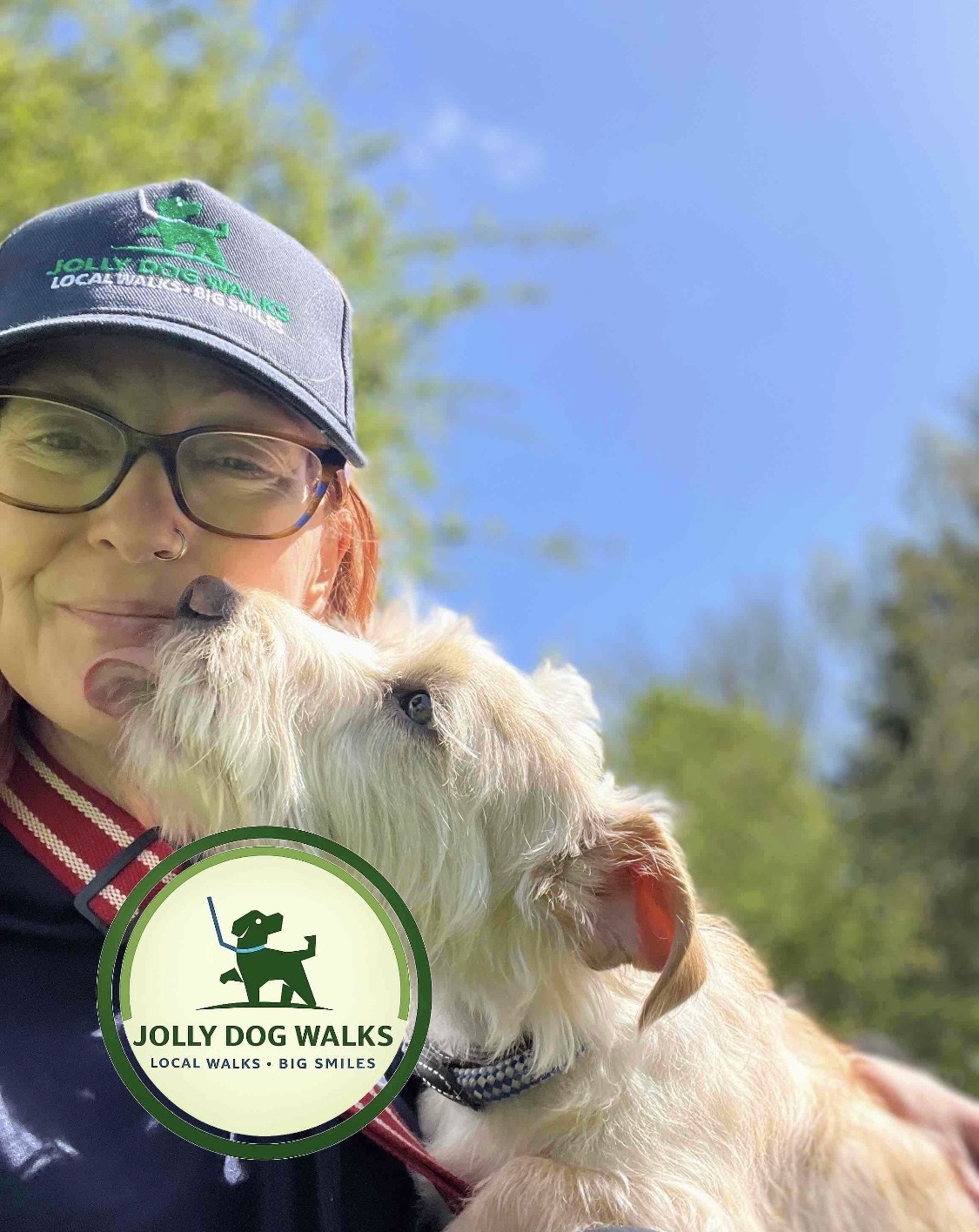
Victoria Cartwright
Hi, I’m Victoria, the proud owner of Jolly Dog Walks 🐾🐶
With a background in nursing and healthcare, alongside my professional training with the Institute of Modern Dog Trainers, I bring a unique combination of care, communication and understanding to my work with dogs and their owners. After leaving my nursing career, I found my true passion in working with animals, and I’ve never looked back!
❤️🐾
Disclaimer
Disclaimer: The views and experiences shared in this blog are based on my personal and professional experiences. They are intended for general information and enjoyment and should not replace individual advice from a qualified veterinary professional or appropriately qualified canine behaviourist/trainer where necessary.


