

For a cat sitter for indoor-only cats in Burton-on-Trent, the cost depends on how often visits are needed, how long they last and the care involved; the price is given after a quote request. Cats Protection advises that a sitter should visit at least twice a day while you’re on holiday. A cattery may suit some cats, but staying at home can feel more reassuring for a nervous cat who’s happiest with familiar surroundings.
It’s natural to weigh up cost alongside your cat’s comfort and safety. This guide explains what affects local cat-sitting costs, how to choose a sitter you feel comfortable leaving your cat with, and how to think about visit frequency. You’ll also find practical points to compare home care with a cattery, so you can make a choice that fits your cat’s routine and needs.
Key Takeaways
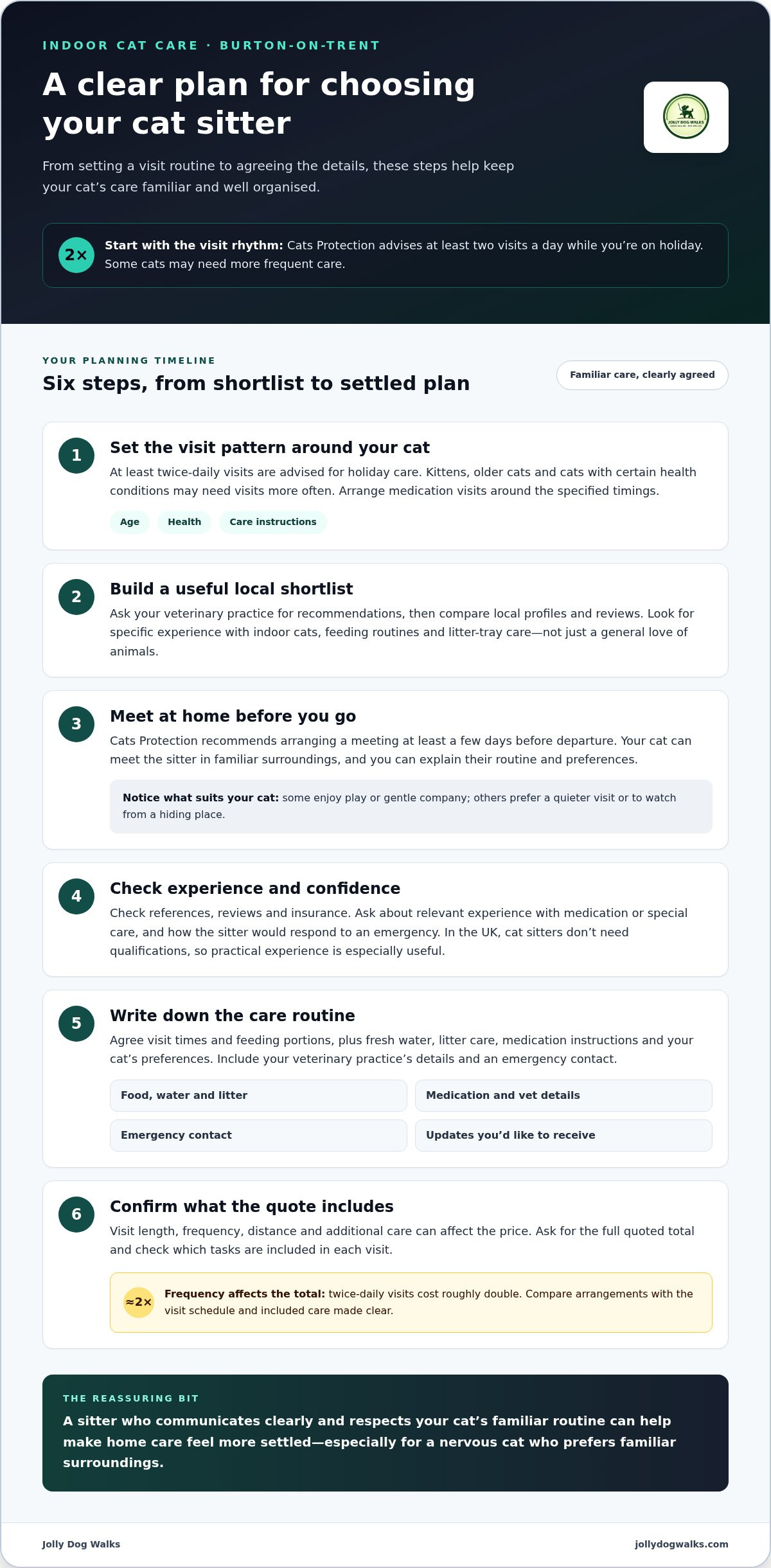
- Cats Protection advises arranging at least two visits a day while you’re on holiday, with more frequent care potentially needed for some cats.
- Use references, reviews, insurance and relevant care experience to assess whether a sitter is a good fit for your cat.
- A familiar home routine may suit nervous or home-loving cats; consider your cat’s temperament when comparing home visits with a cattery.
- Plan ahead with clear care instructions, emergency contacts and a backup arrangement so your cat’s routine is covered while you’re away.
How much does Cat Sitting cost in East Staffordshire?
For a cat sitter for indoor-only cats in Burton-on-Trent, Jolly Dog Walks’ cat sitting and feeding visits provide care at home, including feeding, water, litter cleaning and basic home checks.
Twice-daily visits cost roughly double, so frequency can make a noticeable difference to the total.
To better understand what in-home care can involve, watch this video from Jackson Galaxy:
A visit-based booking and an hourly rate aren’t directly interchangeable. Check what the agreed visit includes, especially if your cat needs particular arrangements for feeding, litter care or companionship.
For indoor cats, a drop-in visit means care in familiar surroundings rather than moving your cat elsewhere. Discuss the practical details during the free consultation: food portions, fresh water, litter care, play preferences and any veterinary instructions. A clear routine helps shape visits around your cat’s needs.
There’s no separate booking-fee figure in the local cost information, so ask for the full quoted total and what it covers. Visit length, frequency, distance and additional care can affect the price. Keep the agreed schedule and tasks in writing, including whether each visit includes litter cleaning and updates about your cat.
Compare like with like when weighing up local options. For example, a week with daily visits has a different total from twice-daily care, even before considering visit length. The right arrangement balances your budget with your cat’s routine, comfort and practical care needs.
Finding and vetting a professional cat sitter
In Burton-on-Trent, choosing a sitter means finding someone who can follow your cat’s familiar routine and respond calmly to their needs. Jolly Dog Walks offers cat sitting and feeding visits locally, with a free consultation to discuss practical arrangements and your cat’s care.
Finding Local Pet Sitters
Cats Protection suggests asking your local veterinary practice for cat-sitting recommendations. You can also compare local profiles and reviews, noting whether a sitter describes caring for indoor cats, cleaning a litter tray and keeping to feeding routines. Look for specific examples of their experience, rather than relying on a general claim that they love animals.
Make a shortlist and compare the same details for each person: the tasks included, how they’ll access your home, and how they’ll share regular updates. An indoor cat may not need outdoor supervision, but still needs someone attentive to changes in appetite, litter habits or behaviour. Those everyday details help you judge whether a sitter understands the care your cat needs.
Contacting and Vetting Sitters
Before booking, arrange a conversation at home so the sitter can meet your cat in their usual surroundings. Cats Protection recommends arranging this meeting at least a few days before departure. Use it to explain your cat’s routine and notice whether they seem comfortable with the sitter, especially if they’re shy or easily stressed.
Cats Protection recommends checking references, reviews and insurance, and confirming experience with any medication or special care your cat needs. Ask how the sitter would respond to an emergency and follow your written instructions. If your cat needs oral medication, explain the timing and method clearly, then discuss the sitter’s relevant experience.
In the UK, cat sitters don’t need qualifications. That makes practical evidence especially useful: ask about previous cat-care experience, litter-tray hygiene and handling nervous behaviour. Training and qualifications can still add helpful context, but they’re only part of the picture. For a cat with a health condition, relevant hands-on experience and clear veterinary instructions matter.
Agree the details before you leave. Include visit times, feeding portions, medication instructions, your veterinary practice’s details and an emergency contact. Explain what regular updates should cover, such as whether your cat has eaten and whether the litter tray has been used. A short, specific plan is easier to follow than a long list of assumptions.
You don’t have to choose the first person you meet. Cats Protection advises meeting more than one sitter if needed, and not booking someone you don’t feel comfortable with. Compare how each person responds to your questions and your cat’s individual needs. The best fit is a caring professional who communicates clearly and respects your cat’s routine.
How often a cat sitter should visit
For holiday care, Cats Protection advises that a cat sitter should visit at least twice a day. That gives your cat regular checks and care, rather than one brief daily appearance. Indoor cats still need food, fresh water, a clean litter tray and attention to changes in behaviour. Discuss the visit pattern and write down the routine to follow.
Some cats need more frequent attention. Cats Protection says very young or old cats, and cats with certain health conditions, may need visits more often than twice daily. Kittens also need frequent monitoring and play. Long periods alone can leave a kitten bored, encourage furniture damage, or expose them to something unsafe. Set the schedule around age, health and care instructions.
For example, a cat taking medication at set times needs visits arranged around those instructions. An older cat with health concerns may also need closer observation than a healthy adult. Share your veterinary practice’s details and explain what changes matter, such as refusing food or seeming unusually quiet. A clear plan helps keep care consistent.
Indoor cats have different temperaments, too. One may greet a sitter at the door, whilst another prefers watching from a hiding place. Explain whether your cat enjoys play, gentle cuddles or simply quiet company. A good visit respects those preferences rather than expecting every cat to be sociable on demand.
Photos and regular updates help owners feel connected while away. Discuss what you’d like an update to include, such as a picture, whether your cat ate, and any concerns about water or litter. A short message after each visit can report the essentials without interrupting time with your cat.
Visit frequency affects the overall sitting-service cost because more visits mean more time and travel. The price depends on the arrangement and is given after a quote request; visit duration, frequency, location and care tasks shape the total. Include any booking fee in the written total, alongside the dates, agreed visits and included tasks.
Before confirming, map the visit schedule against your departure and return times. A morning and evening visit, for instance, gives the sitter two planned check-ins each day. Add medication times, meal portions and update preferences to the same written plan. This makes the booking clearer for owners and helps each visit follow a familiar routine.
Boarding changes a cat’s surroundings, whereas home sitting keeps care within familiar rooms. For an indoor cat, choose a schedule that covers daily needs and any health instructions. Cats Protection’s twice-daily holiday guidance is a starting point; age, health and individual care needs determine whether the plan needs more frequent visits.
Keeping a cat at home while on holiday
An indoor-only cat can stay at home with a sitter following familiar routines and clear care instructions. Before your holiday, prepare the rooms, entry arrangements and emergency details, then show the sitter how to keep your cat safely inside.
Cats Protection recommends home care for cats who are home-bods or more nervous. Familiar rooms can feel more comfortable than an unfamiliar setting, particularly for a shy cat. Explain where your cat tends to hide, which rooms the sitter can enter, and what usually helps them settle. A calm visit follows your cat’s pace, without forcing cuddles.
Escape prevention starts with the doors and windows. Scottish Government notes that cats can squeeze through very small spaces, so check window catches and balcony barriers regularly. Before leaving, walk through the home with the sitter and explain which doors must stay shut. Ask them to check where your cat is before opening an outside door.
Leave practical instructions in one easy-to-find place. Include your cat’s feeding routine, food portions, litter arrangements, medication details and veterinary practice contact information. Cats Protection recommends leaving emergency contact details, vet details, enough food, litter and medication, alongside daily care instructions. Clear notes help the sitter follow your cat’s usual routine.
Set up the home before packing takes over. Cats Protection advises removing potentially harmful items before leaving a cat alone for an extended period. Put string-like toys away, and leave safe favourite toys accessible. Cats Protection also recommends regular play sessions while your cat is home alone, helping provide activity between visits.
Give your cat a secure hiding place that remains accessible during visits. Scottish Government recommends keeping a hiding place available at all times, including while a sitter is caring for the cat. Don’t block a familiar retreat with luggage or holiday supplies. For an older cat, keep food, water and litter in their usual places, since abrupt changes may cause distress.
Make an emergency plan before departure. Write down who to contact if your cat is injured or needs veterinary care, and include relevant insurance and consent instructions. Cats Protection advises arranging a backup sitter in case of an unexpected cancellation. That second contact gives you a practical contingency if plans change suddenly.
Finally, practise the handover. Cats Protection recommends testing home doors with the sitter and leaving a backup key with someone in case access becomes difficult. If your cat is sensitive to change, spread cleaning and packing over a few days, as Cats Protection suggests. A steady routine and prepared home can bring owners greater peace of mind while away.
Cat sitters in Burton-on-Trent
For an indoor cat in Burton-on-Trent, home visits can preserve familiar surroundings whilst you’re away. A local sitter may also stay overnight if required. The useful choice depends on your cat’s temperament, care routine and comfort with visitors, not simply whether a cattery has space.
A trustworthy sitter should understand that each animal has individual needs. One cat may welcome play and company; another may prefer a quiet visit and a familiar hiding place. Before booking, discuss feeding, litter care, medication, access to the home and what updates you’d like. These practical details help you compare arrangements on more than a friendly first impression.
For a kitten, plan visits around frequent monitoring and play. Cats Protection advises at least twice-daily sitter visits during holidays, and very young cats may need more frequent care. If your cat has a health condition, explain the routine and veterinary instructions clearly. The care plan should match your cat, rather than expecting every household to follow the same pattern.
Home sitting and cattery boarding offer different settings. A nervous or home-loving cat may find familiar rooms more comfortable, while a cattery provides care away from home. Some offer discounts for longer stays, so compare the total cost for your dates and care needs.
For a cattery, Cats Protection advises booking well before your trip because places may be full. Check its local authority licence and ask to see it. Cats Protection also recommends checking that vaccinations are up to date before a stay, and that cats are kept separately without direct contact. Ask whether a vaccination certificate is required.
Look at the accommodation itself, too. Cats Protection says each cat should have its own sleeping, exercise and private toileting areas, plus a hiding place and room to move freely. Check that food preparation and bowls are kept separate from litter trays. Safe heating in cold weather and shade in hot weather matter for comfort.
When comparing a sitter with a cattery, write down what your cat needs each day. Include feeding, medication, litter cleaning, play and emergency arrangements. Home visits may suit a cat that becomes stressed in new surroundings; a cattery may suit an individual cat comfortable with a change of setting. For either option, clear care instructions help keep the plan consistent.
Make the decision around your cat’s behaviour and health. A kitten needing frequent attention, a shy adult, and a confident cat accustomed to new places may need different arrangements. In Burton-on-Trent, compare home care and cattery facilities against those individual needs, then choose the setting that best supports your cat’s routine while you’re away.
Jolly Dog Walks: 10-40 minute solo dog walks
Jolly Dog Walks offers 10-40 minute solo dog walks and 60 Minute Solo Walks for dogs needing individual attention. If your household also includes a dog, these walks can help maintain their exercise routine while you organise care for your cat. Puppy visits and pet drop-in visits are also available for suitable pet-care needs.
Victoria’s attendance at IMDT masterclasses reflects a commitment to ongoing learning, alongside a caring and professional approach to pet care. Choose support that suits your dog’s routine, then plan your cat’s care separately so each animal has an arrangement tailored to their needs.
For details, visit jollydogwalks.com or get in touch with Jolly Dog Walks.
Make a care plan that feels right for your household
Before you leave, picture an ordinary day at home: when your cat eats, where they settle, and what helps them feel secure. Share those details during the free consultation and keep your care plan simple enough to follow. For a cat sitter for indoor-only cats in Burton-on-Trent, familiar routines and clear instructions can make the handover easier for everyone.
If you also have a dog, plan their care separately so both pets have support that suits them. Jolly Dog Walks can help with your dog’s routine, leaving you to arrange cat care around your cat’s needs. A calm, considered plan is a kind place to start, and it needn’t be complicated.
Contact Jolly Dog Walks to discuss care for your dog. Here’s to a well-planned break and pets who feel comfortable at home.
Frequently Asked Questions
Should I Use a Cat Sitter or a Cattery?
A home sitter may suit a shy cat who settles best in familiar surroundings, whilst a cattery offers care away from home. Consider how your cat responds to visitors, travel and unfamiliar rooms. For a cat with medical needs, focus on which arrangement can follow their care routine. Cats Protection advises checking a cattery’s licence and vaccination requirements before booking, and ensuring cats are housed separately.
How will a sitter access my home?
Agree a safe, simple entry arrangement directly with your sitter before you leave. Show them how locks work, which doors must remain closed, and where your cat may hide. Test the doors together so you both understand the routine. Keep a spare key with someone you trust in case access becomes difficult, and make sure the sitter knows whom to contact if a key is lost.
How often should an indoor-only cat sitter visit while owners are away?
For holiday care, Cats Protection recommends at least two sitter visits daily. An indoor-only cat still needs regular checks, fresh water, meals and attention to changes in behaviour. Kittens, older cats and cats with certain health conditions may need more frequent visits. Explain any medication timings or signs of concern in the care instructions, so visits can be planned around your cat’s needs.
Are cat sitters in Burton upon Trent insured, DBS checked, or registered?
These checks can vary between individual sitters, so avoid assuming every local provider has the same credentials. Jolly Dog Walks states that its services are insured and DBS-checked. In the UK, cat sitters don’t need qualifications, according to the supplied local research. Ask what insurance and checks apply to the person caring for your cat, and distinguish these from cattery licensing requirements.
Cat sitter reviews and ratings in Burton upon Trent
Compare local sitter profiles and reviews, and ask for references, insurance and relevant cat-care experience.
Cat sitter availability in Burton upon Trent for holidays and weekends
Arrange cat sitting in advance and agree the visit schedule during the free consultation. Cats Protection recommends at least two visits a day while you’re away. Discuss the care your indoor cat needs and plan visits around their routine.
Article by
Victoria Cartwright
Hi, I’m Victoria, the proud owner of Jolly Dog Walks 🐾🐶
With a background in nursing and healthcare, alongside my professional training with the Institute of Modern Dog Trainers, I bring a unique combination of care, communication and understanding to my work with dogs and their owners. After leaving my nursing career, I found my true passion in working with animals, and I’ve never looked back!
❤️🐾
Disclaimer
Disclaimer: The views and experiences shared in this blog are based on my personal and professional experiences. They are intended for general information and enjoyment and should not replace individual advice from a qualified veterinary professional or appropriately qualified canine behaviourist/trainer where necessary.


