
Imagine you're sat at your desk in Burton, trying to focus on a meeting, but your mind is stuck on that brand-new rug in the hallway and whether your puppy has just decided it looks like a patch of grass. It's a feeling almost every new owner in Staffordshire knows well. That mix of overwhelming love for your new arrival and the creeping anxiety of house-training accidents can make those first few months feel like a constant battle against the clock. You want the best for your dog, but the guilt of leaving them alone while you work is heavy.
The good news is that you don't have to choose between your career and a clean home. By establishing a professional, welfare-first routine, you can master the art of toilet training without the stress. This guide will show you exactly how to build a schedule that works for your pup's specific needs, ensuring they stay happy and your carpets stay fresh. We'll explore why consistency is your secret weapon and how professional puppy visits Barton-under-Needwood provide the expert midday support and medical observation your little one needs to thrive while you're away.
Key Takeaways
- Learn the "month-plus-one" rule to accurately predict your puppy's bladder capacity and set realistic expectations for their development.
- Implement the "Eat, Sleep, Play, Repeat" cycle to create a dependable routine that prevents indoor accidents before they happen.
- Discover how professional puppy visits Barton-under-Needwood bridge the critical midday gap, providing your pup with essential relief and socialisation whilst you are at work.
- Identify the difference between "anxiety pees" and simple lack of control, and why using enzyme cleaners is vital for protecting your carpets.
- Understand the benefit of expert medical observation from a former nurse to spot early health issues during your puppy's scheduled garden breaks.
Understanding the Puppy Toilet Training Timeline
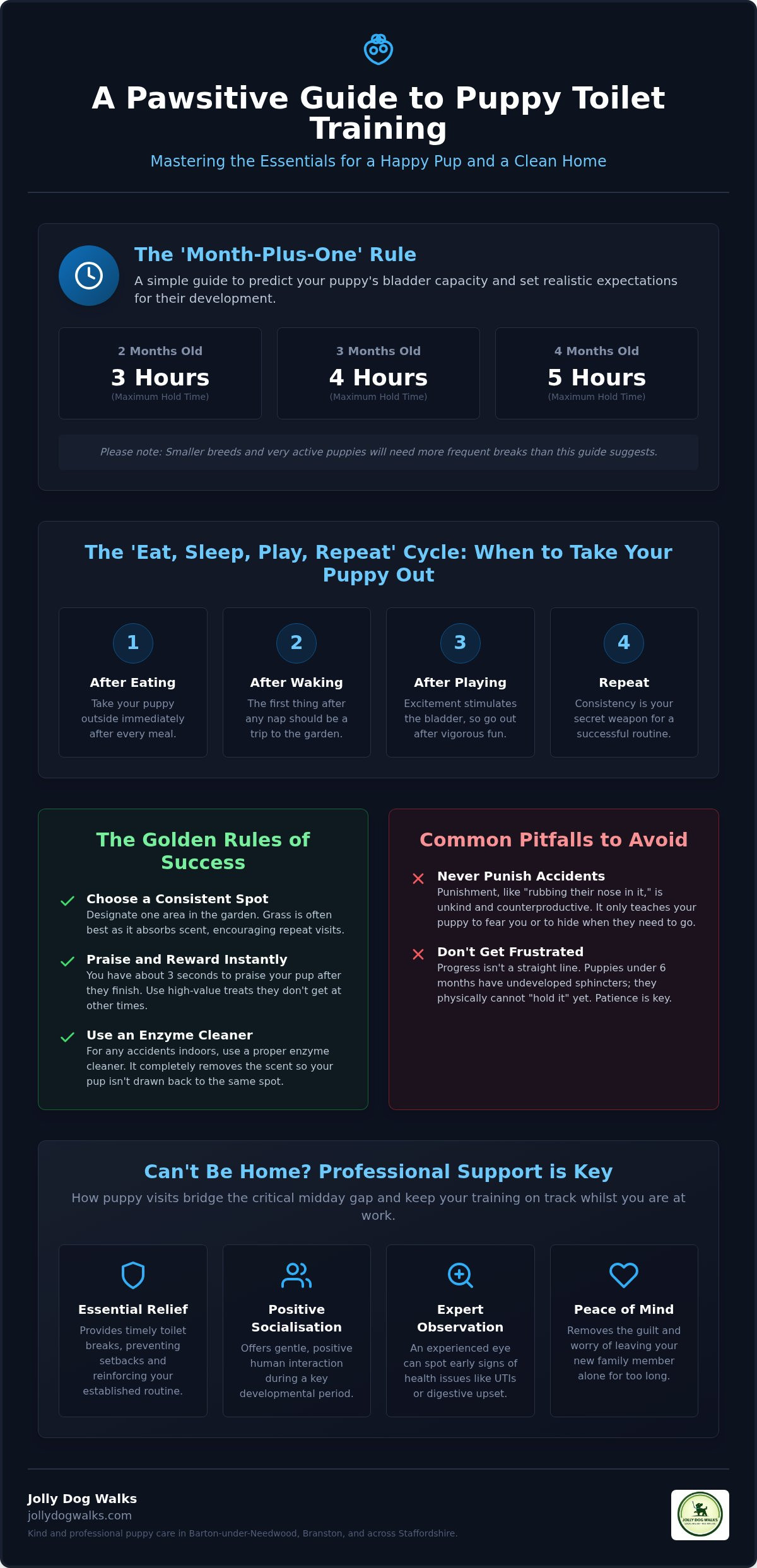
Bringing a new puppy home to Staffordshire is a whirlwind of joy, but it's also a crash course in canine biology. One of the most helpful tools in your arsenal is the "month-plus-one" rule. This simple guide suggests that a puppy can generally hold their bladder for one hour for every month of their age, plus an extra hour. For example, an eight-week-old pup might manage three hours at a push, though in reality, it's often much less during active periods. Understanding this puppy toilet training timeline helps you set realistic expectations for that first month together.
As a former nurse with 27 years of experience, I've spent a lifetime observing subtle physical changes in my patients. This professional background is invaluable during my puppy visits Barton-under-Needwood. I don't just let your dog into the garden; I watch for signs of urinary tract infections or digestive upset that a less experienced eye might miss. If your pup is struggling despite a solid routine, there might be a medical reason behind the accidents. Smaller breeds, for instance, often have much higher metabolic rates and smaller bladders, requiring more frequent breaks than a larger Labrador puppy of the same age.
The Biological Limits of Your Puppy
A puppy's physical development is the primary driver of their schedule. Their sphincters aren't fully developed until they're around six months old, meaning they literally cannot "hold it" even if they want to please you. You'll notice they often sniff in circles or become suddenly restless when they're full. High-energy play or a sudden bout of "zoomies" often triggers an immediate need to go, as the excitement puts physical pressure on their tiny bladder. Recognising these physical limits prevents frustration for both you and your new companion.
Signs of Progress and Common Milestones
Progress isn't always a straight line. You might have three dry days followed by a sudden puddle, but don't lose heart. Look for the "intentional sit" by the back door or a pup that stops what they're doing to look at you expectantly. These are huge wins. Using consistent vocabulary like "be busy" or "toilet" helps your pup associate the action with the reward. Once your pup consistently signals their need, you can start stretching those garden breaks from every hour to every two hours. If you're working, our puppy visits Barton-under-Needwood provide that vital consistency to keep their progress on track whilst you are out of the house.
How to Set Up a Successful Home Routine
Setting up a home routine is about creating predictability for a brain that's still very much under construction. The most effective framework is the "Eat, Sleep, Play, Repeat" cycle. Every time your pup wakes up, finishes a meal, or has a vigorous play session, they need to go outside immediately. This isn't just a suggestion; it's a biological requirement. Establishing a reliable schedule, perhaps supported by puppy visits Barton-under-Needwood, ensures that even when life gets busy, your dog's training doesn't slip. By anticipating these moments, you're setting them up for a win rather than waiting for a mistake.
Designing the Perfect Toilet Spot
Your garden in Staffordshire might be a mix of lush lawn and patio, but for a puppy, consistency in substrate is key. Grass is usually the preferred choice as it absorbs scent, which encourages repeat visits. Gravel or paving can be used, but once a pup chooses a favourite surface, they tend to stick with it. However, we all know the local weather can be unpredictable. When the rain sets in and your garden turns into a mud bath, the routine shouldn't stop. I always recommend using a dedicated "toilet zone" near the house to keep things manageable. To keep your carpets clean after these damp excursions, I use a portable dog shower during my puppy visits Barton-under-Needwood to ensure paws are spotless before they head back inside.
The Golden Rules of Positive Reinforcement
The way you react to a successful toilet break determines how quickly your pup learns. To effectively potty train your puppy, you need to be ready with praise the second they finish. We call this the "three-second rule." If you wait until you're back in the kitchen to give a treat, your pup won't make the connection. Use high-value, healthy rewards that they don't get at any other time. This creates a powerful positive association with doing their business in the right place.
It's vital to address the old-fashioned myth of "rubbing their nose in it." This approach is not only unkind but also completely counterproductive. It teaches your puppy to fear you or to hide when they need to go, which often leads to them finding "secret" spots behind the sofa. If an accident happens, simply clean it up with an enzyme-based cleaner and move on. No drama, no punishment. If you're struggling to maintain this consistency whilst you're at the office, our professional puppy visits can help bridge that gap, ensuring your pup's training stays on the right path even when you aren't there.
Managing Puppy Toilet Breaks Whilst at Work
For many owners in Staffordshire, the biggest hurdle isn't the morning or evening routine; it's the "Midday Slump." Between 11 am and 2 pm, your puppy's energy peaks just as their bladder capacity reaches its limit. If you're working in Burton or Barton, this window is critical. While you might consider coordinating with neighbours in Barton-under-Needwood or Burton for a quick look-in, a professional service offers a different level of reliability. Leaving a young pup for six or seven hours isn't just a risk for your carpets; it can cause genuine distress and hinder your efforts to toilet train your puppy. This is where Jolly Dog Walks bridges the gap, providing a reliable pair of hands when you can't be there.
A professional visit isn't just a quick "pop-in" to open the back door. It's a structured enrichment session. While a quick check-in might suffice for an older dog, puppies thrive on the consistency of a full visit. These puppy visits Barton-under-Needwood focus on individual attention, ensuring your pup gets the relief they need alongside gentle socialisation and basic training reinforcement. We work with you to maintain the "Eat, Sleep, Play, Repeat" cycle you've already established at home, preventing the confusion that often leads to setbacks.
The Professional Puppy Visit Advantage
Choosing a 20-minute solo visit over a group walk is vital for young dogs. Puppies aren't ready for the physical or mental demands of a pack environment. My background as a nurse allows me to provide high-level medical observation during every visit. I look for the small details, like changes in gum colour or unusual lethargy, which are often the first signs of illness. You'll stay connected through the Walkies App, receiving GPS-tracked updates and photos directly to your desk. It's about more than just a toilet break; it's about peace of mind whilst you're focusing on your career.
Preparing Your Home for a Puppy Visitor
To make the most of our puppy visits Barton-under-Needwood, a little preparation goes a long way. Secure access is essential, especially in our local villages. Most owners opt for a secure key code or a lockbox. Setting up a dedicated cleaning station near the door helps me keep your home tidy after a garden break. If it's a typical muddy Staffordshire day, I'll use my portable dog shower to rinse off those paws, so please leave out some clean towels. Any specific instructions, from midday meals to medication, should be logged via the Walkies App to ensure your pup's care is tailored and safe every single day.
Troubleshooting Common Accidents and Behaviours
Accidents are a natural part of the journey, but they often leave owners feeling like they’ve failed. You haven't. Usually, an indoor puddle is either a communication breakdown or a physical response your pup cannot yet control. It is vital to distinguish between a simple full bladder and "anxiety pees" or excitement urination. If your puppy dribbles when guests arrive, it is an involuntary emotional response. Scolding them only increases the anxiety, which makes the problem worse. Instead, keep greetings calm and low-key until they have had a chance to empty their bladder outside.
The biggest obstacle to a clean home is often the "invisible scent" problem. Standard household cleaners often contain ammonia, which smells remarkably like urine to a dog. By cleaning a spot with regular bleach, you might actually be marking it as a designated toilet area. Enzyme-based cleaners are non-negotiable because they break down the proteins in the waste, removing the scent entirely. During my puppy visits Barton-under-Needwood, I always keep an eye out for repeat "accident zones" to help owners identify where the routine might be breaking down.
Dealing with Regressions and Setbacks
Puppies often hit a "teenage phase" around six to nine months where they seem to forget everything they have learned. New furniture, house guests, or even a change in the weather can trigger a regression. When this happens, the best approach is to go back to basics. Use the focus techniques I have learned through IMDT training to help your dog stay engaged with you outdoors. Patience is your best tool here; simply restart the frequent schedule and reward every success as if it is the first time.
Health vs. Behaviour: When to Call the Vet
Sometimes, a setback isn't behavioural at all. My 27 years of nursing experience means I am trained to spot subtle physical changes that suggest a medical issue. If your pup is suddenly straining, going much more frequently, or if their urine has a strong odour, it could be a UTI. I use the Walkies App to record exact times and descriptions of bowel movements and frequency. This data is incredibly useful for your vet to review. If you are worried about regressive behaviour, book a professional puppy visit to ensure your dog has the expert medical observation they need whilst you are away. My puppy visits Barton-under-Needwood provide the consistency and professional oversight needed to navigate these tricky developmental stages safely.
Professional Puppy Visits: The Jolly Dog Walks Approach
Choosing the right support for your new companion is a significant decision that shapes their long-term temperament and health. At Jolly Dog Walks, we don't just offer a standard check-in; we provide an award-winning service recently named the 2026 Dog Walking Service of the Year at the Staffordshire Business Awards. Our puppy visits Barton-under-Needwood are designed to be an extension of your own care, balancing the warmth of a pet lover with the clinical precision of a former nurse. With 27 years of experience in high-level medical observation, I can spot the tiny, subtle changes in a puppy's health that others might overlook, giving you absolute peace of mind whilst you're at work.
Our approach is rooted in modern, ethical science. I am IMDT trained, having completed masterclasses with Steve Mann to ensure our methods are always kind, evidence-informed, and welfare-focused. We use the Walkies App to keep you connected to your pup's day in real-time. You'll receive a detailed digital report, photos, and GPS tracking, so you'll know exactly when the visit happened and how your pup got on. It's a transparent, professional system that removes the guesswork and the guilt often associated with leaving your puppy alone during the working day.
Why Solo Visits Matter for Puppy Training
We strictly offer solo visits for puppies because their early development is too precious to risk in a large group environment. In a pack walk, a young pup can easily be overwhelmed or bullied by older, more boisterous dogs, which can lead to lifelong fear or reactivity. By focusing entirely on your dog, we can reinforce the specific commands and "Eat, Sleep, Play, Repeat" routine we established in earlier chapters. This individual attention builds a deep bond of trust, ensuring your puppy feels safe and secure in their own home and garden whilst learning their boundaries.
How to Get Started in Staffordshire
The journey begins with a relaxed "Meet & Greet." This is where we get to know your pup's personality, assess their recall, and discuss any specific health needs or home security arrangements. It's a vital step to ensure we're the perfect fit for your family and that your home access is secure. If you are just starting out and want to see how we manage our local rounds, you can read more about booking your first puppy pop-in visit in Burton. Once you're ready, joining the Jolly Dog Walks family means you have a dedicated, professional support system for your pup's entire life. To begin your journey, visit our dedicated page for puppy visits Barton-under-Needwood to book your initial consultation.
Building a Brighter Future for Your Staffordshire Pup
Mastering the art of house-training is one of the most rewarding challenges you'll face as a new owner. By sticking to a consistent "Eat, Sleep, Play, Repeat" cycle and understanding your puppy's physical limits, you're laying the foundation for a lifetime of good habits. Remember that setbacks are just part of the process; with patience and the right routine, those indoor accidents will soon be a thing of the past.
You don't have to manage this journey alone. Whether you're navigating the "Midday Slump" or need a professional eye to monitor your pup's health, our puppy visits Barton-under-Needwood provide the expert support your family deserves. As the winner of the 2026 Staffordshire Business Awards for Dog Walking Service of the Year, Jolly Dog Walks combines 27 years of clinical nursing experience with a deep passion for animal welfare. Our fully insured and DBS-checked care ensures your little one is in the safest possible hands.
Book your professional puppy toilet break visit in Staffordshire today and enjoy the peace of mind that comes with expert, local care. Your puppy's happy, accident-free future starts with a single step!
Frequently Asked Questions
How many toilet breaks does a 12-week-old puppy need each day?
A 12-week-old puppy generally needs a toilet break every three to four hours during the day, following the "month-plus-one" rule for bladder capacity. However, this is a maximum limit for a resting pup. When they are awake, playing, or have just finished a meal, they may need to go as often as every twenty minutes. Consistency is vital at this age to prevent indoor accidents and build reliable house-training habits.
Can I leave my puppy for 4 hours whilst I am at work in Staffordshire?
It is not recommended to leave a puppy under six months old for four hours at a time. While the RSPCA suggests four hours is the limit for an adult dog, younger pups lack the physical bladder control to wait that long. Leaving them for extended periods can cause distress and lead to setbacks in their training. Arranging professional puppy visits Barton-under-Needwood ensures your pup gets a vital midday break and avoids unnecessary accidents.
Should I use puppy pads or take them straight to the garden?
Taking your puppy straight to the garden is almost always the better choice for long-term success. Whilst puppy pads seem convenient, they can accidentally teach your dog that going toilet inside the house is acceptable. This often creates confusion when you later try to transition them to outdoor-only breaks. By using the garden from day one, you establish a clear boundary and take advantage of natural scents that encourage them to do their business.
What should I do if my puppy has an accident in front of me?
If your puppy has an accident in front of you, stay calm and avoid any form of scolding or punishment. Punitive reactions only teach your pup to be afraid of you or to hide their accidents in the future. Instead, quietly pick them up and take them to their designated outdoor spot to finish. Once they are safely outside, use an enzyme-based cleaner to remove the scent from your carpet, preventing repeat incidents in that area.
How do I know if my puppy’s toilet accidents are health-related?
You can identify potential health issues by looking for sudden changes in frequency, straining, or unusual odours in their urine. As a former nurse, I provide high-level medical observation during my visits to spot these subtle physical signs early. If your puppy was previously clean but is now having frequent accidents or seems lethargic, it is time to consult your vet. Keeping a record of their routine via the Walkies App helps provide clear medical data.
Is it safe for a puppy walker to visit before my dog is fully vaccinated?
Yes, it is perfectly safe for a professional walker to visit your home before your puppy is fully vaccinated, provided the visit is restricted to your private garden. In fact, early solo visits are highly beneficial for socialisation and maintaining a routine. Unlike group walks, which carry a higher risk of disease transmission, my dedicated puppy visits Barton-under-Needwood focus on one-to-one care in a controlled environment that protects your pup's developing immune system.
How much do puppy toilet break visits cost in Barton-under-Needwood?
The cost of puppy visits in the local area varies based on the duration of the visit and the specific care your dog requires. We offer tailored solo visits ranging from 20 to 40 minutes, which include feeding, playtime, and garden breaks. These sessions are provided by an award-winning professional with clinical experience and IMDT training. For a personalised quote that reflects your puppy's needs and your location in Staffordshire, please get in touch to arrange a consultation.
What happens if it is raining during my puppy’s scheduled toilet break?
Rain doesn't stop the routine, though we may adjust the session to keep your pup comfortable. If it is pouring down, I focus on garden toilet breaks followed by indoor enrichment and playtime to ensure they stay stimulated without getting cold. After a damp trip outside, I use my portable dog shower and clean towels to rinse off muddy paws, ensuring your home stays as clean as possible. We always prioritise your puppy's welfare and comfort.
Article by
Victoria Cartwright
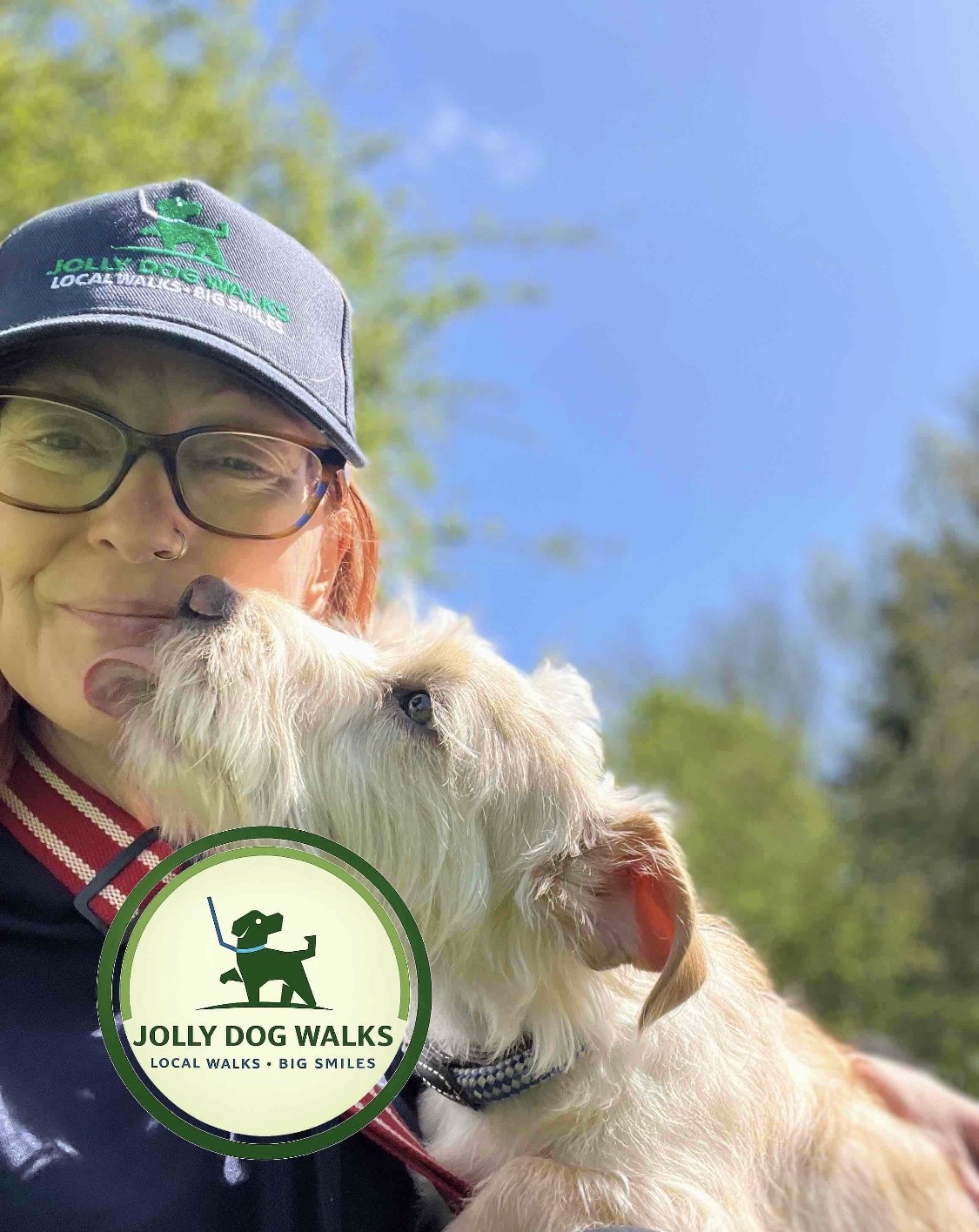
Hi, I’m Victoria, the proud owner of Jolly Dog Walks 🐾🐶
With a background in nursing and healthcare, alongside my professional training with the Institute of Modern Dog Trainers, I bring a unique combination of care, communication and understanding to my work with dogs and their owners. After leaving my nursing career, I found my true passion in working with animals, and I’ve never looked back!
❤️🐾
Disclaimer
Disclaimer: The views and experiences shared in this blog are based on my personal and professional experiences. They are intended for general information and enjoyment and should not replace individual advice from a qualified veterinary professional or appropriately qualified canine behaviourist/trainer where necessary.


