

What if your puppy doesn’t need a perfect schedule, just a few kind, predictable rhythms to help them feel at home? If you’re looking for puppy care for new owners Tatenhill, it’s understandable to have questions about toilet accidents, settling in, early experiences and fitting care around work.
Small, consistent steps can make puppy life more manageable for both of you. This guide covers how to shape a calm daily routine, respond patiently to accidents and support early learning without expecting too much too soon.
We’ll also look at when to ask your veterinary professional about health, vaccinations or behaviour, and how to assess local support if your commitments mean your puppy needs a planned visit. Jolly Dog Walks offers dedicated puppy visits, which you can discuss in light of your puppy’s individual needs. You’ll find practical ideas for home and useful questions to ask as you help your new companion settle in Tatenhill.
Key Takeaways
- Prioritise your puppy’s everyday needs, including safety, rest, regular toilet opportunities and veterinary care.
- Use a flexible rhythm of toilet breaks, meals, gentle activity and rest, adjusting it to your puppy rather than chasing a perfect timetable.
- Compare owner care, help from someone trusted and professional puppy visits by considering your puppy’s comfort, communication and household arrangements.
- Make a simple plan for busy days with written care instructions, important contacts and a gradual introduction to any new caregiver.
- Explore puppy care for new owners Tatenhill, including whether a planned visit from Jolly Dog Walks could fit your puppy’s familiar routine.
New puppy in Tatenhill? Start with the needs that matter every day
Bringing a puppy home is lovely, exciting and, at times, a little bewildering. There’s plenty to learn, from toilet opportunities and meals to helping your new companion feel safe. You don’t need to get everything right straight away. Focus on the basics, notice how your puppy responds and make changes gently.
Good puppy care for new owners Tatenhill starts with the everyday essentials: a safe home, plenty of rest, fresh water, food suited to your puppy, regular chances to toilet, kind interaction and appropriate veterinary care. Puppies aren’t all alike, so adapt your approach to their age, health and temperament. Ask a veterinary professional for advice when you’re unsure.
For another perspective on welcoming a puppy, you can watch this video:
What should a new puppy owner organise first?
Prepare a calm, secure space where your puppy can rest without being disturbed, and keep everyday hazards out of reach. Agree household expectations early, such as where the puppy sleeps and which areas are accessible. Consistent responses help your puppy learn what to expect, rather than facing different rules from one day to the next.
Before your puppy arrives, write down their current food, usual habits, health information and familiar words or cues. Ask the breeder or rescue organisation what has been working, then check with your veterinary professional which transition details and preventive care are relevant to your puppy.
How can you help a puppy settle into a new home?
Give your puppy time to explore at their own pace. Keep early introductions and household activity calm, and provide a quiet place to retreat when they need rest. A puppy-care routine is a predictable pattern of care, not a rigid timetable. Reassuring cues can help your puppy understand what happens next while leaving room for their individual needs.
Use gentle, reward-based interactions. Notice and reward behaviours you’d like to encourage, such as approaching you or settling calmly. Avoid punishment and intimidation, which can make a puppy worried, and choose patient guidance instead. For background on puppy development, see this overview. Speak to your vet about health, vaccinations and preventive-care questions; they can advise based on your puppy’s circumstances.
Build a puppy routine around rest, toilet breaks and gentle learning
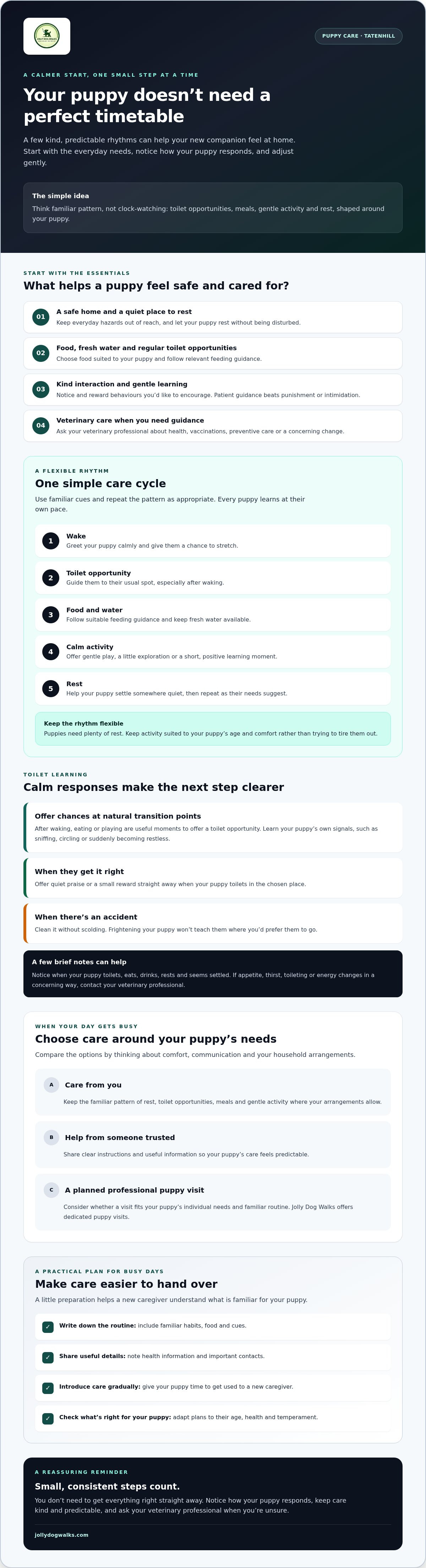
A flexible rhythm gives your puppy familiar points in the day without expecting them to follow a clock. Consistent cues can make a routine easier to understand, though every puppy learns at their own pace. For puppy care for new owners Tatenhill, watch how your puppy responds and adjust the pattern to suit them.
A simple cycle might look like this:
- Wake: Greet your puppy calmly and give them a chance to stretch.
- Toilet opportunity: Guide them to their usual spot, especially after waking.
- Food and water: Follow feeding guidance from your breeder, rescue organisation or veterinary professional, and keep fresh water available.
- Calm activity: Offer gentle play, a little exploration or a short, positive learning moment.
- Rest: Help your puppy settle somewhere quiet, then repeat the pattern as appropriate.
Young puppies need plenty of rest, and an exciting day can quickly become tiring. Keep activity suited to your puppy’s age and comfort instead of trying to tire them out. Note when they toilet, eat, drink, rest and seem settled. If you notice a concerning change in appetite, thirst, toileting or energy, contact your veterinary professional for advice.
How can you make toilet routines calmer?
Offer a toilet opportunity at natural transition points, such as after waking, eating or playing, and learn your puppy’s own signals. These might include sniffing the floor, circling or becoming suddenly restless. When they toilet in the chosen place, offer quiet praise or a small reward straight away. If there’s an accident, clean it without scolding. Frightening your puppy won’t teach them where you’d prefer them to go.
Brief notes can reveal useful patterns and help you explain changes clearly to your vet. Seek veterinary advice if toileting seems painful, unusually frequent or otherwise worrying.
How should early learning and social experiences be handled?
Keep new experiences short, positive and guided by your puppy’s comfort. They might watch people from a comfortable distance or listen to everyday sounds at a low level. Let them choose whether to approach, and don’t force greetings or close contact. The American Veterinary Society of Animal Behavior’s guidance on early socialization can help explain why thoughtful, positive experiences matter. Ask your vet how to balance suitable experiences with your puppy’s health and vaccination needs.
Compare puppy-care options by routine, safety and your puppy’s needs
Extra help can be useful, but there’s no single arrangement that suits every puppy or household. Consider who can maintain familiar routines, how your puppy responds to them and what’s practical for you. Support should complement your care, not replace veterinary advice. The RSPCA puppy care guide is another helpful source of general advice as your puppy grows.
| Option | Continuity and comfort | Access, communication and practicalities |
|---|---|---|
| Owner care | You know your puppy’s habits and can respond directly to their cues. | You manage care and household access yourself, which may be harder to balance with work or other commitments. |
| Help from someone trusted | Your puppy may already know the person, though you’ll still want to introduce or refresh their contact at your puppy’s pace. | Agree what they’ll do, how they’ll contact you and how they’ll enter and secure your home. |
| Professional puppy visits | A planned visit may help maintain familiar care at home, if your puppy is comfortable with the visitor and the arrangement suits their needs. | Discuss routines, household access, updates and practical expectations with the provider beforehand. |
When might a puppy visit be worth considering?
If a commitment means you can’t be home at a time that fits your puppy’s routine, a visit may be one option to explore. Consider how your puppy feels about new people entering the home, what care they need and whether a visit is appropriate for their age and circumstances. It won’t suit every puppy or household, and it isn’t a substitute for veterinary advice or your ongoing care.
For visit-specific information, look for Jolly Dog Walks’ “Puppy Home Visits in Tatenhill” guide. Before making plans, discuss your puppy’s individual needs and check what support is currently available.
What should you ask before choosing puppy-care support?
A useful first conversation should cover the details that help you decide whether an arrangement feels right. Ask how the caregiver will learn about your puppy and what happens if plans need to change.
- How will you share your puppy’s routine, health information, temperament and familiar cues?
- How will home access be arranged, and which emergency contacts should be provided?
- What updates will you receive, and how will the caregiver respond if your puppy seems unsettled?
- Does the proposed care match your puppy’s needs and your expectations?
Good puppy care for new owners Tatenhill means choosing support thoughtfully, not simply filling a gap in the diary. Clear communication helps you decide what feels safe and comfortable for your puppy.
Make a practical puppy-care plan for busy days in Tatenhill
A little preparation can make support feel more familiar for your puppy and clearer for the person caring for them. Keep the plan simple, and update it as your puppy grows or their needs change. For puppy care for new owners Tatenhill, the aim isn’t to hand over every decision, but to help anyone supporting you understand the routine you’ve chosen.
What information helps a caregiver understand your puppy?
Write down your puppy’s name, age, usual routine, temperament and relevant health or medication information. Add your veterinary practice’s details, an emergency contact and clear instructions for entering and securing your home, if needed. Be open about your puppy’s preferences, worries and care needs. Discuss these honestly with a potential caregiver rather than assuming every arrangement will suit every puppy.
Use this preparation plan before care begins:
- Record the routine: Note usual food arrangements, toilet opportunities, rest and familiar cues.
- Share care instructions: Explain what your puppy enjoys, what unsettles them and what you’d like the caregiver to do if they seem uncomfortable.
- Prepare contacts: Provide your vet’s details and a trusted emergency contact, and explain when you’d like to be contacted.
- Confirm home access: Agree how the caregiver will enter, which rooms are accessible and how doors or gates should be secured.
- Introduce gradually: Where practical, let your puppy meet the caregiver calmly before a visit. Keep the introduction at a pace your puppy appears comfortable with.
How can Tatenhill owners keep support local and clear?
Ask directly whether a provider serves Tatenhill and confirm current availability before making plans. Agree the purpose of a visit, what care is expected and how updates will be shared. A home-visit checklist can help you compare arrangements, but the provider should also ask about your puppy’s routine and individual needs. Review your notes whenever health, household access or daily habits change.
Jolly Dog Walks offers puppy visits, but suitability and current availability should be discussed directly. If you’re checking nearby service information, you can also read about Barton-under-Needwood pet-care information. Use that as a starting point for questions, then confirm whether the service and arrangements fit your Tatenhill household and puppy.
How Jolly Dog Walks can fit into your puppy-care routine
When work or other commitments make it difficult to be home at a point in your puppy’s day, a puppy visit from Jolly Dog Walks may be one option to discuss. You can talk through how a visit might fit the familiar routine you’ve established, while your puppy’s care remains guided by you and any advice from your veterinary professional.
Jolly Dog Walks provides puppy visits and pet care in the local area. Discuss your puppy’s needs and the practical arrangements directly to decide whether a visit is suitable.
What should owners discuss with Jolly Dog Walks?
Share your puppy’s routine, temperament, relevant health information and care instructions. Explain what helps them feel settled and how they usually respond to visitors. Ask how a visit might fit your priorities, and clarify practical details such as home access and how updates will be shared. An open conversation gives you both a chance to consider whether the proposed support suits your puppy.
How can you take the next step with confidence?
You don’t need a perfect timetable before asking questions. A few notes about your puppy’s day are a useful start. Discuss what information would help, how your puppy’s comfort will be considered and whether the arrangements fit your household. Then weigh the proposed support against your puppy’s individual needs.
If you’re exploring puppy care for new owners Tatenhill, contact Jolly Dog Walks to discuss your puppy’s needs and confirm whether visits are currently available in your area. You don’t need to have every detail worked out before starting that conversation.
Discuss puppy-care support with Jolly Dog Walks.
Take your puppy’s next steps one day at a time
A new puppy doesn’t need a flawless routine. Focus on steady care, plenty of rest, kind toilet training and gentle experiences, then adapt as you learn what helps your puppy feel comfortable. Keep notes for busy days and ask your veterinary professional about health questions or changes that concern you.
For puppy care for new owners Tatenhill, extra help can be useful when it fits your puppy’s needs and familiar routine. Jolly Dog Walks offers dedicated puppy visits, which you can discuss alongside your household arrangements and your puppy’s individual care. Veterinary advice should come from your veterinary professional.
If you’d like to explore whether puppy visits could suit your circumstances, discuss puppy-care support with Jolly Dog Walks and confirm current local availability. You don’t need to have every detail worked out before asking. With patience, thoughtful planning and support that feels right, you and your puppy can find your feet together.
Frequently Asked Questions
How do I care for a puppy as a new owner?
Start by finding out what your puppy is used to, then prepare a calm, safe home and organise their food, fresh water, rest and toilet opportunities. Keep interactions gentle and predictable, using rewards to encourage behaviours you’d like to see again. Every puppy is an individual. Ask your veterinary professional about health, feeding, vaccinations and preventive care rather than relying on general online advice for questions about your own puppy.
How do I establish a routine for a new puppy?
Observe when your puppy usually wakes, eats, needs the toilet and settles for rest, then build a flexible pattern around those clues. Use familiar cues and respond calmly if the day doesn’t go to plan. A routine can support predictability, but it can’t guarantee that accidents will stop. If you’re unsure whether a behaviour or change in your puppy’s health is typical, check with your veterinary professional.
Can a puppy be left alone while I am at work?
There isn’t one suitable answer for every puppy, as their needs depend on age, health, confidence and individual circumstances. Plan how your puppy will receive appropriate care and toilet opportunities, and don’t assume they can manage a long absence. Consider whether someone you trust could help maintain their familiar routine. Your veterinary professional can advise on your puppy’s needs, and any support should fit the care you provide.
When should I arrange a puppy visit in Tatenhill?
Consider a visit if your schedule makes it difficult to maintain your puppy’s familiar care routine, or if help at home would be useful. Jolly Dog Walks lists dedicated puppy visits among its services, but first discuss your puppy’s temperament, health information, routine and home arrangements. Confirm current availability directly. Jolly Dog Walks serves Tatenhill and surrounding areas, including Barton-under-Needwood, Drakelow, Staffordshire, Yoxall, Hamstall Ridware, Branston, Burton upon Trent, Rosliston, Walton upon Trent, Tutbury, Stretton and East Staffordshire.
What should I ask a puppy caregiver before arranging a visit?
Ask how the caregiver will learn about your puppy’s routine, temperament, relevant health information and care instructions. Discuss home access, emergency contacts, how you’ll receive updates and what the visit is intended to support. Share any concerns, and ask how the caregiver would approach an unfamiliar situation. Take time to check that the arrangement fits your puppy and household; one type of support won’t suit every dog.
Should I ask a vet about my new puppy’s routine?
Yes. Your veterinary professional is the right person to discuss your puppy’s health, feeding questions, vaccinations and preventive care. General puppy-care advice can help you organise everyday routines, but it can’t assess your individual dog or diagnose a concern. Keep a note of questions and changes you’ve noticed, such as differences in appetite or toileting, and share them with your veterinary practice for advice tailored to your puppy.
How can I help my puppy feel comfortable with new people and experiences?
Introduce new experiences gently and watch your puppy’s response. Give them space to observe, retreat or take a break, and reward calm engagement without forcing contact. Keep experiences appropriate to their health and confidence, and ask your vet about any health-related considerations. If you’re concerned about fear or behaviour, seek advice from a suitably qualified professional who uses kind, welfare-focused methods. Let your puppy set the pace for getting comfortable.
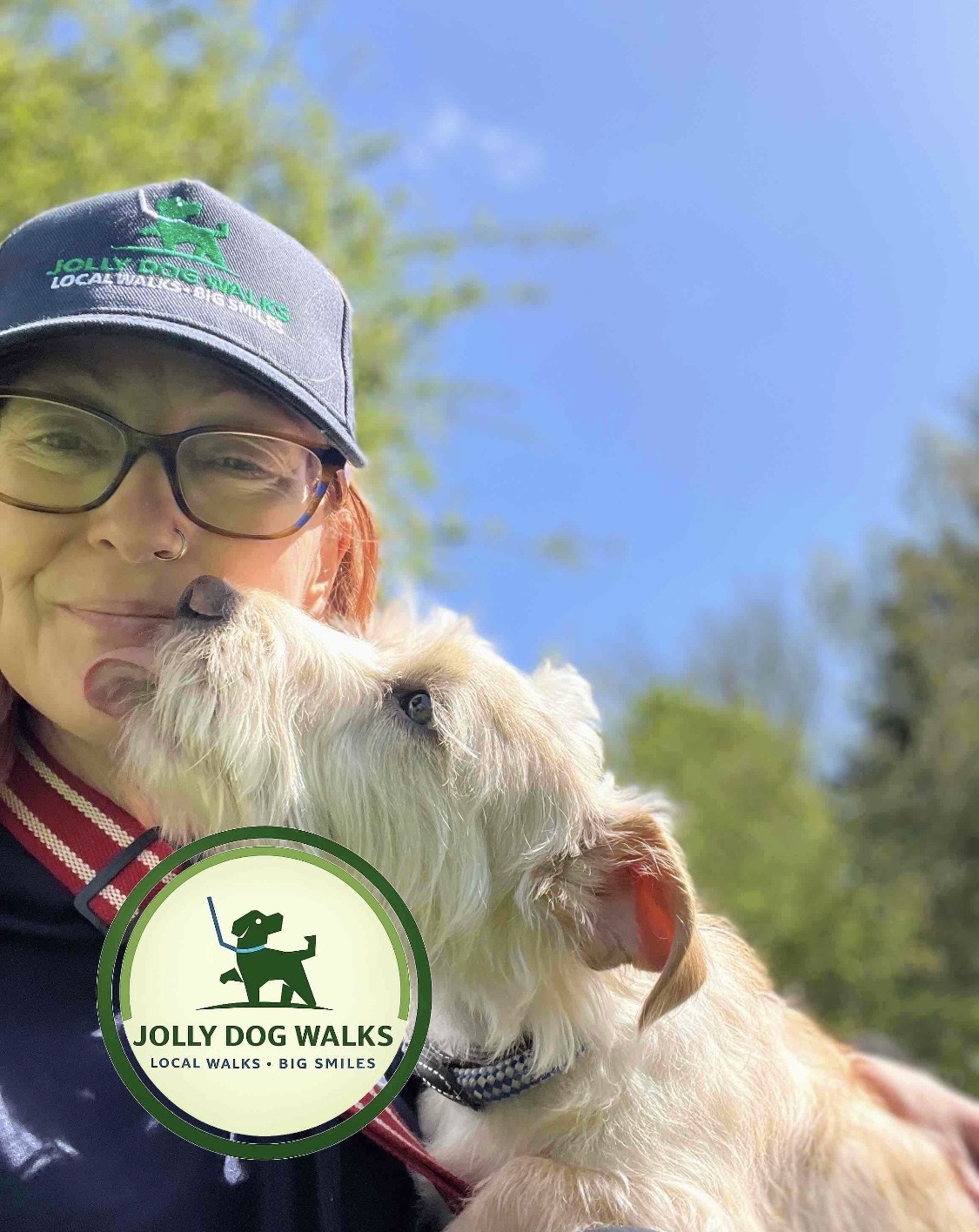
Article by
Victoria Cartwright
Hi, I’m Victoria, the proud owner of Jolly Dog Walks 🐾🐶
With a background in nursing and healthcare, alongside my professional training with the Institute of Modern Dog Trainers, I bring a unique combination of care, communication and understanding to my work with dogs and their owners. After leaving my nursing career, I found my true passion in working with animals, and I’ve never looked back!
❤️🐾
Disclaimer
Disclaimer: The views and experiences shared in this blog are based on my personal and professional experiences. They are intended for general information and enjoyment and should not replace individual advice from a qualified veterinary professional or appropriately qualified canine behaviourist/trainer where necessary.


