
The Burton Dog Walker Meet and Greet: Your Preparation Checklist
Hiring a dog walker in Burton is a big step, one built on trust and clear communication. Before the first lead is clipped on, the single most important step is the ‘Meet and Greet’. This isn’t just a quick hello; it’s a vital, in-depth consultation where we ensure your dog, you, and I are a perfect match. It’s a chance for your dog to meet me in the comfort of their own home, and for you to ask every question you have.
Unlike the brief, often impersonal interactions you might find on app-based services, the Jolly Dog Walks Meet and Greet is a thorough process. We’ll go through a detailed checklist covering everything from your dog’s health to their quirky behaviours. This initial investment of time is crucial for building a safe, happy, and lasting partnership. We’ll discuss everything needed to provide peace of mind, from gathering essential details like vaccination status and microchip numbers to establishing emergency vet contacts in the Burton area.
The best start for any dog is a calm, indoor introduction. This allows them to get used to my scent and presence in their safe space, making that first solo walk from your Burton home a much less daunting experience.
Information You Should Have Ready
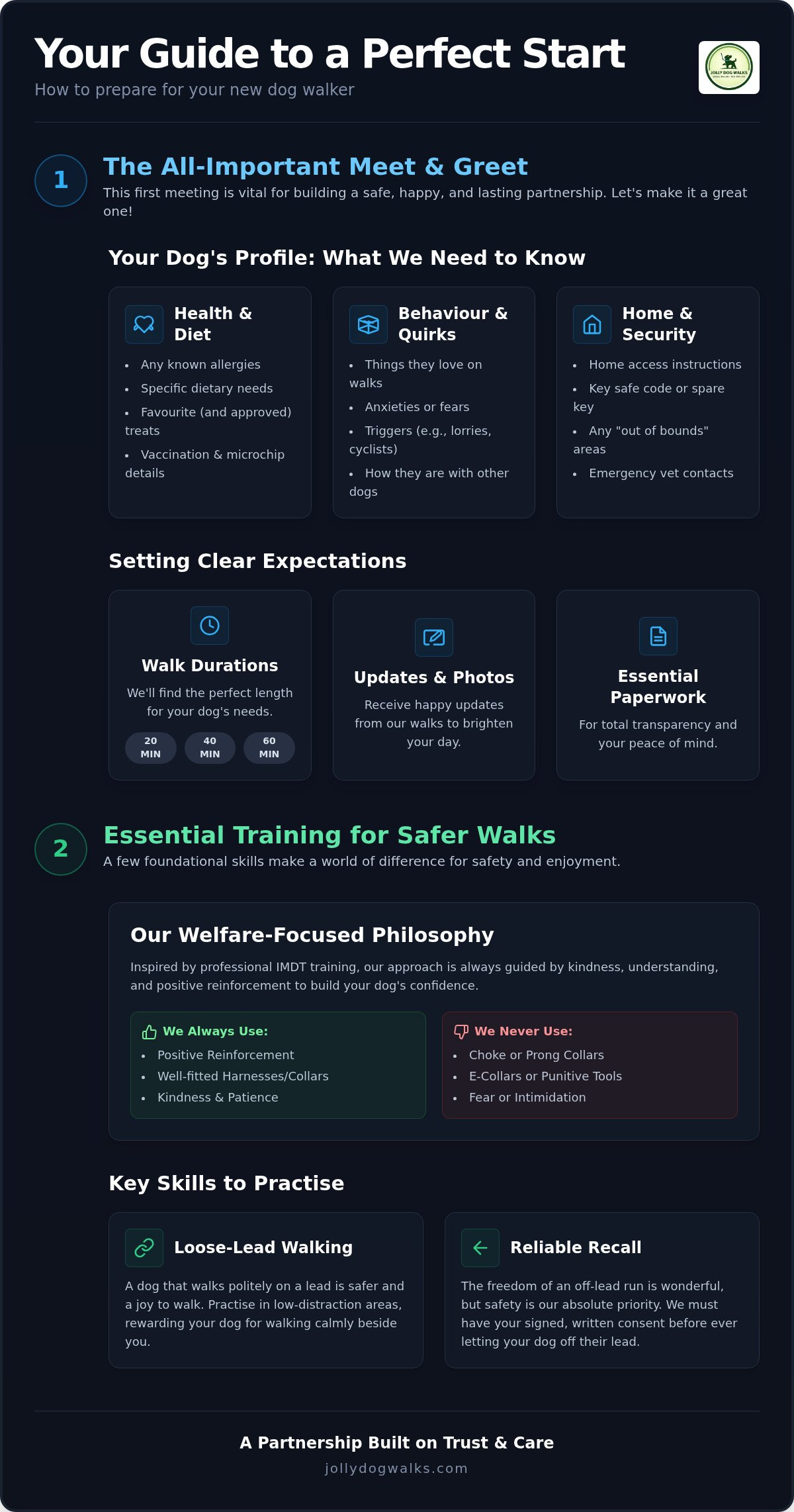
To make our Meet and Greet as productive as possible, it helps to have a few key details to hand. Think of it as creating a personalised care manual for your beloved companion. This information allows me to tailor every walk and visit to their specific needs.
- Health and Diet: Be ready to share details about your dog’s dietary needs, any known allergies, and their absolute favourite (and approved) treats. Knowing what motivates them can be a great way to build a positive bond from day one.
- Behavioural Traits: You know your dog better than anyone. What makes them burst with joy on a walk? What makes them anxious or nervous? Documenting their triggers—whether it’s loud lorries on the roads in Stretton, cyclists, or a fear of people in hats—is essential for planning safe and enjoyable routes.
- Home Access and Security: We’ll need to agree on home access instructions. Whether you use a key safe with a code or have a spare key, rest assured that as a fully DBS-checked professional, your home’s security is a top priority. It’s also helpful to identify any restricted or "out of bounds" areas in your house.
Setting Expectations and Communication
A great relationship with your dog walker is all about clear expectations. During our meeting, we’ll cover the practical side of the service to ensure we are perfectly aligned.
- Walk Durations: We can discuss the ideal walk length for your dog. Whether it’s a brisk 20-minute leg-stretch, a standard 40-minute outing, or an exploratory 60-minute adventure, we’ll find the right fit for their age, breed, and energy levels.
- Updates and Photos: How would you like to hear about our walks? Many owners in Burton love receiving a photo and a short update to see their happy dog enjoying their time out. We can agree on the best way to keep you connected whilst you’re at work.
- The Paperwork: We will review the service agreement and any necessary consent forms, such as the Veterinary Release Form or off-lead waiver. This isn’t just red tape; it’s about ensuring total transparency and peace of mind for everyone involved.
Essential Training: Polishing Cues for Safe Staffordshire Walks
While your dog doesn’t need to be a Crufts champion, a few foundational skills make a world of difference to the safety and enjoyment of their walks. As a professional walker, I truly appreciate owners who have worked on basic cues. It shows a commitment to their dog’s welfare and makes our time together much more relaxed and secure.
At Jolly Dog Walks, every interaction is guided by welfare-focused, positive reinforcement methods. This means we never use punitive tools like choke chains, prong collars, or e-collars. Instead, we build confidence and cooperation through kindness and understanding. My approach is heavily informed by my IMDT (Institute of Modern Dog Trainers) training, including completing The Recall Masterclass on 16/07/2026, which focuses on creating a dog who happily chooses to come back to you.
Even a few minutes of practice each day can make a huge difference. Here are five simple steps you can take to improve your dog’s focus before their first walk with a new person:
- Start in a low-distraction environment, like your garden.
- Use high-value treats to reward them for checking in with you.
- Keep sessions short and fun—just five minutes is plenty.
- Practise their name recognition. When they look at you, reward them!
- Gradually introduce more distractions as they become more reliable.
Mastering the Loose Lead
A dog that pulls on the lead can turn a relaxing stroll into a stressful tug-of-war. More importantly, it can pose a safety risk, especially near busy Burton roads. A dog with good loose-lead skills is a joy to walk and much safer for both themselves and their walker.
- Start at Home: Begin practising loose-lead walking in a place with minimal distractions, like your garden in Stretton or a quiet back lane. Reward your dog for every moment they walk beside you without tension on the lead.
- Professional Insight: My understanding of lead manners was solidified during my attendance at the IMDT’s The Loose Lead Masterclass webinar on 20/06/2026. This training emphasises kind, effective techniques to teach a dog to walk politely without yanking.
- The Right Gear: A well-fitted harness or a comfortable flat collar is essential. You must provide safe and appropriate equipment for your dog. We will check the fit during the Meet and Greet to ensure it’s secure and won’t cause discomfort.
Reliable Recall and Off-Lead Consent
The freedom of an off-lead run is wonderful for many dogs, but it comes with huge responsibility. At Jolly Dog Walks, your dog's safety is non-negotiable, which is why we have a strict policy for any off-lead exercise.
- Written Consent is Mandatory: Under no circumstances will your dog be let off the lead without your prior, signed, written consent. This is a critical part of our service agreement and insurance requirements.
- Test in Secure Environments: Before you consider signing the consent form, it's vital to be confident in your dog's recall. Test their skills in a secure, enclosed field away from the temptations of public parks. A reliable recall means they return to you immediately, even with distractions.
- On-Lead for Safety: If your dog’s recall isn’t 100% reliable, or if they are easily distracted, the safest and kindest option is to keep them on a lead. We can still have fantastic, enriching adventures on a long line, exploring places like the quiet paths around Branston Water Park, ensuring they get plenty of exercise and mental stimulation. For more on this, read about the peace of mind an insured, professional dog walker provides.
Logistics and Gear: Setting Up Your Burton Home for Success
A little bit of organisation at home can make the handover process incredibly smooth and stress-free for your dog and your walker. By having everything ready, we can get out and on with the fun part—the walk—without any last-minute searching or confusion.
A simple "walking station" near your door can work wonders. This designated spot can hold everything needed for a walk, making for a quick and efficient handover. Before our first scheduled walk, take a moment to double-check that all leads, harnesses, and collars are in good repair, fit your dog correctly, and are free from any damage. As per our terms, you are responsible for providing safe equipment, though I may use my own with your consent if what's provided is unsuitable.
And let's not forget the classic British weather! If rain is forecast for your walk in Barton or Tutbury, leaving a towel out is always greatly appreciated. We’ll do our best to dry off muddy paws before letting your dog back into the house.
Home Access and Security
Entrusting someone with access to your home is a significant decision, and one I take very seriously. As a professional, DBS-checked dog walker, I am committed to maintaining the security and privacy of your home.
- Secure Key Handling: We will agree on the best method for home access during the Meet and Greet. All keys are stored securely and are never labelled with your address, only with your dog's name.
- Respecting Your Space: Please let me know if there are any areas of your home that are "out of bounds." I will always respect your instructions and ensure my presence is as unobtrusive as possible.
- Our Commitment: My focus is solely on the care of your dog. I am committed to locking up securely and ensuring your home is exactly as you left it, giving you complete peace of mind while you are away.
Post-Walk Comfort
Coming home after a good walk is a time for your dog to relax and settle. A few simple preparations can make their post-walk experience even better.
- Fresh Water: Always ensure a bowl of fresh water is left out. After a walk, especially on warmer days, your dog will need to rehydrate.
- Post-Walk Treats: If you'd like me to give your dog a specific treat or a dental chew after their walk, please leave it out with clear instructions.
- Puppy Visit Prep: For puppy visits in Burton, having a clean-up kit readily available is a huge help for any little accidents. You can learn more in our guide to professional puppy care visits.
Solo Walks and Small Groups: Finding the Right Fit for Your Dog
Every dog is an individual, and their exercise needs should reflect that. While some dogs thrive on social interaction, others find the world a little overwhelming. That’s why offering a flexible approach is so important for their welfare.
For reactive, shy, or anxious dogs in Staffordshire, solo walks are often the kindest and most effective choice. A one-on-one walk removes the pressure of interacting with unfamiliar dogs, allowing your pet to relax and enjoy their surroundings without stress. We can build a strong, trusting bond through low-pressure initial visits and progress at a pace that feels comfortable for them. For dogs that need space, a secure field visit offers a fantastic opportunity to run freely without the worry of encountering off-lead dogs.
During our Meet and Greet, it's crucial to be open about your dog's specific triggers. The more I know about what worries them—be it joggers, other dogs, or loud noises in Tatenhill—the better I can manage their environment to ensure a positive experience.
The Benefits of Individual Attention and Curated Groups
The "one-size-fits-all" model of dog walking simply doesn't work. Large, chaotic pack walks can be a recipe for disaster, increasing the risk of bullying, intimidation, or fights. This is why Jolly Dog Walks is different.
- The Solo Walk Advantage: Individual attention is perfect for nervous rescues, senior dogs, or those recovering from injury. It allows us to focus entirely on their needs, building their confidence and ensuring their welfare is the top priority. To understand more, explore the benefits of 1-on-1 dog walking.
- Small, Curated Group Walks: For well-socialised and friendly dogs, I also offer small, carefully managed group walks. These groups consist of a maximum of three dogs from different households, all matched for temperament and energy levels. This ensures a calm, controlled, and positive social experience, a world away from the unpredictability of large packs.
- Safe Exercise in Burton: By identifying quiet routes around Branston or Yoxall for sensitive dogs, or utilising secure fields for our small group adventures, we can provide enriching exercise that is tailored to each dog's personality and needs.
Health, Medication, and the Nursing Advantage
Your dog's health is my number one priority. With 27 years of experience as a nurse, I bring a unique level of clinical observation and diligence to every single visit. This background has trained me to spot subtle changes in behaviour or physical condition that might indicate a dog isn’t feeling their best—an invaluable skill that provides an extra layer of reassurance for health-conscious owners.
This clinical approach is especially important when it comes to administering medication. I follow a strict, professional protocol to ensure your dog receives their prescribed medication safely and accurately while you are at work. A key part of this is the non-negotiable requirement for the original veterinary container. The label must be clear and legible, as this is vital for correct administration.
For senior dogs or those with chronic conditions, preparing a simple health "cheat sheet" can be incredibly helpful. This can list their conditions, medication schedule, and any signs to watch out for, ensuring continuity of care.
Medication Administration Protocol
If your dog requires medication during a visit, you can be confident that it will be handled with the utmost care and professionalism, following a precise protocol.
- Signed Consent is Required: Before any medication can be given, I require a signed consent form from you. This authorises me to administer the specific medication as per your vet’s instructions.
- Meticulous Record-Keeping: Every single dose is recorded. This log includes the medication name, the date, the time it was administered, and a signature, ensuring a clear and accurate record of their care.
- Label and Expiry Checks: I will never administer medication if it is expired or if the veterinary label is missing or illegible. If there are any issues, I will contact you immediately to let you know it could not be given.
Emergency Veterinary Authorisation
While we hope it’s never needed, being prepared for an emergency is a crucial part of professional pet care. We will review the Veterinary Release Form together during our initial meeting.
- Authorisation for Care: This form gives me your authority to seek emergency veterinary care on your behalf if I am unable to reach you after making every reasonable effort.
- Your Nominated Vet: It’s important to have a nominated vet in the Burton area. We will aim to use your own vet whenever possible, but the form also allows for treatment at an alternative licensed practice if necessary.
- Communication is Key: My commitment is to contact you immediately in any emergency situation. Seeking veterinary care is a step taken only when it is essential for your dog’s welfare and I cannot get in touch with you first.
Frequently Asked Questions (FAQs)
Here are some answers to common questions I receive from dog owners in the Burton upon Trent area.
- Do I need to be home when the dog walker arrives in Burton?
- No, you don’t need to be home. Most clients are at work or out for the day. We will arrange for secure key access during our initial Meet and Greet, so I can collect and drop off your dog safely while you're away.
- What happens if my dog is reactive towards other dogs on the walk?
- This is exactly why the Meet and Greet is so important. If your dog is reactive, we will discuss their triggers in detail. I specialise in solo walks, which are ideal for reactive dogs as we can manage their environment carefully, choosing quiet routes in areas like Tatenhill or Barton to avoid stressful encounters.
- Can you administer my dog’s medication whilst I am at work?
- Yes, absolutely. With my 27-year nursing background, I am experienced and comfortable administering prescribed medications. I follow a strict protocol which requires your signed consent and the medication to be in its original, clearly labelled veterinary container.
- Is off-lead walking guaranteed for my dog?
- Off-lead walking is never guaranteed as it depends entirely on the dog's recall and temperament, as well as the safety of the environment. It is only ever done with your prior written and signed consent, and only once I am confident that it is safe to do so.
- Do you offer group walks for dogs from different households?
- Yes, alongside my specialist solo walks, I also offer small, carefully managed group walks for up to three dogs from different households. These walks are designed for well-socialised dogs and are perfect for building positive friendships in a calm and controlled setting, often at a secure field. For any dog that is nervous, reactive, or simply prefers their own company, a solo walk remains the best and recommended option.
- What is your policy for walking dogs in extreme weather in Staffordshire?
- Your dog’s safety and welfare always come first. In cases of extreme weather—such as a heatwave, heavy snow, or icy conditions—walks may be shortened, rescheduled, or replaced with a home visit for a garden break and some indoor enrichment. I will always communicate with you if the plan needs to change.
- What training methods do you use if my dog pulls on the lead?
- I only use kind, positive, and welfare-focused methods, informed by my IMDT training. If your dog pulls, I focus on rewarding them for walking on a loose lead rather than using force or punitive equipment. We can discuss simple exercises you can practise at home to support this.
- How much notice do I need to give to cancel a walk?
- For permanent, recurring slots, I require one month’s notice for cancellation. For non-permanent or ad-hoc bookings, at least seven days’ notice is required. Cancellations made with less notice than this are chargeable in full.
Article by
Victoria Cartwright
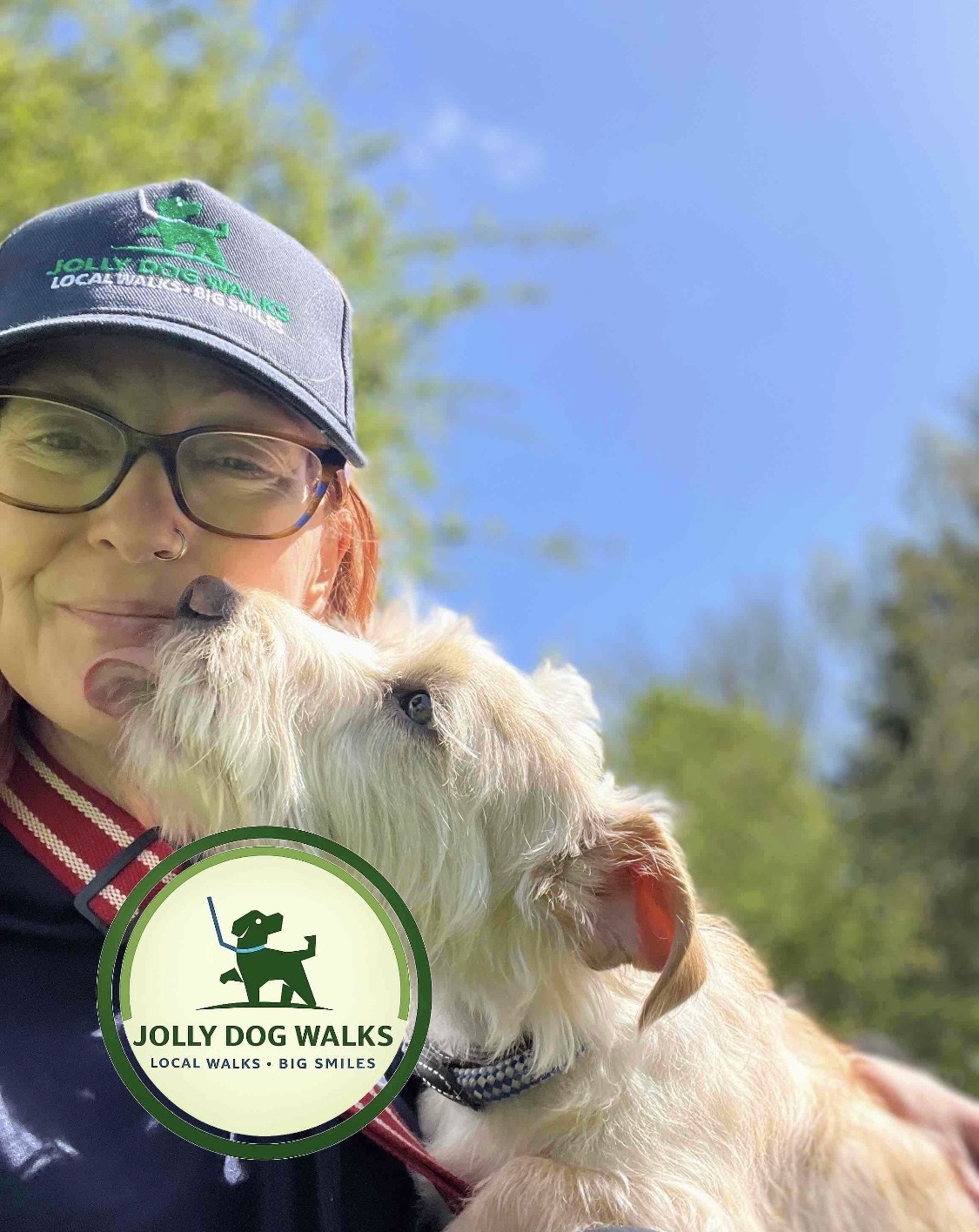
Hi, I’m Victoria, the proud owner of Jolly Dog Walks 🐾🐶
With a background in nursing and healthcare, alongside my professional training with the Institute of Modern Dog Trainers, I bring a unique combination of care, communication and understanding to my work with dogs and their owners. After leaving my nursing career, I found my true passion in working with animals, and I’ve never looked back!
❤️🐾
Disclaimer
Disclaimer: The views and experiences shared in this blog are based on my personal and professional experiences. They are intended for general information and enjoyment and should not replace individual advice from a qualified veterinary professional or appropriately qualified canine behaviourist/trainer where necessary.


