

Your older cat knows the comforting rhythm of home: favourite resting spots, familiar sounds and meals served just so. A change in routine can feel unsettling, and it’s natural to wonder whether a visitor will notice small changes in appetite, thirst or behaviour. If you’re arranging elderly cat care visits Burton upon Trent, keeping things calm and familiar is a thoughtful place to start.
Jolly Dog Walks provides local pet drop-in visits for owners who need support at home. The service is fully insured and DBS-checked. Victoria, who runs the business, brings 27 years of experience as a former nurse and a careful, observant approach to pet care.
This guide explains what older cats may need from a home visit, how to leave clear instructions, and what changes you might want a visitor to note. You’ll also find practical ways to make everyday essentials easier to reach and learn how to arrange local support, so your cat can stay close to the routines and surroundings they know.
Key Takeaways
- Shape visits around your cat’s familiar routine and individual preferences, rather than assuming every older cat needs the same care.
- Share clear notes about usual eating, drinking, litter habits and behaviour so a visitor can notice changes without trying to diagnose them.
- Compare home visits, help from someone your cat knows and a cattery by considering how your cat copes with change and what suits your circumstances.
- Prepare for elderly cat care visits Burton upon Trent with practical care notes, home access details and useful contact information.
- Thoughtful local pet drop-in visits can help keep your cat’s care centred on the familiar comforts of home.
Elderly cat care visits in Burton upon Trent: what changes with age?
Leaving an older cat at home can bring a few extra worries. Will they settle in their usual spot? Will someone notice if their routine seems different? Calm, well-planned elderly cat care visits Burton upon Trent can be shaped around the cat you know, rather than a one-size-fits-all idea of what an older pet needs.
An elderly-cat care visit is a planned visit at home that follows the individual cat’s established routine and the owner’s guidance. An age-aware visit is a familiar, considerate check-in shaped around a cat’s usual habits, comfort and needs. Age alone doesn’t tell you what support a cat needs. One older cat may still enjoy a lively greeting, whilst another prefers a quiet hello and an undisturbed nap. Their everyday preferences are the most useful starting point.
For owners in Burton upon Trent and nearby East Staffordshire communities, a little preparation can help a visitor understand what “normal” looks like for your cat. The changes with age in elderly cats can include physical and behavioural differences, but general information can’t tell you what’s right for an individual animal. Your observations and veterinary guidance should take priority.
Which changes in an older cat’s routine are worth noting?
Think of your notes as a simple picture of your cat’s usual day, not a test to pass. Record what’s typical for them, including:
- How much and when they usually eat and drink.
- Their normal toileting habits and litter tray routine.
- Where and when they tend to sleep or rest.
- How they usually seek company, respond to people or make themselves heard.
Patterns matter more than a single quiet afternoon. If you notice a gradual change from your cat’s usual habits, write down what you’ve seen and when, then share it with their veterinary practice. A visitor can help report observations, but shouldn’t be expected to diagnose the cause. If you’re concerned about a change, seek advice from your vet.
Why can familiar surroundings matter to an older cat?
Home holds the smells, resting spots and daily rhythms a cat already knows. Keeping those familiar can avoid unnecessary disruption, although every cat responds differently. Point out favourite resting places and the safest routes between important areas, especially if your cat finds particular steps, slippery floors or obstacles uncomfortable to navigate.
General comfort adjustments, such as keeping essential resources easy to reach, may make the home routine simpler. They aren’t a substitute for individual veterinary advice. If your cat has mobility difficulties or a health concern, ask their veterinary practice what changes are appropriate, then include those instructions in the visit notes. Familiarity is helpful, but your cat’s own comfort should guide the plan.
What should an elderly cat care visit pay attention to?
A useful visit starts with your cat’s normal day, not a checklist that assumes every older cat has the same needs. One may enjoy a friendly chat; another may prefer the visitor to follow their usual routine and let them snooze in peace. For elderly cat care visits Burton upon Trent, your knowledge of your own cat is the best guide to what deserves attention.
Think of the visitor as following your instructions and noticing what they see, not making medical judgements. A written routine helps keep care consistent from visit to visit, even when someone else is following your cat’s usual pattern.
Build a simple routine and care handover
Keep notes practical and easy to scan. Explain your cat’s usual schedule, favourite comforts and any small details that make a visit feel familiar. Feeding instructions should be specific to your cat and supplied by you, rather than left open to guesswork. Include relevant care information and contact details, too.
- Usual meal times, food and portion instructions.
- Where food, water and other everyday items are kept.
- Preferences around company, gentle interaction or being left to rest.
- Any relevant care needs, along with your contact details and an emergency contact.
Keep the handover somewhere straightforward to find, and make sure it reflects your cat’s current routine. If something has changed, update the notes before the visit so the person caring for them isn’t relying on old instructions.
Notice and communicate changes without diagnosing
During a visit, observations are most useful when compared with what’s normal for that cat. If your cat usually comes to greet people but stays tucked away, or seems less comfortable moving around, note what happened in plain language. The same goes for a change in appetite or behaviour. Avoid guessing at a cause: a clear description is more helpful than a label.
Agree how observations will be shared with you, including anything that seems different from the routine you described. Useful details might include what was noticed, when it happened and whether it differed from your cat’s usual habits. This gives you a clearer picture to consider, rather than a vague message that your cat seemed “a bit off”.
For broader background, Cornell Feline Health Center’s practical guide to elderly cat care covers topics such as veterinary care and changes at home. If you’re concerned about your cat’s health, or notice a sudden change, contact their veterinary practice. A visitor can pass on observations, but diagnosis and advice about treatment belong with your vet.
Clear notes and thoughtful observation can make arranging local support feel more manageable. Explore local pet-care support and plan a pet drop-in visit that follows your cat’s routine.
Home visits or another option: what may suit an older cat?
There isn’t one right arrangement for every older cat. Some are most settled in familiar surroundings, whilst others enjoy company or may need closer support than occasional visits can provide. Think about your cat’s response to visitors, how they cope when you’re away, their established routine and what care you can arrange. These are useful starting points when weighing elderly cat care visits Burton upon Trent against other options.
A home visit keeps your cat in their own space, with familiar resting places and everyday surroundings. A trusted person may offer continuity if your cat already knows them and they can follow your instructions. A cattery provides care in a different setting, which some cats may adapt to, whilst others may find a change of environment difficult. None of these choices guarantees a stress-free experience; your cat’s individual response matters.
| Option | Setting | Routine | What to plan |
|---|---|---|---|
| Home visits | Your cat stays at home | Can be organised around familiar home routines | Visit arrangements, clear care notes and how your cat manages between visits |
| Trusted person | At home or another familiar arrangement | May feel familiar if your cat already knows them | Their availability, handover details and your cat’s comfort with their care |
| Cattery | A separate care setting | Your cat’s home routine and surroundings will change | How your cat copes with change and any health or care needs to discuss |
When might visits at home fit an older cat’s routine?
Home visits may suit a cat who settles well alone for periods and seems comfortable with visitors. They can allow familiar nap spots, feeding areas and household rhythms to remain in place. But consider the whole picture: does your cat hide when someone new arrives, or become unsettled if left without company? The best fit depends on their behaviour and your wider care plan, not age alone.
For elderly cat care visits in Burton upon Trent, consider whether the planned visits can meet your cat’s needs throughout the time you’re away. Be realistic about how often they need attention and whether they’re content between visits. If you’re unsure, discuss your cat’s individual needs with their veterinary practice.
When should owners consider a different care arrangement?
If your cat needs more continuous attention, or has health-related care requirements that may be difficult to manage through planned visits, think carefully about whether home visits alone are suitable. A familiar person might be able to provide a different level of company, depending on the arrangement. A cattery may also be worth considering as a setting, but a change in surroundings may not suit every cat.
Talk through health-related care needs with your cat’s veterinary practice before deciding. They can offer guidance based on your cat’s circumstances. The aim is not to choose the option that sounds easiest on paper, but to match the setting and routine to your cat’s comfort and the support you can arrange.
How to prepare for elderly cat care visits in Burton upon Trent
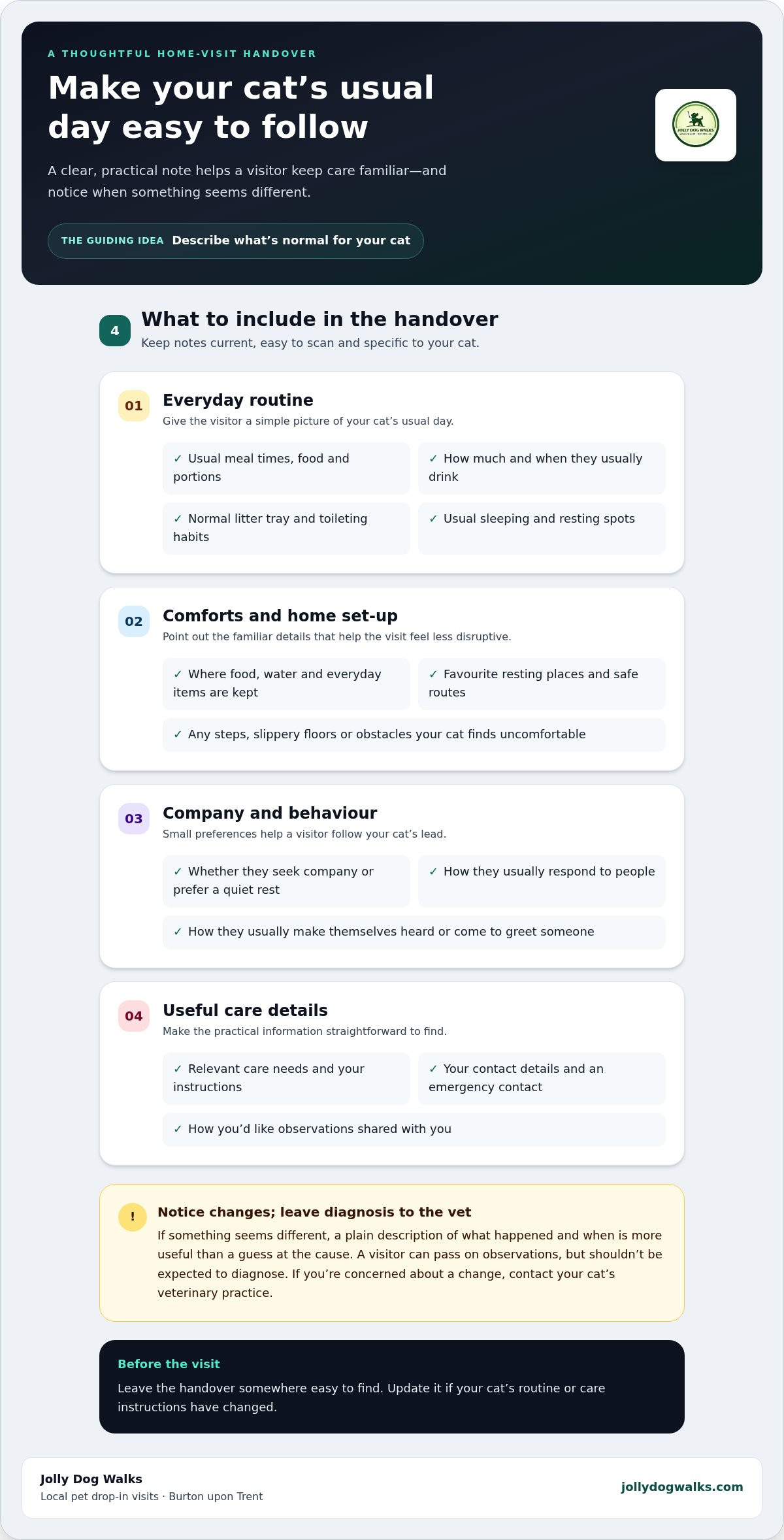
A clear handover makes it easier for someone to follow your cat’s familiar routine and helps you feel organised before you leave. For elderly cat care visits Burton upon Trent, focus on the details only you know: what your cat usually does, what they enjoy and what would be out of character for them.
A short conversation before the visits can fill in the gaps that written notes might miss. You can describe your cat’s normal behaviour, explain any recent changes and talk through what you’d like the visitor to do if something concerns them. Keep the plan specific to your cat, rather than relying on general assumptions about older cats.
What information belongs in a cat-care handover?
Use a simple, up-to-date note that’s easy to follow. Include your care instructions and the information someone would need to enter your home, find the right supplies and reach you. A guide to planning a pet drop-in visit can also help you think through the practical arrangements for a home visit.
- Your cat’s usual routine, including the feeding instructions you provide.
- Familiar preferences, such as where they like to rest and whether they tend to seek company or quiet.
- Where relevant supplies are kept, and any care details the visitor needs to know.
- How to access the home, where to leave keys if agreed, and the best way to contact you.
- Your veterinary practice’s contact details and the steps you’d like followed if a concern arises.
Make emergency contacts easy to find, and include an alternative contact if you may be difficult to reach. Be clear about when you want to be contacted and how. This doesn’t replace veterinary advice; it gives the visitor a straightforward way to follow your wishes and pass on information.
How can you make the home visit easier to organise?
Before the first visit, set out the supplies you’ve mentioned and show where your cat usually rests or retreats. A cat who likes to tuck themselves away may not greet a visitor at the door, and that can be perfectly normal for them. Explaining their usual hiding place or favourite bed helps the visitor understand what to expect.
Use this short sequence to get ready:
- Write down the usual routine and your cat’s particular preferences.
- Add current care instructions, home access details and contact information.
- Set out the relevant supplies and point out familiar resting places.
- Have a brief handover conversation, including any recent changes to routine or wellbeing.
Keep the instructions current. If your cat’s routine changes before the visit, update the notes and mention it in your conversation. Jolly Dog Walks provides pet drop-in visits for local owners, including in Burton upon Trent. A clear handover is a helpful starting point for organising support. Explore pet drop-in visit support.
Arrange elderly cat care visits with Jolly Dog Walks in Burton upon Trent
Familiar routines and clear instructions give a visit a practical starting point. Jolly Dog Walks provides pet drop-in visits in Burton upon Trent and nearby areas, helping local owners arrange support at home. The care plan should reflect your cat’s individual preferences and the information you provide, rather than assumptions about what every older cat needs.
Jolly Dog Walks serves pet owners in Barton-under-Needwood, Branston, Burton upon Trent, Tatenhill, Yoxall, Rosliston, Tutbury, Drakelow, Stretton, Hamstall Ridware and Walton-on-Trent, across East Staffordshire. Before visits begin, describe the support you’re looking for and how your cat usually responds to visitors. A conversation can clarify expectations, including how you’d like updates shared and what you consider normal for your cat. This helps keep communication straightforward and makes it easier to plan around the routine your cat knows.
What reassurance should owners look for in local pet care?
Look for clear communication and a willingness to listen carefully to your instructions. A considerate approach gives your cat space to respond in their own way, whether they come over to say hello or prefer to keep their distance. It should also be clear how observations or concerns will be passed on to you, without the visitor trying to diagnose a health issue.
If your cat has health needs or requires specific care beyond ordinary visit arrangements, speak with their veterinary practice about what’s appropriate. A pet drop-in visit shouldn’t be presented as veterinary or specialist elderly-cat care.
Taking the next step for your cat
To begin planning, explain the kind of support you need and share relevant care information before visits are arranged. A clear outline of your cat’s usual routine, preferences and response to visitors can help make the conversation more useful. If anything changes, update the information so the plan continues to reflect your cat’s circumstances.
Jolly Dog Walks supports pet owners in Burton upon Trent, and the Barton-under-Needwood service-area page offers further local coverage information. A straightforward conversation about your cat and the support you need is a sensible first step.
For local pet-care support, talk to Jolly Dog Walks about pet-care visits. Start with the details you know and take the next step at a pace that feels right for you and your cat.
Make the next step feel manageable
Making a care plan can start with one simple question: what would help you feel comfortable leaving your cat at home? You don’t need to have every detail settled straight away. A little time to think about your plans and your cat’s needs can make the conversation easier.
If you’re considering elderly cat care visits Burton upon Trent, Jolly Dog Walks provides local pet drop-in visits for owners who need support at home. You can discuss whether a home visit fits your plans and what information will help shape an arrangement around your cat’s routine.
Every cat has their own way of doing things, and a thoughtful plan starts by recognising that. Take the next step when you’re ready and share what matters most to you and your cat.
Talk to Jolly Dog Walks about local pet-care visits. A friendly conversation is a good place to begin.
Frequently Asked Questions
Can elderly cats stay at home while their owner is away?
Some older cats may be comfortable staying at home if their needs can be met and suitable care is arranged. Consider how long you’ll be away, whether your cat copes well without company and whether their daily needs are manageable between visits. A cat who needs close observation or frequent attention may need a different plan. If you’re uncertain, discuss your cat’s individual circumstances with their veterinary practice before travelling.
How often should someone visit an elderly cat?
There isn’t a single visit schedule that suits every older cat. Base the plan on your cat’s routine, health, comfort with time alone and how long you’ll be away. For example, a cat who needs help keeping to a particular care routine may need a different arrangement from one who is settled between check-ins. If health needs affect the schedule, ask your veterinary practice for guidance rather than guessing.
What should I tell a cat sitter about my older cat?
Tell them what helps your cat feel at ease, including how they like to be approached and what they tend to do when they’re wary. Mention any noises or household changes that might startle them, and explain what a normal greeting looks like, even if that means no greeting at all. Also make sure the sitter knows how to reach you and who to contact if you’re unavailable.
Is a cattery or a home visit better for an elderly cat?
Neither option is automatically best; the right choice depends on your cat and your circumstances. A home visit avoids relocating your cat, while a cattery means a different setting and routine. Think about how your cat has responded to travel, unfamiliar places and visitors in the past. If they become unsettled by one arrangement, weigh that against the practical care and companionship the other option can provide.
What happens if an elderly cat behaves differently during a visit?
A visitor should describe what they observed and let you know, rather than trying to explain the cause. For instance, they might report that your cat didn’t come out as usual or seemed reluctant to move. You can then compare this with what you know about your cat and decide what to do. If the change is sudden or worries you, contact your cat’s veterinary practice for advice.
Should I speak to a vet before arranging visits for my elderly cat?
Speak to your veterinary practice if your cat has a health condition, their needs have changed, or you’re unsure what care is appropriate while you’re away. This is especially helpful before arranging elderly cat care visits Burton upon Trent if a health concern affects how long your cat can be left or what support they need. Share relevant veterinary guidance with the person caring for your cat, so the plan reflects professional advice.
Can a cat sitter give medication to an elderly cat?
Only arrange this if the individual sitter has clearly agreed to administer your cat’s medication and can follow the veterinary instructions. Provide the exact schedule, dose and method in writing, and explain where the medicine is kept. Don’t assume that a sitter can give medication just because they’re visiting. If nobody involved is confident about the instructions or your cat’s needs, ask your veterinary practice how best to organise care.
Article by
Victoria Cartwright
Hi, I’m Victoria, the proud owner of Jolly Dog Walks 🐾🐶
With a background in nursing and healthcare, alongside my professional training with the Institute of Modern Dog Trainers, I bring a unique combination of care, communication and understanding to my work with dogs and their owners. After leaving my nursing career, I found my true passion in working with animals, and I’ve never looked back!
❤️🐾
Disclaimer
Disclaimer: The views and experiences shared in this blog are based on my personal and professional experiences. They are intended for general information and enjoyment and should not replace individual advice from a qualified veterinary professional or appropriately qualified canine behaviourist/trainer where necessary.


