

Could the kindest care for your cat be the kind that changes their day the least? If you’re planning time away, it’s natural to wonder how your cat will manage without you and what a home visitor should know before stepping through the door. Choosing cat companion visits Tutbury means thinking about your cat’s usual routine, the practical details of your home and the updates that will help you feel informed.
Jolly Dog Walks provides pet drop-in visits, with digital reports through the Walkies app that include photos and a visit summary. A little planning before you go can help make the arrangements clearer for you and more consistent for your cat. It also gives you a chance to share the details that matter, from how your cat reacts to visitors to how the home should be accessed.
In this guide, you’ll find practical ways to think through your cat’s routine, prepare household and access information, and agree on communication. We’ll also cover useful local planning points for Tutbury, so you can keep your cat’s familiar home life at the centre of the decision.
Key Takeaways
- Consider your cat’s personality, familiar routine and the length of your absence when planning home visits.
- When comparing cat companion visits Tutbury, look for clear arrangements around routines, communication, home access and dates.
- Prepare straightforward care notes and provide the agreed keys, access codes or entry instructions.
- Jolly Dog Walks’ pet drop-in visits include digital reports through the Walkies app, with photos and a visit summary.
- Agreeing practical details beforehand can help make visits more predictable for your cat and more reassuring for you.
Cat companion visits in Tutbury: when can home visits suit your cat?
If you have a cat at home, planning a trip means thinking about how their routine will be maintained while you’re away. Consider whether home visits suit your cat’s habits, your household routine and the dates you’ll be absent. A familiar home can keep the surroundings unchanged, while a visitor still brings a new person into your cat’s day.
A cat companion visit is an agreed visit to a cat in its own home whilst its owner is away, with arrangements guided by the owner’s instructions. Your cat stays in familiar surroundings rather than travelling to another home or care setting. Each household is different, so consider your cat’s habits and what arrangements will cover their needs during your absence.
Which cats may appreciate familiar-home care?
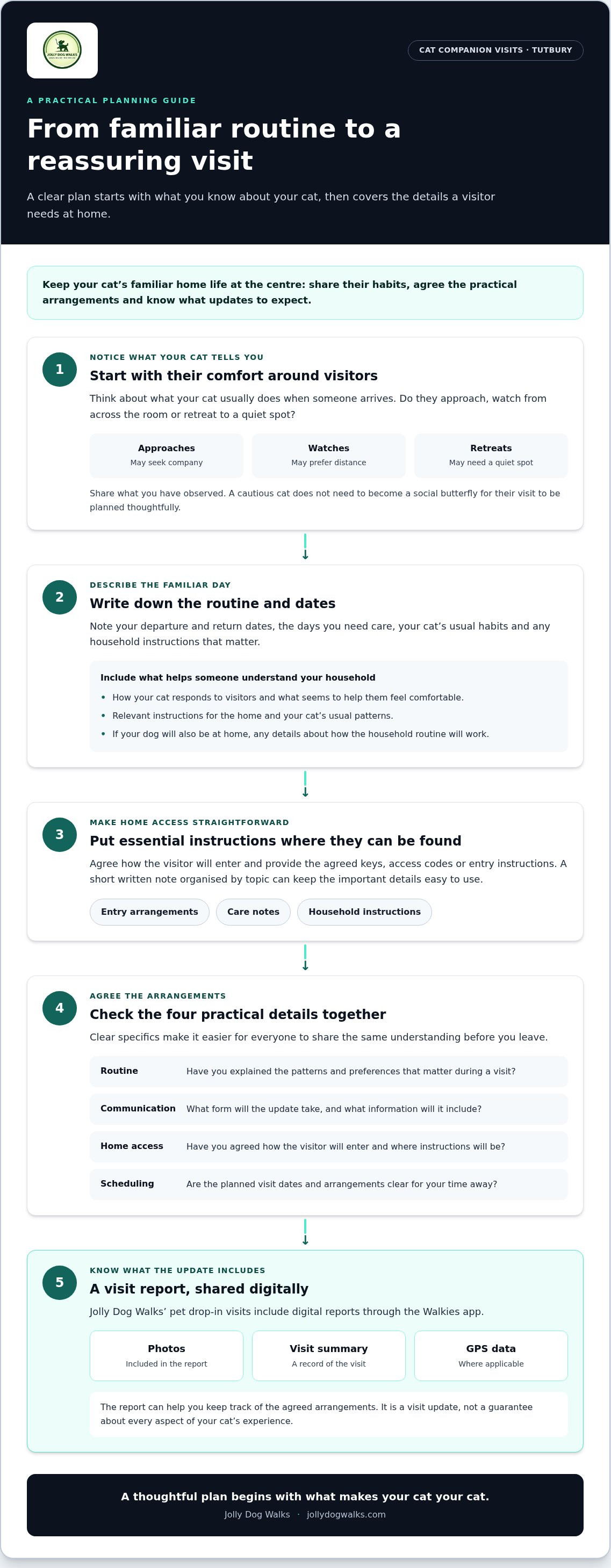
Every cat has their own way of responding to people. Some are curious about visitors, while others prefer to watch from a distance or retreat to a quiet spot. Cats may show comfort or unease differently from dogs, so think about what you have observed rather than expecting one particular response.
Does your cat approach guests, watch from across the room or disappear when the doorbell rings? Do they settle once visitors sit quietly, or remain wary? These everyday clues can help you describe your cat’s comfort level and set realistic expectations. A general overview of cat behavior can also help owners consider how cats communicate and respond to their surroundings.
Your knowledge of your own cat is especially useful. Share whether your cat seeks company or prefers people to give them space. A cautious cat doesn’t need to become a social butterfly for a visit to be planned thoughtfully. Explain what you have noticed and let that guide the arrangements.
What should owners decide before arranging visits?
Start with the practical picture: when you’ll be away, what your cat’s usual day looks like and what household instructions a visitor should understand. If your dog will also be at home, think through how the household routine will work during your absence and share any relevant details. Clear information helps make the arrangements specific to your household instead of relying on assumptions.
- Note your departure and return dates, along with the days you’ll need care.
- Describe your cat’s usual habits and any relevant household instructions.
- Consider how your cat responds to visitors and what helps them feel comfortable.
- Think through home access and the practical details a visitor will need to know.
Then weigh those details against your cat’s temperament and your own plans. A confident cat, a shy cat and a cat accustomed to visitors may each need a different approach. The aim isn’t to find a perfect formula. It’s to make a practical plan that takes your cat’s individual habits into account and works for your household.
How to compare cat companion visits in Tutbury
A reassuring arrangement is built on clear details, not just a friendly first impression. As you compare cat companion visits Tutbury, look at how the plan reflects your cat’s routine, how updates are shared, how home access is handled and whether the dates are clear. These points help you compare the practical arrangements rather than relying on broad promises that could mean different things to different people.
Routine: Can you explain your cat’s usual patterns and individual preferences that matter during a visit?
Communication: What form does the visit update take, and what information will it include?
Home access: Have you agreed how the visitor will enter and where to find the instructions they need?
Scheduling: Are the planned visit dates and arrangements clear for the period you’ll be away?
This simple comparison separates practical arrangements from reassuring-sounding language. “We’ll take good care of your cat” may sound lovely, but it doesn’t tell you what has been agreed. A clear plan gives everyone a shared understanding of the routine, access and communication. It also makes it easier to spot any detail that needs to be discussed before you leave.
What makes a home-visit arrangement feel clear?
Share the information in a format that’s easy to use, such as a short written note organised by topic. Include the routine you want followed, relevant household instructions and anything about your cat’s behaviour around visitors that could help someone entering your home. Agree which details are essential and make sure instructions are easy to find. Care arrangements work best as a conversation: you provide what you know, and anything unclear can be talked through before the visit.
What can a visit update tell an owner?
Jolly Dog Walks provides digital reports through the Walkies app. These include photos and a visit summary, with GPS data where applicable. The report gives you a record of the visit and a way to stay informed whilst you’re away. It’s useful to know what the update covers, and to treat it as a report of the visit rather than a guarantee about every aspect of your cat’s experience.
Jolly Dog Walks’ pet drop-in visits offer a local home-care option for Tutbury pet owners. The report and the care notes you provide can help you keep track of the agreed arrangements. You can find out more about Jolly Dog Walks’ Pop-In Visits.
Will a cat companion visit disrupt your cat’s routine?
A visitor changes one part of the day, even if your cat stays at home. That doesn’t mean a visit will necessarily unsettle them, but it’s sensible to plan around what they already know. With cat companion visits Tutbury, share your cat’s usual routine and clear instructions, rather than assuming every cat will respond in the same way.
Familiar surroundings may suit a cat who likes their usual spaces, resting places and household rhythms. At the same time, someone entering the home is a new experience, and practical details such as how the door is opened or which rooms are accessible matter. Think of the arrangement as a way to keep care anchored to home, not as a promise that your cat’s behaviour won’t change.
A planned visit can follow your cat’s usual routine, but it can’t guarantee how your cat will behave. Your companion may greet the visitor, keep a watchful distance or choose a quiet spot. Each response can be normal for that individual cat.
How can owners make visits feel more familiar?
Before care begins, describe the rhythm of an ordinary day and household details that could affect the visit. Keep instructions clear and easy to refer to, rather than relying on a quick conversation that might be hard to remember later. Explain how your cat usually responds to new people. Perhaps they approach once the house is quiet, or prefer visitors not to seek them out. Small observations like these help set a considerate, realistic approach.
It can help to separate essential information from useful background. Make key access instructions easy to spot, then add notes about your cat’s usual habits and where they tend to settle. If the household routine will change while you’re away, explain what will be different. A visitor can only work from the information shared, so a little preparation can prevent avoidable confusion.
What if your cat is shy or wary of visitors?
Tell the visitor what you’ve observed, including how your cat behaves when someone unfamiliar comes in and what usually helps them settle. If your cat tends to hide, explain that this is familiar behaviour for them. The aim isn’t to coax them into appearing or expect a quick bond. It’s to help the visitor understand what may be typical and respect your cat’s response.
- Describe whether your cat usually approaches, watches from a distance or retreats.
- Share any household boundaries or instructions that matter during a visit.
- Agree how you’d like relevant observations to be communicated, without expecting every visit to look the same.
That kind of open conversation is useful for any cat, not only a nervous one. If your cat’s behaviour changes noticeably around visitors, factor that into your plans and consider what arrangement feels manageable for your household. There’s no need to judge a visit by whether your cat makes an appearance. Clear expectations and respect for their individual response are a sounder starting point.
Preparing your Tutbury home and cat for companion visits
A little preparation can make a home visit easier to organise and help avoid last-minute uncertainty. For cat companion visits Tutbury, think through three things: your cat’s ordinary routine, the information a visitor needs about your home, and how they’ll get inside. You know the small details that make your household tick, so even a short, clear handover can be valuable.
Jolly Dog Walks does not provide services at weekends or on Bank Holidays unless a special arrangement is made. If your planned absence includes either, factor that into your arrangements early so the dates and access plan are clear.
What information should you share before the first visit?
Write down the details you’d want someone to know if they were stepping into your home for the first time. Keep it practical and easy to scan. Include your cat’s usual routine, relevant household instructions and anything about their behaviour or preferences that may help a visitor understand what’s typical. If your cat is often tucked away in a favourite spot, for example, that context can prevent unnecessary worry.
Where appropriate, add an emergency contact and say how you’d prefer to communicate if a question comes up. Keep important details current, and separate essential instructions from helpful background. This makes the handover easier to follow, especially if you’re preparing for a busy departure.
- Your absence dates and the visit dates you’ve arranged.
- A simple description of your cat’s usual routine and relevant instructions.
- Household notes, such as rooms that are off limits or anything that affects entry.
- An appropriate emergency contact and your preferred way to communicate.
Share information that’s useful for the arrangement. This isn’t about creating a hefty manual; it’s about making the essentials clear and accessible. A concise note can be easier to use than a long page of details with the important instructions buried in the middle.
How should you arrange home access?
Owners are responsible for providing the agreed keys, access codes or instructions needed to enter the home. Make sure the details are clear before the visits begin, and explain practical considerations, such as which entrance to use or areas that should remain closed. If there’s a change to the agreed access plan, communicate it in advance where possible.
It’s also helpful to agree the appointment arrangements clearly, rather than assuming a particular arrival time. The aim is to make access straightforward and predictable for everyone, without leaving the visitor to guess or the owner to worry about whether an instruction was understood.
Jolly Dog Walks’ pet drop-in visits are available to local pet owners in Tutbury. Once you’ve considered your dates and prepared the handover details, you can arrange a Pop-In Visit with Jolly Dog Walks.
Arrange cat companion visits in Tutbury with Jolly Dog Walks
Choosing someone to enter your home is personal, and it’s reasonable to want a conversation that feels clear and unhurried. Jolly Dog Walks is operated by Victoria Cartwright, a former nurse with 27 years of experience. For a cat visit, keep the discussion focused on your cat’s individual routine, your home and the arrangements you need while you’re away.
What to expect when discussing a local visit
Bring the details you’d like to talk through, such as your planned dates, your cat’s usual habits and any points that would help a visitor understand your household. You can also explain what kind of communication would help you feel informed. There’s no need to have every answer ready; a practical discussion can help clarify the arrangements and make sure the important details are understood.
Jolly Dog Walks’ pet drop-in visits provide a local home-care option for Tutbury pet owners. The focus is on the information you share about your household and your cat, rather than making assumptions about how your cat will respond.
A simple next step for Tutbury cat owners
Start with the dates you have in mind and the main points you’d like to discuss. Sharing those details gives the conversation a useful starting point and helps you think through what will work for your cat and home.
If you’d like to talk through your plans, arrange a pet drop-in visit with Jolly Dog Walks. A thoughtful conversation is a good first step towards making arrangements that feel considered and comfortable.
Take the next step towards a settled plan
Planning care for your cat doesn’t have to mean predicting exactly how they’ll respond. A more helpful starting point is to share what you know: what feels familiar to them, what tends to make them cautious, and what you’d like to understand whilst you’re away. That gives the conversation a personal focus and helps you decide whether the proposed arrangement feels right for your household.
If you’re considering cat companion visits Tutbury, bring your questions and planned dates to the conversation. You don’t need every detail perfectly organised. The important thing is to talk through your cat’s needs and the practical arrangements openly.
Arrange a pet drop-in visit with Jolly Dog Walks and take the next step at a pace that feels comfortable. With a thoughtful plan in place, you can head away feeling more prepared, while your cat stays at the centre of the arrangements.
Frequently Asked Questions
Can cats stay at home whilst their owners are away?
Yes, cats can stay in their own home whilst you’re away, with cat companion visits Tutbury forming part of a care plan. Whether that suits your cat depends on their individual needs and the arrangements in place for your absence. Think about whether the planned visits and other care arrangements meet your cat’s needs throughout your time away. If your plans change, revisit the arrangements rather than assuming the original plan will still fit.
What should I tell someone before a cat companion visit?
Share the details that could help someone understand what’s normal for your cat and household. For example, mention whether the doorbell tends to send your cat into hiding, or whether they settle once the home is quiet. Explain any household boundaries, how to reach you and who to contact in an emergency. Clear notes give useful context, especially if something seems different from your cat’s usual behaviour.
Do cat companion visits include feeding or medication?
Explain what your cat needs and agree responsibilities before arranging a visit. If feeding or medication is part of your cat’s care, make those requirements clear when discussing the arrangements. Don’t assume a task is included unless it has been agreed. Clear instructions help everyone understand what is expected during the visit.
Can I arrange cat visits in Tutbury at weekends or on Bank Holidays?
Jolly Dog Walks doesn’t provide services at weekends or on Bank Holidays unless a special arrangement is made. If your planned absence includes those days, raise this early so the dates can be discussed as part of your care plan. Avoid assuming that a weekday arrangement automatically covers a weekend or Bank Holiday. Clear dates help you plan ahead and identify any gaps in care before you travel.
How will I know what happened during a Jolly Dog Walks visit?
Jolly Dog Walks sends a digital service report through the Walkies app, with photos and a summary. GPS data is included where applicable. This gives you a record of the reported visit, but it isn’t a live update or a guarantee of what your cat did throughout the day. Make sure you can access the app and know how to view the report before you leave.
How do I arrange home access for a cat visit?
Provide the agreed key, access code or entry instructions before the visit, and make sure the details explain any tricky locks or entrances. Tell the visitor which rooms or areas are restricted. Don’t leave a key somewhere exposed, such as under a doormat or in a plant pot; agree a suitable handover method instead. Keep access instructions current if anything changes before your departure.
Is a cat companion visit right for a shy cat?
It may suit a shy cat, but their response will depend on their individual temperament and experience. Explain whether your cat usually hides, watches from a distance or approaches after a while, and avoid expecting them to interact or appear. A visit can be planned with your observations in mind, but no one can guarantee how a cat will behave around a visitor. Your notes help set realistic expectations.
Article by
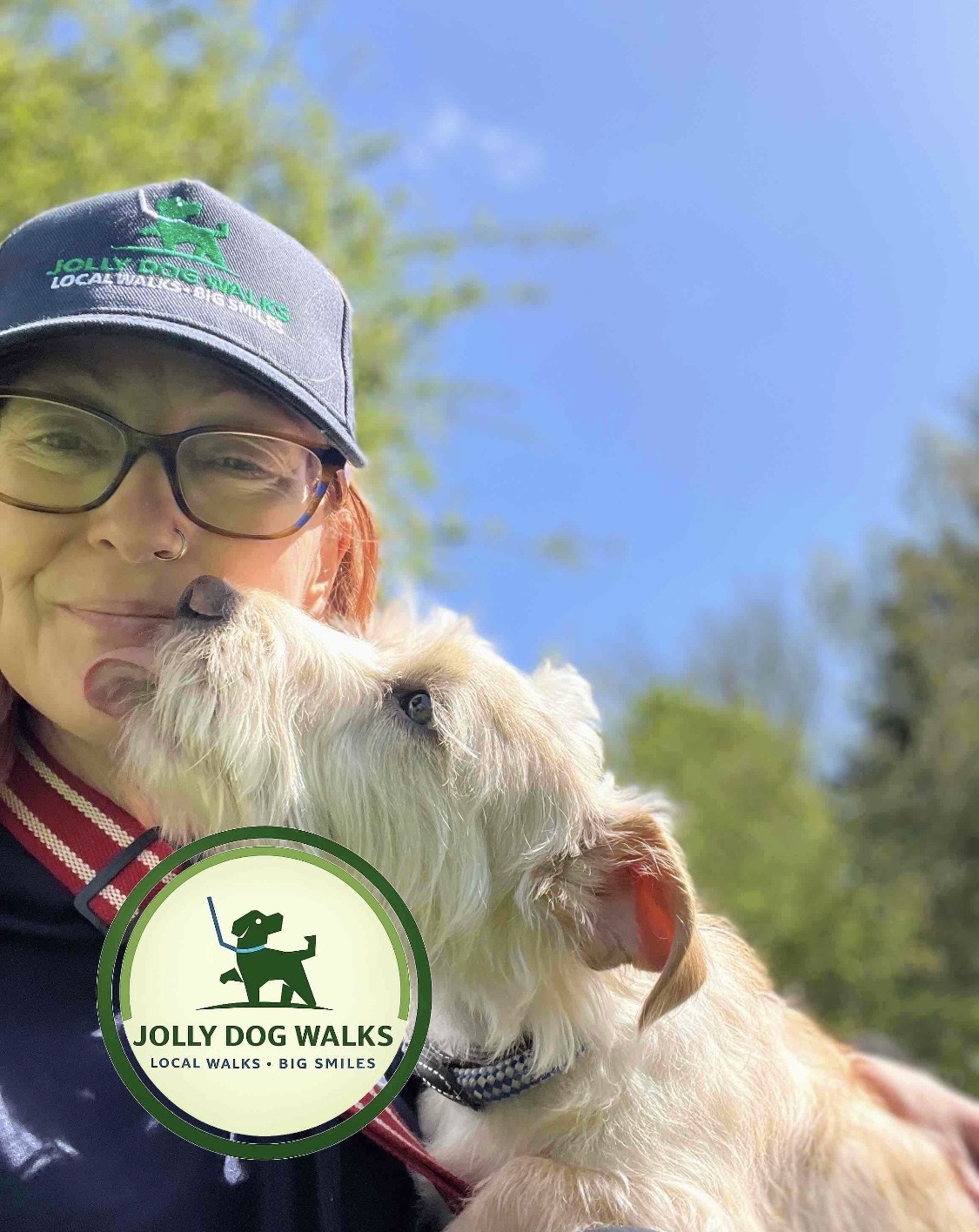
Victoria Cartwright
Hi, I’m Victoria, the proud owner of Jolly Dog Walks 🐾🐶
With a background in nursing and healthcare, alongside my professional training with the Institute of Modern Dog Trainers, I bring a unique combination of care, communication and understanding to my work with dogs and their owners. After leaving my nursing career, I found my true passion in working with animals, and I’ve never looked back!
❤️🐾
Disclaimer
Disclaimer: The views and experiences shared in this blog are based on my personal and professional experiences. They are intended for general information and enjoyment and should not replace individual advice from a qualified veterinary professional or appropriately qualified canine behaviourist/trainer where necessary.


