
Toilet training is a gradual process: most puppies settle into a routine within 4-6 weeks, but becoming reliably house trained can take a few months. If you’re looking for puppy toilet training support in Yoxall, it helps to know that progress depends on a steady routine, patient rewards and your puppy’s growing ability to hold on.
It’s understandable to feel unsure when accidents happen, especially if your puppy needs to toilet while you’re out. A setback doesn’t mean you’ve failed. Young puppies are still learning and may not yet be able to wait as long as you’d like.
This guide explains how to build a toilet-break routine, reward toileting outdoors and decide whether puppy pads or a bell might help. It also covers the challenge of leaving a puppy alone, with practical ways to plan breaks and make training calmer for both of you.
Key Takeaways
- Many puppies settle into a toilet routine within 4-6 weeks, though reliable house training can take a few months.
- Watch for signs such as sniffing, fidgeting or circling, then guide your puppy to the same toilet spot.
- Offer praise or a treat straight after your puppy toilets in the right place, and keep accidents calm and blame-free.
- Build regular toilet breaks around waking, meals, play and bedtime, adjusting the routine as your puppy grows.
- Plan for toilet breaks before and after time alone; puppy visits can help support your puppy’s routine while you’re away.
How long does it take to toilet train a puppy?
Most puppies settle into a toilet-training routine within 4-6 weeks, but becoming completely house trained can take a few months. Puppies are usually fully house trained by 4-6 months of age, though occasional accidents can happen as they learn.
Clean urine with a solution of one part biological washing powder to nine parts water, then rinse with water. Avoid bleach and other ammonia-based cleaners, which may encourage your puppy to toilet in the same area again.
Frequent accidents despite consistent training, sudden incontinence, increased thirst, straining or discomfort are reasons to speak to a vet. A sudden change in toileting can have a health cause, so don’t assume it is simply a training setback.
Accreditation and insurance are separate from a trainer’s approach. Positive-reinforcement training rewards desired behaviour rather than using fear or punishment, but those labels alone don’t establish the quality of individual support.
- Set realistic expectations for physical development. Puppies usually gain the physical control associated with reliable toilet habits at around six months old, while dogs don’t have full bladder capacity until approximately 12 months. Learning the routine and being physically able to hold on are different milestones. A puppy can understand where to go yet still need frequent opportunities.
- Notice the pattern behind progress. Compare your puppy’s habits across ordinary days, including changes in sleep, meals, play and household activity. A busy afternoon or disrupted nap can affect when they need to go. Look for an overall pattern becoming more predictable, rather than expecting every day to be identical.
- Respond to signals before an accident. Fidgeting, sniffing or circling can indicate that your puppy needs to toilet. Take them to the same suitable place when you notice these signs. Responding early gives them a chance to succeed before they squat indoors and helps you learn their individual cues.
- Keep your expectations suited to age. Puppies up to one month old can usually hold their pee for one hour, while puppies under 12 weeks old may need regular toilet breaks during the night. Don’t use an older puppy’s progress as a measure for a younger one. Development, routine and the ability to settle overnight all influence what they can manage.
- Keep learning from setbacks. If an accident happens, clean the area thoroughly and consider what came before it. Note the time, activity and location to spot a missed cue or emerging pattern. Use what you learn to adjust the routine kindly; never punish your puppy for an accident.
Rewarding outdoor toileting
Help your puppy associate toileting outdoors with a pleasant outcome. A reward given at the right moment makes the message clearer than a treat offered once you’re back inside.
- Have the reward ready before you go out. Keep a few small treats in your pocket or by the door, so you don’t have to search for them after your puppy toilets. Calm praise or a short game may also work if your puppy enjoys it. Choose a reward they like and have it ready near the toilet area.
- Reward the right moment. As your puppy starts to go, say a quiet cue such as “toilet”. As soon as they finish, praise them and offer a treat or play. This helps them associate toileting in that place with something positive. If you wait until you’re back inside, they may connect the reward with coming indoors instead.
- Keep your reaction calm and kind. Your puppy may pause if you get excited or crowd them, so give them room to finish. If nothing happens, let them sniff and try again later rather than turning the trip into a play session. Praise toileting, not simply being outdoors. The aim is to teach them that toileting outside brings a welcome reward.
- Choose one suitable outdoor toilet area. Use a spot that’s easy to reach and comfortable for your puppy, and take them there consistently. Familiar ground and smells can make the routine more predictable. Stay nearby and give them time before heading off to play or explore. If you have a garden, using the same corner can simplify supervision and clean-up.
- Move on from puppy pads with a clear plan. Pads can help in flats, homes without a garden, or while your puppy is not fully vaccinated, but they don’t replace outdoor trips. To change the habit, take your puppy to the chosen outdoor area regularly and reward them for toileting there. If they still use a pad, keep offering outdoor opportunities calmly; don’t scold them for using a familiar spot.
- Make the choice that fits your home. Some owners avoid pads because they can teach puppies to toilet indoors, potentially making the later change to going outside harder. Others use them temporarily, including overnight when a puppy can’t yet hold on. Whichever approach you choose, keep the message consistent: reward outdoor toileting and don’t punish accidents. Bladder control develops with age, so patience and repetition matter more than expecting instant success.
Establishing a consistent toilet-break routine
Offer predictable toilet trips throughout the day, then gradually adjust the gaps as your puppy grows and settles into the routine.
Choose a toilet spot and verbal cue
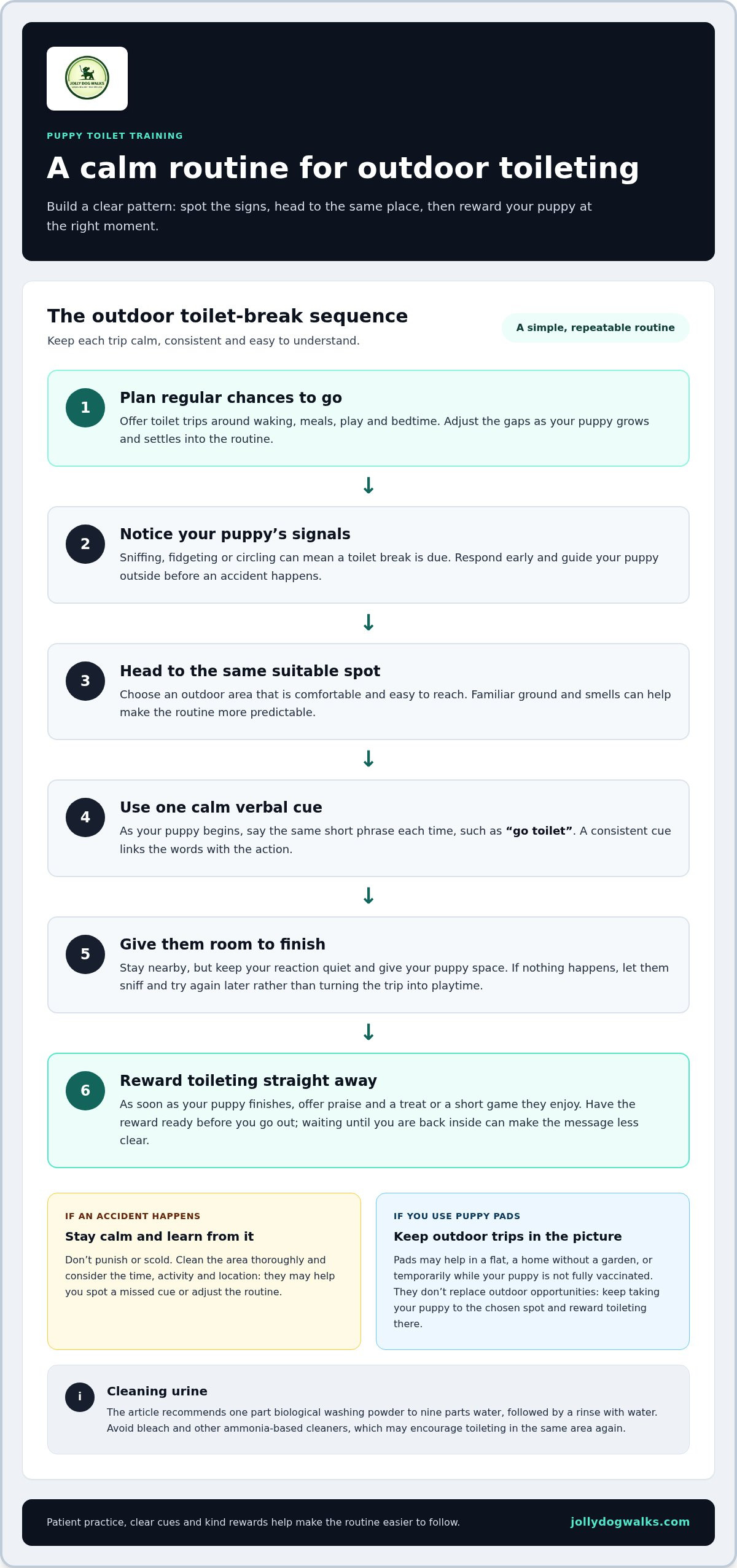
Take your puppy to the same suitable garden spot whenever a toilet break is due. Choose somewhere easy to reach and let them sniff and settle. As they begin, say the same short cue, such as “go toilet”. Using the phrase consistently links the cue with the action. Keep your voice calm and avoid repeating it rapidly.
Follow the step-by-step training method
Build toilet breaks around your puppy’s daily activities rather than waiting for them to ask. Puppies commonly need breaks every hour at first because their bladder and bowel muscles are still developing. Use these steps and maintain the routine for several months:
- Take them out after waking. Make the garden the first stop after naps and overnight sleep. Your puppy may need to go as soon as they wake, so be ready before opening the crate or letting them wander around the house.
- Plan trips around food, drink and activity. Take your puppy outside after meals and drinks, after play or exercise, and before bedtime. Visitors can be exciting, so offer a toilet break after greetings too. These repeated opportunities help your puppy learn where to go.
- Keep regular breaks between those moments. At first, take your puppy out every hour, as well as after the activities above. Puppies under 12 weeks old may also need regular toilet breaks during the night. If they wake and seem unsettled, quietly guide them to their usual spot.
- Increase the gaps gradually. Continue the routine for several months. As your puppy gets older and follows it reliably, gradually leave more time between garden visits. Adjust in response to their pattern, not just because a particular day has arrived. If accidents return, offer toilet trips more often.
- Keep track of the pattern. During the first few days, note toilet trips alongside waking, meals, drinks and play. A brief log can show when your puppy most often needs the garden. Use that pattern to plan breaks while still responding promptly if they show signs sooner.
Consistency means repeating useful steps, not expecting your puppy to manage the same interval every day. Their needs change as they grow, so keep offering regular opportunities while their control develops.
Anchor the routine to predictable moments: take your puppy outside after waking, eating or drinking, and playing, before bedtime, and at regular intervals. Repeating these opportunities helps organise the day around familiar transitions, rather than waiting until a toilet trip becomes urgent.
Pawsitive Squad recommends using a toileting cue during training. Use the same cue each time rather than changing the words from one break to the next. This gives your puppy a consistent verbal signal as well as predictable opportunities. Keep offering breaks at familiar moments and regular intervals throughout the day.
Toilet training when a puppy is left alone
Plan each absence around your puppy’s needs rather than expecting them to wait until you return. Take them outside before you leave and again when you get home, bearing in mind that their ability to hold on depends on their age and development.
- Offer a toilet trip just before leaving. Take your puppy to their usual outdoor spot and allow time for them to toilet before picking up your keys. Keep the departure calm, as a rushed goodbye can distract them. If they don’t go, bring them inside and supervise closely while you get ready, then offer another chance before leaving.
- Plan around the length of the absence. Consider when your puppy last toileted, their usual pattern and how long they can comfortably wait. If you’ll be away longer than they can manage, arrange for someone familiar to provide a toilet break. An indoor accident while they’re alone doesn’t necessarily mean they’ve forgotten their training; the gap may simply have been too long.
- Make the space practical and comfortable. Before leaving, settle your puppy in a safe, puppy-proof area with a comfortable place to rest. Keep the route to any toilet option clear. If they can’t hold on overnight, a puppy pad may be a temporary option, but continue offering outdoor trips rather than relying on the pad alone.
- Return calmly and go straight outside. Take your puppy out as soon as you get home, before unpacking or getting caught up in other tasks. Praise them if they toilet outdoors. If there’s been an accident inside, clean it up without telling them off. Punishment can cause worry or confusion without showing them where to go next time.
- Use accidents to adjust the plan. Note when you left, when you returned and whether your puppy had toileted indoors. Repeated accidents after a similar absence may mean the break needs changing. Offer an earlier toilet trip or arrange a visit, then see whether that helps. Keep the record factual, not as a reason to punish your puppy.
- Build comfort with separation gradually. Practise brief, manageable periods apart while your puppy is settled, then increase them in small steps. Keep toileting separate from the leaving routine: offer outdoor access before you go, but don’t make every toilet trip a signal that you’re leaving. A predictable pattern can help your puppy settle and reduce accidents.
Keep outdoor trips at both transitions: take your puppy outside before leaving them alone and again when you return.
What is the recommended step-by-step method for toilet training a puppy?
- Prepare the route and toilet area. Before taking your puppy outside, make sure the way to the chosen spot is clear and easy to reach. Keep a lead by the door if you use one to guide them safely. A short, predictable trip helps your puppy focus on toileting rather than racing around the garden or getting distracted by toys.
- Give them a quiet chance to go. Stay with your puppy in the toilet area and let them sniff without rushing or crowding them. If they start to toilet, say your chosen cue gently. Avoid repeating the cue or turning the moment into a game. Give them room to finish before offering praise.
- Reward the completed behaviour. Once your puppy has finished in the right place, respond straight away with calm praise or a small treat. Keep the reward close so you don’t delay while searching a pocket or heading indoors. A clear, timely response helps your puppy understand what you liked.
- Try again if nothing happens. If your puppy hasn’t toileted after five minutes outside, bring them indoors and supervise closely. Take them back outside 10 minutes later. Stay attentive during the wait, since a puppy may give another signal before the next trip. This calm reset gives them another opportunity without making the outing feel like a test.
- Respond gently to an indoor attempt. If you see your puppy starting to toilet in the wrong place, don’t shout or startle them. Calmly guide them towards the correct area and praise them if they finish there. If you find an accident later, simply clean it up; your puppy won’t understand a telling-off after the event.
- Clean thoroughly and review what happened. Use a biological cleaning preparation to break down the odour, and avoid ammonia-based products such as bleach. For the first few days, note what happened before an accident, such as a nap, meal or lively play. These details can reveal missed opportunities and help you make a practical adjustment.
- Keep the method kind and consistent. Repeat the same steps, cue and reward to give your puppy a clear, predictable lesson. Don’t expect perfection or punish mistakes; house training takes learning and physical development. If accidents continue despite a consistent approach, or toileting changes suddenly, speak to your vet to rule out a health concern.
Jolly Dog Walks: 10-40 minute solo dog walks
Jolly Dog Walks offers puppy visits to help keep your young dog’s toilet routine on track while you’re away. The visit gives your puppy an opportunity for a break and caring attention, supporting the routine you’re building at home.
For dogs ready for walks, 10-40 minute solo dog walks and 60 Minute Solo Walks provide individual care. Jolly Dog Walks takes a kind, welfare-focused approach, informed by IMDT training and a caring professional background.
If you’d like to talk about puppy visits or a suitable walking option, you’re welcome to contact Jolly Dog Walks.
Take the next step with confidence
Your puppy’s routine will change as they grow, and a brief record of what works can make those changes easier to manage. Note shifts in sleep, meals or household routines, then adjust your plan calmly rather than treating an unexpected accident as failure. Small, consistent choices help you respond to your puppy’s needs today.
If you’d value support alongside your own training, puppy toilet training support in Yoxall can include attentive care that fits your puppy’s daily routine. Jolly Dog Walks can discuss how puppy visits may complement the routine you’re building at home.
Contact Jolly Dog Walks to discuss your puppy’s care. Every pup learns at their own pace, and patient, kind guidance gives you a positive way forward together.
Frequently Asked Questions
Should you tell off your puppy for little accidents?
No. Telling your puppy off can make them anxious about toileting without showing them what you want instead. If you catch an accident starting, calmly guide them towards the toilet area. If you find it later, your puppy won’t connect the mess with a telling-off. Stay neutral and consider whether they needed an earlier opportunity.
What puppy toilet training support is available in Yoxall?
Jolly Dog Walks offers puppy visits to help maintain your puppy’s care routine while you’re out. Before a visit, share your puppy’s usual cues, preferred toilet spot and any recent changes in their pattern. These details help keep care familiar and support the approach you use at home.
How often should a puppy be taken outside to toilet, including overnight?
Offer toilet trips often enough to match your puppy’s age and usual pattern, and respond promptly if they wake or seem unsettled overnight. A simple note of when they last toileted can help you judge whether they need another opportunity. Keep night-time trips quiet and purposeful, with minimal light and interaction, so your puppy can settle again afterwards.
How long does puppy toilet training usually take, and what affects progress?
There’s no single timetable that suits every puppy. Progress depends on physical development, how predictable the day is, and whether changes such as visitors or a different sleeping arrangement disrupt familiar habits. Look for steady signs of learning, such as choosing the outdoor area more often or signalling sooner. Speak to your vet if toileting changes suddenly or difficulties persist.
Article by
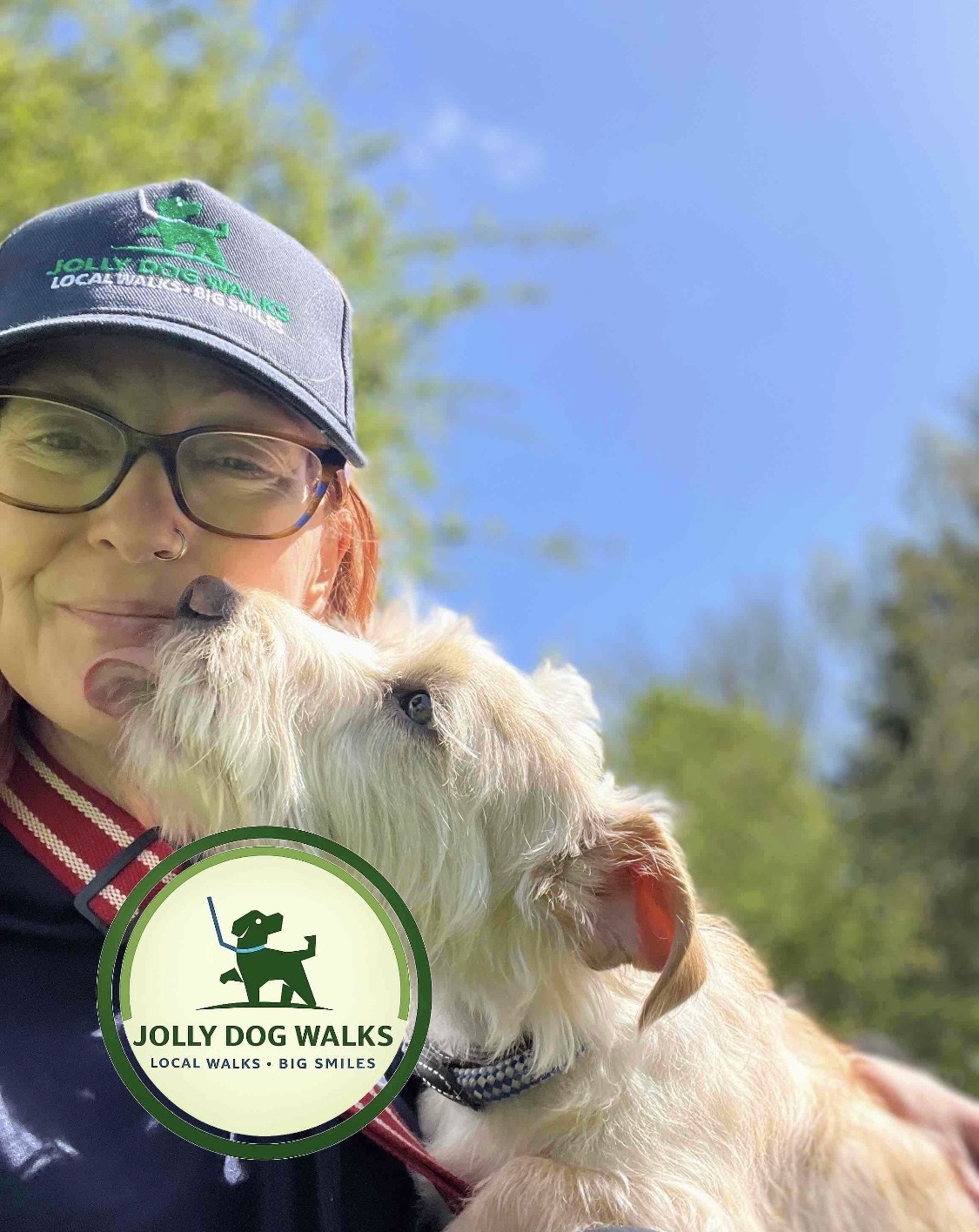
Victoria Cartwright
Hi, I’m Victoria, the proud owner of Jolly Dog Walks 🐾🐶
With a background in nursing and healthcare, alongside my professional training with the Institute of Modern Dog Trainers, I bring a unique combination of care, communication and understanding to my work with dogs and their owners. After leaving my nursing career, I found my true passion in working with animals, and I’ve never looked back!
❤️🐾
Disclaimer
Disclaimer: The views and experiences shared in this blog are based on my personal and professional experiences. They are intended for general information and enjoyment and should not replace individual advice from a qualified veterinary professional or appropriately qualified canine behaviourist/trainer where necessary.


