
Imagine the day you finally brought your rescue dog home. You've spent weeks patiently following the 3-3-3 rule, watching them slowly transition from a nervous bundle of fur into a cherished member of the family. Now that you're returning to a busier schedule, the thought of finding a dog walker for rescue dogs feels like a massive leap of faith. You worry about them slipping a collar or being overwhelmed by a "dominance" trainer who doesn't understand their fragile confidence. It's completely natural to feel anxious about whether a stranger will protect your dog's hard-won progress whilst you're away.
I understand that your dog's decompression journey is deeply personal, and their safety is your top priority. This guide will help you navigate that trust gap and find a professional who truly gets it. You'll learn how to choose a walker who uses positive reinforcement and quiet routes to keep your dog's tail wagging. We'll explore why solo walks are often the kindest choice for rescues and how modern tools like GPS tracking and photo updates can provide the reassurance you need to breathe easy again.
Key Takeaways
- Learn how the 3-3-3 rule provides a vital roadmap for your dog’s decompression, ensuring they aren’t overwhelmed during those first crucial months.
- Understand why choosing a specialist dog walker for rescue dogs who prioritises solo walks can prevent the bullying and stress often found in large packs.
- Discover the essential questions to ask potential walkers to ensure they use kind, welfare-focused methods rather than outdated "dominance" techniques.
- Explore how professional safety measures, including GPS tracking and secure lead protocols, offer peace of mind whilst your dog builds confidence.
- See how tailored walking plans in Staffordshire provide the quiet, predictable routine your rescue dog needs to feel truly at home.
Why Walking a Rescue Dog Requires a Different Approach
When you bring a rescue dog into your life, you are opening your heart to a "mystery box" of past experiences. Unlike a puppy raised with a known history, an adopted dog often carries invisible baggage from their previous life. This unknown history is exactly why finding a specialist dog walker for rescue dogs is so different from hiring a standard service. You aren't just looking for someone to provide exercise; you are looking for a caregiver who can read the subtle language of a dog that may have spent months or even years in a stressful shelter environment.
Rescue dogs often exhibit distinct flight or freeze responses that differ significantly from dogs raised in stable homes. Whilst a puppy might approach a new object with curiosity, a rescue dog might "pancake" (pressing their body flat to the pavement) or spook at the sound of a rustling crisp packet. There is also the risk of "trigger stacking". This happens when small stresses build up over a short period. A distant siren followed by a passing cyclist might be enough to push a nervous dog over their emotional threshold. A professional walker must be tuned into these signals to prevent a full-blown panic attack.
The Flight Risk: Why Safety Equipment is Non-Negotiable
Safety isn't just a buzzword; it's a legal and ethical commitment. Under the Control of Dogs Order 1992, every dog in a public place must wear an ID tag with the owner's surname and address. For a rescue dog, this is the final safety net if the unthinkable happens. I always recommend a well-fitting, "escape-proof" harness provided by the owner. Because safety is at the heart of what I do, Jolly Dog Walks carries out a thorough assessment of all equipment before our first outing together. We check for wear and tear and ensure the fit is secure enough to prevent a "Houdini" act if your dog gets spooked by a sudden noise.
Building Trust Through Consistency
Predictability is the greatest gift you can give a nervous dog. Establishing a regular routine helps them realise that the world is a safe, structured place. This is where The 3-3-3 Rule comes into play, helping owners understand the timeline of emotional adjustment during the pet adoption process. By using positive reinforcement and maintaining a calm, steady temperament, a walker becomes a reliable anchor for the dog. Whether we are exploring quiet corners of Barton-under-Needwood or simply sniffing the hedgerows, the goal is to build a bond based on kindness rather than control.
The 3-3-3 Rule: Navigating the Decompression Phase
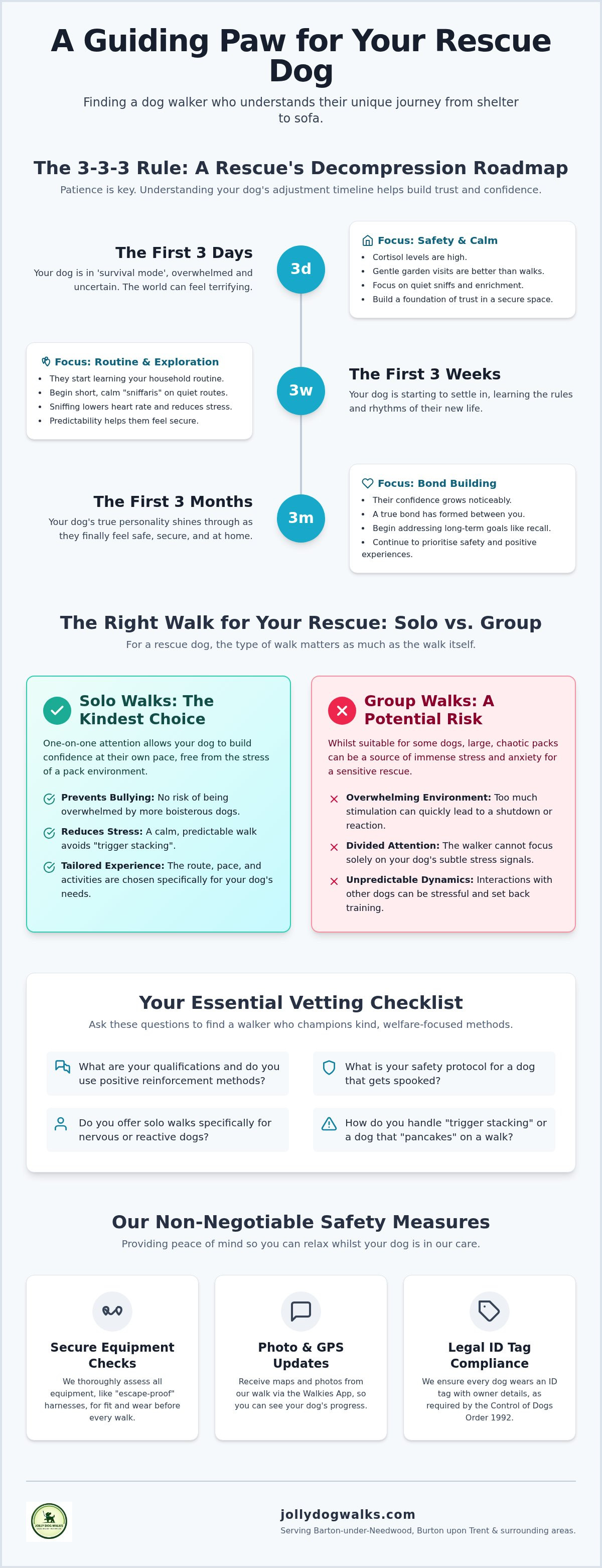
Adopting a dog is a marathon, not a sprint. To help owners set realistic expectations, we use the "3-3-3 rule" as a vital roadmap. This guideline suggests that it takes three days for a dog to decompress from the shelter, three weeks to learn your household routine, and three months to finally feel at home. Because this transition is so delicate, choosing a dog walker for rescue dogs requires a different approach than a standard walking service.
The First 3 Days: Garden Visits and Gentle Sniffs
In those first seventy-two hours, your dog is often in "survival mode." Their cortisol levels are high, and the world outside your front door can feel terrifyingly vast. During this phase, I often recommend my pet drop-in visits rather than traditional walks. Staying within the safety of your garden allows your dog to relieve themselves without the pressure of encountering "scary" triggers like traffic or other dogs. We focus on gentle sniffs and enrichment, building a foundation of trust in a controlled environment before we ever think about hitting the pavement.
Weeks 3 to 12: Exploring the World at Their Pace
Once your dog understands that their new home is safe, we can start exploring. This is the era of the "sniffari." Instead of marching for miles, we let the dog lead with their nose. Sniffing lowers a dog's heart rate and helps them process their environment. We avoid high-traffic areas in Burton or Stretton, opting instead for quiet, predictable routes where your dog won't be overwhelmed. I use the Walkies App to track our progress, sharing GPS maps and photos so you can see exactly how your dog is gaining confidence with every outing.
It is only after the three-month mark, when a dog truly feels secure, that we begin to address long-term goals like recall training. Safety remains our priority, and off-lead time only happens after a thorough assessment. If you are starting this journey in Barton-under-Needwood, a tailored solo walking plan can provide the steady routine your rescue dog needs to thrive.
Solo vs. Group Walks: Which is Best for Your Rescue?
Deciding how your dog interacts with the world is a significant step in their journey. When you begin to thoroughly interview them, the question of solo versus group walks will inevitably come up. There's a common myth that every dog "needs" to play with a large group of furry friends to be happy. In reality, many rescue dogs find large packs completely overwhelming. For a dog with a history of trauma, being surrounded by five or six high-energy dogs can feel like bullying rather than socialisation.
A professional dog walker for rescue dogs understands that 1-on-1 attention is often the kindest choice. Solo walks allow us to focus entirely on your dog's specific needs, whether that's reinforcing loose lead walking or managing reactivity. It gives them the mental space to relax without needing to watch their back. Without the distraction of a pack, we can reward every "brave" choice they make, turning a potentially stressful outing into a confidence-building adventure.
The Risks of Large Group Environments
Large, unregulated pack walks can unfortunately be breeding grounds for intimidation and disease transmission. It's incredibly difficult for one person to monitor the subtle body language of eight or more dogs at once. This is why Jolly Dog Walks has a firm policy: we never walk more than four dogs together. By keeping groups small, I can spot tiny changes in behaviour or health that might otherwise be missed. For a nervous rescue, this smaller, controlled environment prevents the "pack mentality" that leads to dogs being ganged up on or ignored when they're clearly uncomfortable.
When to Consider a Secure Field Visit
Sometimes, even a quiet street can feel like too much for a dog still finding their feet. This is where Secure field dog walking in Staffordshire becomes a total game changer. If your rescue has a high prey drive, like many of the lovely Lurchers and Greyhounds I work with, a secure field offers 100% safety. They can run, sniff, and enjoy their "zoomies" to their heart's content in a fully enclosed space. It's the perfect solution for dogs with poor recall or those who simply need a break from the triggers of the outside world. It provides the freedom they crave with the absolute security you need for your peace of mind.
How to Vet a Dog Walker for Your Rescue Dog
Hiring a dog walker for rescue dogs is a decision that carries significant emotional weight. You aren't just looking for someone to "do the job"; you're looking for a professional who understands that a rescue dog's trust is hard-won and easily lost. Before you hand over the keys, it's vital to ensure their training philosophy aligns with modern, welfare-focused practices. Avoid anyone who mentions "dominance" or "pack leaders." Instead, look for a walker who uses positive reinforcement to build confidence and rewards "brave" choices during their walks.
A "Meet and Greet" is non-negotiable. This is your chance to see how the walker interacts with your dog in their own environment. Pay attention to whether they give your dog space to approach them or if they force an interaction. A true professional will let a nervous dog set the pace and won't be offended if your dog is a little hesitant at first. It's about building a relationship, not just a service agreement.
Key Questions for the Meet and Greet
During this first meeting, don't be afraid to ask specific, scenario-based questions to gauge their experience. You might ask, "How do you handle a dog that spooks or refuses to move?" A knowledgeable walker will explain techniques involving patience and gentle encouragement, never dragging or shouting. Another vital question is, "What is your process for administering medication if my dog needs it?" For dogs with ongoing health needs, clear communication is essential. I use the Walkies App messaging system to ensure all medication instructions are documented and followed to the letter, giving you a digital paper trail for your peace of mind.
Professional Qualifications Matter
In an unregulated industry, certifications provide a necessary benchmark for safety and ethics. Look for a walker with credentials from the Institute of Modern Dog Trainers (IMDT). My own commitment to professional development includes the IMDT Loose Lead Masterclass (completed 20/06/2026) and Recall Masterclass (16/07/2026). These qualifications ensure I'm using the kindest, most effective handling techniques available today.
My background as a former nurse also provides high-level medical observation skills. This is vital for rescues who might have underlying health issues or who express stress through physical symptoms. To keep every walk transparent, I use the Walkies App for GPS tracking. You'll receive photos and a map of our route, providing the reassurance that your dog is being cared for exactly as promised. Combined with being fully insured and DBS-checked, these tools ensure your dog is in the safest possible hands.
If you are looking for a walker who understands the unique needs of your adopted companion, contact Jolly Dog Walks today to arrange a friendly chat.
How Jolly Dog Walks Supports Rescue Transitions in Staffordshire
As the Winner of the 2026 Staffordshire Business Awards – Dog Walking Service of the Year, Jolly Dog Walks is built on a foundation of trust and local community spirit. Choosing a dog walker for rescue dogs in Staffordshire means finding someone who knows the local terrain as well as they know canine behaviour. My tailored solo walking plans are specifically designed for the nervous or reactive dogs of Barton and Burton, ensuring their exercise is a source of joy rather than a cause for alarm.
I understand that a sudden encounter with a noisy tractor or a boisterous off-lead dog can set a rescue's progress back by weeks. Because of this, I've mapped out the quietest, low-trigger routes in villages like Tatenhill and Yoxall. These peaceful paths allow your dog to explore at their own pace without the pressure of a busy environment. Whilst we love exploring the countryside, I'm mindful of your home too. Every walk includes the use of my portable dog shower and a supply of clean towels. Your dog returns happy and tired, but your carpets stay pristine after a muddy Staffordshire outing.
Safety remains my absolute priority. My 'Lead Only' preference for new rescues is a non-negotiable part of our early journey together. We only transition to off-lead exercise after a comprehensive recall assessment is completed and I am 100% confident in our bond. This cautious, welfare-first approach ensures that your dog is never put in a position where they might feel the need to bolt.
A Personalised Approach to Every Rescue
Every journey begins with a detailed Meet & Greet checklist. This is where I learn about your dog's unique history, their specific fears, and the little things that make them happy. This information forms the basis of their bespoke walking plan. To keep you connected to their progress, I use the Walkies App to send daily updates and photos. Seeing your dog relaxed and sniffing through a hedgerow provides the peace of mind you need whilst you're at work. For more tips on managing specific behaviours, you might find my guide on Stress-Free Solo Walks for Reactive Dogs in Burton helpful.
Safe Exercise Options Across East Staffordshire
I am proud to serve a wide range of local communities, providing reliable care in Barton-under-Needwood, Branston, Tutbury, and Drakelow. My commitment to small groups (never more than four dogs) ensures that every animal in my care receives the individual attention they deserve. For a rescue dog, this small, managed environment is often the safest way to begin their socialisation journey once they are ready. If you're looking for a professional who will treat your rescue dog like a member of the family, please contact Victoria to book a Meet and Greet for your rescue dog today.
Taking the Next Step in Your Rescue Journey Together
Bringing a rescue dog into your life is a beautiful commitment, and finding the right support shouldn't be a source of stress. By respecting the 3-3-3 rule and prioritising solo walks in quiet areas like Tatenhill or Branston, you give your dog the emotional space they need to truly thrive. Choosing a qualified dog walker for rescue dogs ensures that every outing reinforces their confidence through kindness rather than pressure.
As the Winner of the 2026 Staffordshire Dog Walking Service of the Year, I bring my background as a former nurse with 27 years of care experience to every interaction. I am IMDT trained, fully DBS checked, and dedicated to providing the welfare-focused care your dog deserves. Whether we are enjoying a gentle garden visit or a secure field adventure, I am here to support your dog's transition with patience and positivity.
Ready to find a walking routine that puts your dog’s safety first? Book a Meet and Greet for your rescue dog today and let’s start building that all-important bond of trust. Your dog has already found their forever home; now let’s help them find their confidence in the great outdoors.
Frequently Asked Questions
Is it safe to let my rescue dog off-lead with a walker?
Off-lead walking is never a guarantee and only occurs after a thorough recall and behaviour assessment. Even with owner consent, I perform a dynamic risk assessment on every walk. If we encounter livestock, cyclists, or heavy traffic, your dog stays on the lead for their safety. I also require a signed lead waiver and a legal ID tag before any off-lead exercise is considered in public spaces.
My rescue dog is reactive to other dogs; can you still walk them?
I certainly can, provided they haven't shown aggression toward people. My solo walking service is designed specifically for dogs that need extra space and a calm environment. I avoid busy parks and high-trigger areas, opting for quiet routes in villages like Tatenhill or Drakelow. This ensures your dog can enjoy their walk without the stress of unwanted encounters with other dogs or overwhelming groups.
What happens if my rescue dog gets spooked and refuses to walk?
If your dog spooks or "pancakes," I never use force or pressure to move them. Instead, I use patience, gentle encouragement, and positive reinforcement to help them regain their confidence. If they are truly overwhelmed, we may shorten the walk and return home for a calming enrichment session or garden playtime. I will always update you via the Walkies App so you know exactly how they handled the situation.
Do you walk rescue dogs in large groups?
No, I have a strict policy against walking dogs in large packs. I never walk more than four dogs together, and I am not insured to walk more than six at any time. For a rescue dog, small groups or solo walks are much safer as they reduce the risk of bullying, intimidation, and disease transmission. This allows me to provide the individual attention your dog needs to feel secure.
Can you administer medication to my rescue dog during a visit?
I can administer medication, provided you give written instructions through the messaging function in the Walkies App. Medication must be in its original pharmacy-labelled container and within its expiry date. I record every dose administered, including the time and dosage, to ensure total accuracy. This service is part of my commitment to providing professional care for a dog walker for rescue dogs with specific medical requirements.
What areas in Staffordshire do you cover for rescue dog walking?
I provide professional dog walking services across a wide range of locations in East Staffordshire. This includes Barton-under-Needwood, Branston, and Burton upon Trent, as well as Tatenhill, Yoxall, and Rosliston. I also visit clients in Tutbury, Drakelow, and Stretton. If you are unsure if I cover your specific street, please get in touch for a friendly chat about your rescue dog's needs in your local area.
Why is solo walking better than a group walk for a new rescue?
Choosing a solo dog walker for rescue dogs is often the best choice during the decompression phase because it eliminates the stress of pack dynamics. New rescues are often overwhelmed by their new environment and don't need the added pressure of navigating social hierarchies with unfamiliar dogs. Solo walks allow for 1-on-1 attention, tailored training reinforcement, and a much calmer outdoor experience that focuses entirely on building confidence.
Article by
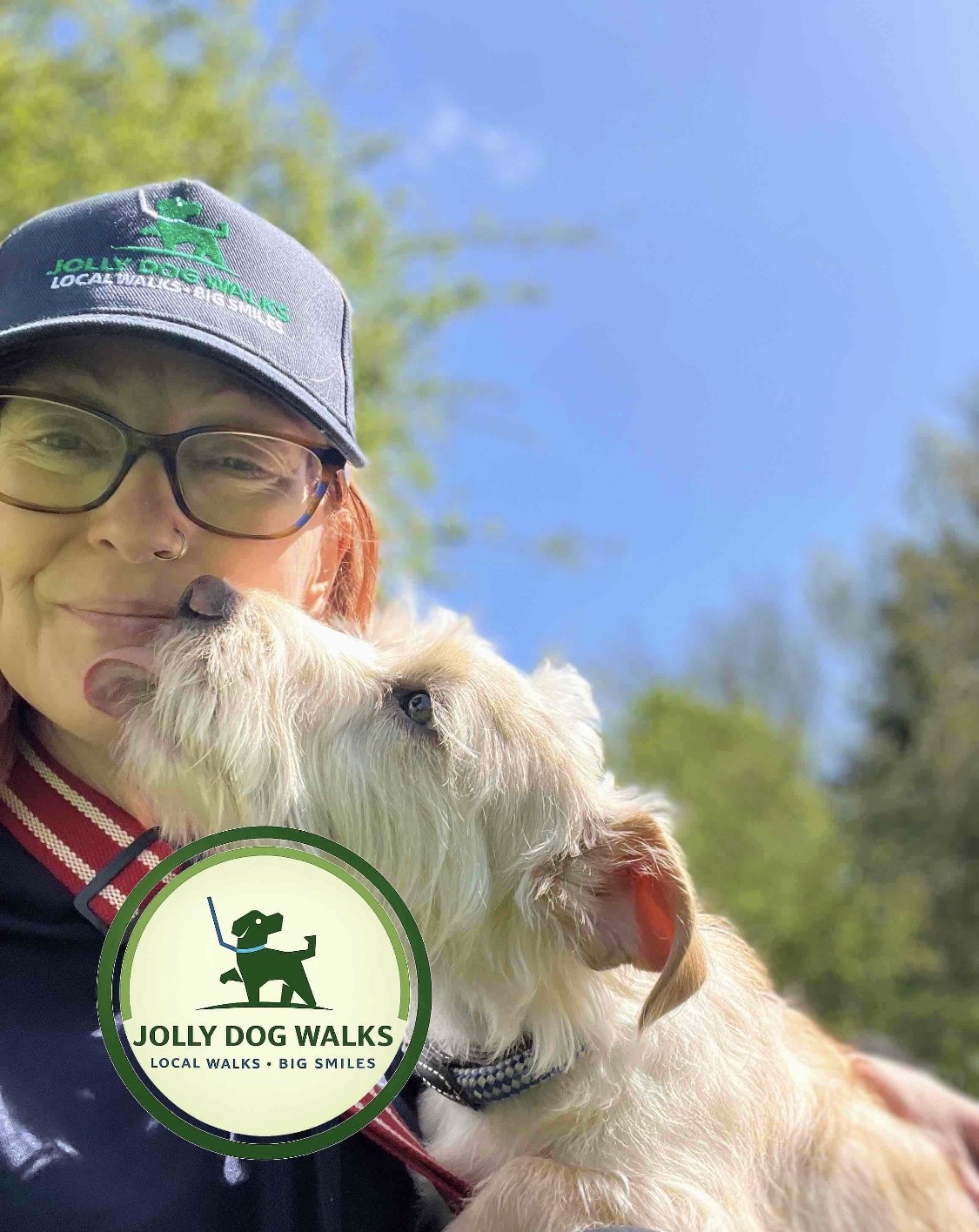
Victoria Cartwright
Hi, I’m Victoria, the proud owner of Jolly Dog Walks 🐾🐶
With a background in nursing and healthcare, alongside my professional training with the Institute of Modern Dog Trainers, I bring a unique combination of care, communication and understanding to my work with dogs and their owners. After leaving my nursing career, I found my true passion in working with animals, and I’ve never looked back!
❤️🐾
Disclaimer
Disclaimer: The views and experiences shared in this blog are based on my personal and professional experiences. They are intended for general information and enjoyment and should not replace individual advice from a qualified veterinary professional or appropriately qualified canine behaviourist/trainer where necessary.


