

If you’re a dog owner sharing your home with a cat, plan care for both pets before you travel. For your cat, choose between drop-in visits and overnight care based on their routine, temperament and need for company. The right arrangement keeps their familiar habits in mind while you’re away.
It’s natural to want your cat’s meals, medication and everyday care handled thoughtfully, while your dog’s routine is covered too. A clear plan for each pet can help you leave home with fewer loose ends.
This guide explores cat care while on holiday in Staffordshire, including how to compare visits with overnight care and what to discuss with a sitter. It also covers practical arrangements for feeding, medication and updates, so you can plan care that suits the animals in your household.
Key Takeaways
- Choose between drop-in visits and overnight care by considering your cat’s routine, temperament and need for company.
- Agree how updates will be shared, including what information and photos would help you feel reassured.
- Give clear written instructions for meals, fresh water, medication and your cat’s usual habits.
- Look for a sitter whose approach feels right for your cat, and discuss the care plan before you travel.
- Compare care options by what’s included and what your cat needs; if considering a cattery, view its current licence certificate.
Communication and updates
Book once your travel dates are set, especially for popular holiday periods. The lead time depends on your dates, the care arrangement and your cat’s needs, so planning early gives you more time to agree on a suitable routine.
Before agreeing on care, decide which updates would reassure you. One owner may want a brief message after each visit; another may prefer a daily summary. For example, ask for confirmation that your cat has eaten, has fresh water and received medication, if applicable.
Agree how and when messages will arrive instead of leaving expectations unstated. You might choose a text with a photo or a short written note after each visit. If your cat hides from unfamiliar people, ask the sitter to report signs such as uneaten food or unusual behaviour rather than expecting a photograph.
A clear plan keeps updates useful and avoids confusion while you’re away. Discuss these points before handing over keys:
- Timing: Agree whether updates come after every visit or at a set point each day.
- Content: List the details you want covered, such as meals, water, medication and litter tray.
- Photos: Explain whether pictures are welcome, especially if your cat is shy or tends to hide.
- Changes: Set out what should be reported promptly, such as refusing food or seeming unwell.
- Contact: Share your preferred number and an alternative contact for urgent situations.
Keep instructions specific and easy to follow. For example, write “send a message after the evening visit” instead of “keep me updated”. If your cat has a particular hiding place, note where it is so the sitter can avoid searching noisily and disturbing them.
Staffordshire listings display 3+ sitters, so compare their communication approach alongside their care arrangements. Ask how they record completed visits and pass on concerns. A useful update gives observable details, such as “ate half the meal”, rather than a vague “all fine”.
If you’re considering a cattery, ask to view its current licence certificate at the premises. Before travelling, give the cattery or sitter your itinerary and confirm the agreed start and finish dates. Keep feeding instructions, medication details and emergency contacts together so the person caring for your cat can find them quickly.
Book once your travel dates are set, particularly during popular holiday periods. The lead time depends on your dates, the care arrangement and your cat’s needs.
Sitter vetting, reviews and trust
Start with the care your cat needs, then look for a sitter who can explain their approach clearly. A nervous cat, for example, may need quiet, patient visits, while a sociable cat may welcome play. Ask how the sitter would handle each situation rather than relying on a friendly profile alone.
Read reviews for specific details about care, communication and reliability. A comment describing how a sitter followed feeding instructions is more useful than a general compliment. Look for recurring themes and whether the examples match your cat’s needs. Reviews can help inform your choice, but a conversation lets you judge the fit.
Arrange an introductory meeting at home before care begins. Notice how the sitter approaches your cat: do they allow time to sniff and settle, or try to force contact? Share a familiar toy or hiding place, then discuss how the sitter would respond if your cat stays out of sight. A calm, respectful approach matters more than instant cuddles.
Use the meeting to discuss practical arrangements. Ask who will visit, how access to your home will be managed and what happens if the sitter becomes unwell. If more than one person may provide care, meet each person who could enter your home. Agree clearly on key collection and return.
- Experience: Ask for examples of caring for cats with similar routines or temperaments.
- Care plan: Discuss feeding, litter, play, medication and your cat’s usual hiding spots.
- Cover: Find out what the sitter’s backup plan is if they cannot attend.
- Home access: Agree how keys are stored, used and returned after the booking.
- Reviews: Compare detailed examples and look for consistent themes, not just star ratings.
Trust also depends on clear boundaries and records. Write down which rooms the sitter may enter, where supplies are kept and which doors must stay shut. If your cat is an indoor cat, for instance, state plainly that they must not be let outside. Give instructions in writing so everyone follows the same plan.
Before you leave, confirm the dates, visit arrangements and emergency contacts in writing. Explain what signs should prompt an update, such as repeated vomiting or refusing food. State who may be contacted if you’re unreachable. These steps give the sitter a practical framework and help you choose care that suits your cat and home.
Drop-in visits versus overnight house sitting
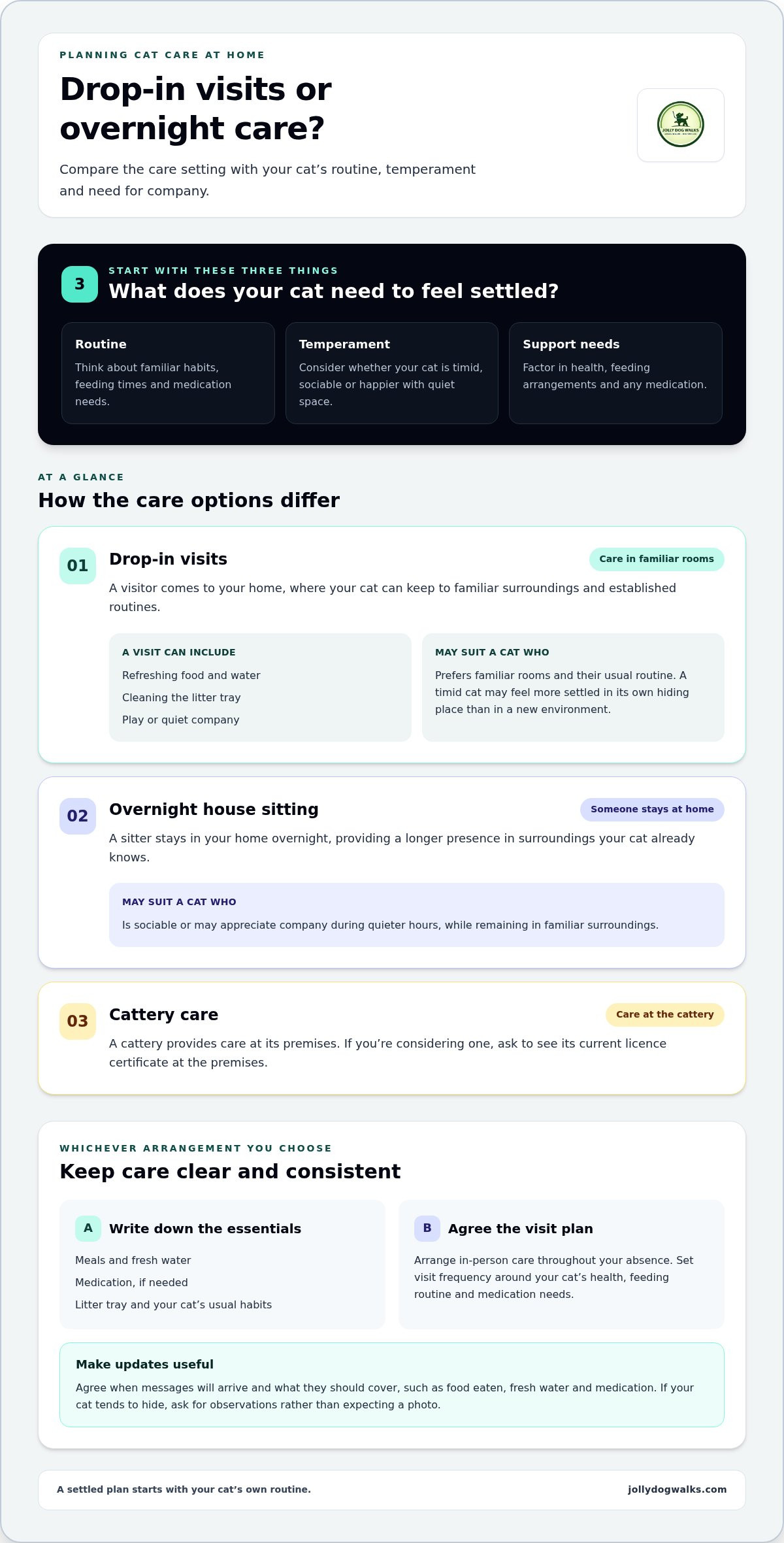
Compare care at home with a cattery by considering your cat’s routine, surroundings and support needs. A sitter keeps care familiar; a cattery provides care at its premises. Think about which setting your cat is likely to cope with best.
If your cat is left alone, nobody may promptly notice a spilled water bowl, illness or an escape. Arrange in-person care throughout your absence, with visit frequency based on your cat’s health, feeding routine and medication needs.
Drop-in visits suit cats who prefer familiar rooms and established routines. A visitor can refresh food and water, clean the litter tray, and offer play or quiet company. A timid cat, for example, may feel more settled beneath its own bed than travelling to a new environment.
Overnight house sitting means someone stays in your home overnight. This can provide company during quieter hours and a longer presence in familiar surroundings. It may suit a sociable cat or one whose routine involves interaction outside planned visits. Discuss which household tasks and cat-care duties are included.
- Your cat’s temperament: Consider whether your cat hides from visitors or enjoys meeting people.
- Daily routine: Match the arrangement to feeding, play, litter care and medication.
- Home environment: Think about whether familiar rooms help your cat feel settled.
- Care coverage: Clarify when visits happen, or what overnight care involves.
- Practical arrangements: Compare travel, key access and the supplies each option needs.
A cattery changes your cat’s surroundings, so consider the journey and the new setting together. Ask how the cattery handles feeding, medication, privacy and settling in. If you visit the premises, ask to view the current licence certificate. A familiar blanket or toy can also keep a recognisable scent nearby.
For cat care while on holiday in Staffordshire, write down what matters most before deciding. Note whether your cat hides, eats at set times or needs medication with food. Then compare each care option against those details rather than choosing based on convenience alone.
A cat that becomes distressed without company, for example, may suit overnight care better. A cat that dislikes travel but tolerates brief visits may be more comfortable at home. Kittens, older cats and cats with health needs need particular attention to routine and supervision.
Choose an arrangement that covers essential care and suits your cat’s behaviour. Regular pet drop-in visits can provide planned checks at home; a cattery may suit cats that are comfortable in that environment. Share your cat’s usual habits and any changes with the person responsible for their care.
Feeding, fresh water and medication assistance
Give the sitter clear instructions for your cat’s meals, water and medication. A written routine, familiar supplies and your vet’s directions make each task easier to follow.
Feeding and fresh water
Write down what your cat eats, where it’s stored and how you serve it. For example, explain whether wet food needs refrigerating after opening or dry food is kept in a labelled container. Note your cat’s usual mealtime routine, including any preferences about bowls or feeding spots.
Show the sitter which food to use and how much to serve, rather than relying on memory. If your cat eats different foods at different times, label each container with the relevant meal. Explain what to do if food is left uneaten, and ask the sitter to note any change in your cat’s usual appetite.
Include fresh water in the agreed routine. Point out every water bowl and explain where clean water and spare bowls are kept. If your cat prefers a particular bowl, show the sitter its usual position. Mention any water fountain and how it is normally used so it can be checked during care.
Sitter instructions and supplies
Leave a clear care sheet beside your cat’s supplies, with feeding details and your contact information. Add your travel dates, your vet’s name and number, and an alternative contact if you’re unreachable. Keep the details current, especially if your cat’s routine or medication changes before you leave.
- Food: Label portions, storage instructions and any treats allowed.
- Water: Show bowls, spare supplies and the usual place for each.
- Litter: Point out the tray, cleaning supplies and waste arrangements.
- Medication: Leave the original packaging and written veterinary directions.
- Contacts: Provide your vet’s details and an emergency contact.
For medication, write down the prescribed dose, timing and method exactly as directed by your vet. Show the sitter where it’s stored and explain how your cat usually accepts it. For example, note whether a tablet is given directly or with food, following the veterinary instructions. Don’t rely on a verbal reminder alone.
Tell the sitter what to record after each dose, such as the time it was given or any difficulty administering it. Explain whom to contact if a dose is missed, spat out or refused. Keep medication separate from food and other supplies if that helps prevent mix-ups. Clear notes help the sitter follow your cat’s established care plan.
What are the typical prices for cat sitters and catteries in Staffordshire?
Holiday care costs depend on the arrangement, dates and work involved. A drop-in visit, overnight house sitting and cattery stay include different things, so compare like with like. A quote for one daily visit, for example, does not cover the same care as an overnight stay.
For a sitter, ask how the quote is calculated and what each visit includes. The number and length of visits, distance travelled and additional tasks can affect the total. Medication assistance or care for several cats may also change what’s involved. Ask for the full cost for your dates, not just a headline rate.
A cattery quote may cover accommodation and routine care, while additional needs can affect the final amount. Ask whether food, medication support or other requested care is included. If your cat eats a particular diet, for instance, clarify whether you provide it or the cattery does. This helps you compare the actual arrangements.
- Care type: Compare visits, overnight stays and cattery accommodation separately.
- Visit pattern: Check how often visits happen and how long each lasts.
- Included tasks: Clarify feeding, litter care, medication and companionship.
- Additional cats: Explain how many cats need care and ask how this affects the quote.
- Dates and travel: Check whether your travel dates or the sitter’s journey affect the total.
Ask for the quote in writing, including the dates, care schedule and included tasks. If one option costs more, identify why. A longer visit may mean more time with your cat, while an overnight arrangement involves a different level of presence. Clear details make for a fairer comparison.
For a cattery, compare the agreed stay and care with your cat’s needs. For a home sitter, check how the schedule covers meals, fresh water and medication. A cheaper arrangement may not include tasks you expected, so confirm each item before deciding.
Keep a simple comparison of each option: total quoted cost, care provided, extra charges and payment terms. For example, note whether litter supplies are included and how medication is handled. This makes differences clear without relying on a vague “per day” figure.
Choose an arrangement that suits both your budget and your cat’s routine. A clear written quote shows what you’re paying for, while a specific care plan shows whether essential tasks are covered. Discuss any changes to dates or care needs before finalising the booking.
Jolly Dog Walks: 10-40 minute solo dog walks
Jolly Dog Walks offers pet drop-in visits alongside solo dog walks and puppy visits. Victoria brings a caring, professional approach shaped by her nursing background and IMDT learning. For dog owners, 10-40 minute solo dog walks and 60 Minute Solo Walks provide individual attention suited to each dog’s needs.
To explore local support in Barton-under-Needwood, visit the page about pet care in Barton-under-Needwood. Contact Jolly Dog Walks to discuss your dog’s routine and care needs.
Make your holiday care plan feel settled
Choosing cat care while on holiday in Staffordshire is a personal decision shaped by your cat’s habits and the care that helps them feel comfortable. Before travelling, set aside time to finalise arrangements and let your cat get familiar with the person or place involved. A calm handover gives everyone a clearer start.
Think about the rest of your household routine too. If you have a dog at home, arranging their exercise can be another useful part of holiday planning. Jolly Dog Walks provides dog-walking support, so you can discuss your dog’s routine with Victoria, your local professional, alongside your other preparations.
Good planning doesn’t need to be complicated. Write down the essentials, keep key details accessible and give yourself time to prepare your pet’s space. For help with your dog’s routine, contact Jolly Dog Walks. You can take the next step knowing you’ve thoughtfully planned care around the animals who make home feel like home.
Frequently Asked Questions
Who are the recommended Pet Sitters in Staffordshire?
There’s no single sitter who suits every cat, so match the person to your cat’s needs. Staffordshire listings display 3+ sitters. Compare their care approach, experience with your cat’s requirements and how they handle unexpected changes. For example, if your cat needs a particular routine, ask how the sitter would keep it consistent. Use an introductory meeting to see whether your cat seems comfortable around them.
What cat-sitting and cattery options are available in Staffordshire?
Staffordshire cat owners can consider home visits, overnight house sitting or a cattery stay. Home visits keep your cat in familiar surroundings, while overnight sitting means someone stays in your home. A cattery provides care at its premises. Compare the setting, routine and type of human company involved. If you’re considering a cattery, ask to view its current licence certificate during a visit.
How can I find and verify a reputable cat sitter in Staffordshire?
Look for clear, consistent information about the sitter’s care and arrangements, then discuss your cat’s needs directly. Ask for a written agreement covering dates, duties, home access and what happens if plans change. You can also request a suitable reference and ask specific questions about reliability and care. A practical conversation should leave you clear about who is responsible for each task.
How often should a cat sitter visit while I am on holiday?
Plan visits around your cat’s health, usual routine, feeding pattern and medication, rather than assuming one schedule suits every cat. A cat needing medication at set times requires a plan that follows those instructions. A shy, healthy adult may need a different routine from a kitten or older cat. Agree the schedule with the sitter and your veterinary practice if health needs affect care.
What are the risks of leaving a cat alone, and how long is it safe?
If nobody is present, a spilled water bowl, illness or an escape may go unnoticed. Arrange in-person care throughout your absence, with visit frequency based on your cat’s health, feeding routine and medication needs.

Article by
Victoria Cartwright
Hi, I’m Victoria, the proud owner of Jolly Dog Walks 🐾🐶
With a background in nursing and healthcare, alongside my professional training with the Institute of Modern Dog Trainers, I bring a unique combination of care, communication and understanding to my work with dogs and their owners. After leaving my nursing career, I found my true passion in working with animals, and I’ve never looked back!
❤️🐾
Disclaimer
Disclaimer: The views and experiences shared in this blog are based on my personal and professional experiences. They are intended for general information and enjoyment and should not replace individual advice from a qualified veterinary professional or appropriately qualified canine behaviourist/trainer where necessary.


