
Weekend and bank holiday visits may cost more than weekday visits, so include this in your plans. For small pet care visits in Drakelow, the price depends on the service and visit duration.
Price is only one part of arranging care. You’ll also want feeding, fresh water and familiar routines handled thoughtfully, with clear updates about your pet. A suitable visit plan should reflect your pet’s needs and explain how you’ll hear how they’re doing.
This guide explains what can affect weekend and bank holiday charges, what a home drop-in may cover, and how to organise feeding, water and owner updates. You’ll also find out how visits differ from longer pet-sitting arrangements and what to consider when looking at the service area around Drakelow. That way, you can plan care with a clearer picture of what your small companion needs while you’re away.
Key Takeaways
- Allow for weekend and bank holiday visits to carry higher rates, and plan your dates and budget around the days care is needed.
- Leave clear feeding and fresh-water instructions so your pet’s routine can be followed consistently.
- Agree how you’d like updates about your pet during visits, so you know what information to expect.
- Home drop-ins are shorter check-ins, while pet sitting generally involves a longer stay or handover; choose the arrangement that suits your plans.
- Consider your pet’s needs, the visit schedule and the Drakelow service area when planning care.
Keeping owners connected through visits and updates
A clear update plan helps you stay informed without interrupting your pet’s familiar routine. Before the first visit, agree how the sitter will share news, such as a message after arriving or a note once feeding is complete. For small pet care visits in Drakelow, explain what would reassure you: confirmation that your rabbit has eaten, your guinea pig has fresh water, or your cat seems settled.
Make updates useful by agreeing what they should cover. A brief message could confirm the visit happened and flag anything unusual, such as uneaten food, a change in behaviour or a problem with a water bottle. If you’d like a photo, say so beforehand. Set one preferred contact method and name a backup contact, so the sitter knows how to reach you if your phone is unavailable.
Weekend and bank holiday bookings are available at higher rates in this service market. Ask for the total for your dates before agreeing the booking, and clarify whether the visit schedule or update arrangements change on those days. A meet-and-greet before booking can help your pet become comfortable with the carer and gives you time to explain routines in person.
How can I check a pet sitter’s insurance, references, and qualifications in the UK? Ask to see current insurance documents and read what activities and animals the policy covers; request references from previous clients and contact them with permission. For qualifications, ask for the awarding organisation, the course or certificate name, and how it relates to caring for your pet’s species.
What should I ask a pet sitter before booking small pet visits? Ask who will visit, what each visit includes, how updates are sent, and how feeding, cleaning or medication instructions are recorded. Give a real example, such as your hamster hiding when approached, and ask how the sitter would keep the visit calm and follow your usual routine.
What risks and emergency arrangements should I consider when hiring a small pet sitter? Discuss escape prevention, household access, signs that concern you, and who to contact if your pet appears unwell. Leave your vet’s details, an emergency contact, care instructions and clear permission arrangements for urgent decisions; explain where the carrier and supplies are kept.
Before you leave, write down your pet’s routine and explain it during the consultation. Include the food, usual portion, water arrangements, cleaning supplies and any access instructions. Agree how to communicate if something unexpected happens. Clear details help the carer follow your instructions and keep you informed.
Feeding and changing water
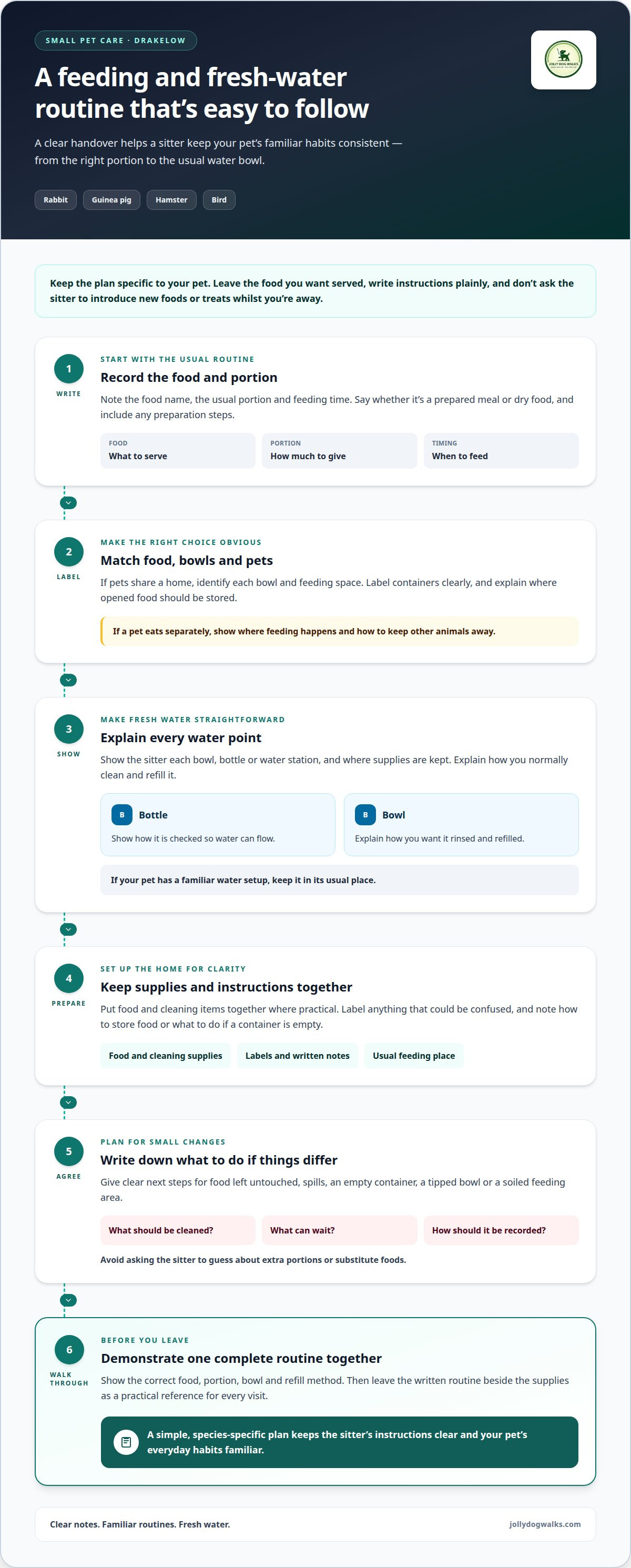
A written routine helps a sitter serve each pet’s usual food in the right way. Before the first visit, note the food type, portion, feeding time and where supplies are kept. For example, distinguish a prepared meal from dry food, and label containers clearly. If pets share a home, identify each bowl and feeding space. These small details reduce mix-ups when more than one animal needs attention.
Keep instructions specific to your pet, rather than relying on general feeding assumptions. A rabbit, guinea pig, hamster or bird may have a different diet and feeding routine. Leave the food you want served, with any preparation steps written plainly. Explain whether a portion should be measured, offered in a particular bowl, or stored again afterwards. Don’t ask the sitter to introduce new foods or treats during your absence.
- Write down the food name and the portion you normally give.
- Mark which pet each container or bowl belongs to.
- Explain where opened food should be stored.
- Note what to do if food is spilled or a container is empty.
Fresh water needs equally clear instructions. Show the sitter every drinking point, including a bowl, bottle or more than one station. Explain how you normally clean and refill it, and where the water supplies are kept. A bottle should be checked to make sure water can flow; a bowl should be rinsed and refilled as you direct. If your pet uses a familiar setup, keep it in its usual place.
Make the routine easy to follow in the home. Put food and cleaning items together where practical, and label anything that could be confused. If one pet eats separately, show the sitter where feeding happens and how to keep other animals away. For instance, a pet that leaves food for later may need its dish left in a particular place. Clear instructions help preserve that familiar pattern.
Agree what the sitter should do if something differs from the routine. A pet may leave food untouched, tip over a bowl or soil a feeding area. Write down what should be cleaned, what can wait, and how you’d like an unusual change recorded. Avoid asking the sitter to guess about extra portions or substitute foods. Your instructions should identify the next step for that specific situation.
Before leaving Drakelow, walk through one complete feeding and water change together. Point out the correct food, portion, bowl and refill method, then leave the written routine beside the supplies. A simple, species-specific plan gives the sitter a practical reference at every visit and helps keep your pet’s everyday habits consistent.
Home visits and drop-ins for small pets
A home visit lets a carer attend to a pet in familiar surroundings. The right plan depends on the pet’s needs, its routine and the tasks agreed for each visit.
Home visits and drop-ins
Home visits and drop-ins for cats and small pets are shorter check-ins, rather than a longer stay or full handover. A visit can cover feeding, changing water, medication, welfare checks, litter or toileting support, and gentle affection. Before arranging care, list the tasks your pet needs and show where supplies are kept. A cat may need its litter tray checked, while a small animal may need its enclosure inspected.
Keep the visit focused on the individual animal. A rabbit that spends much of the day in an enclosure may need a different check from a cat that uses several rooms. Explain where your pet tends to hide, how it responds to a visitor and what a normal day looks like. These details help the carer approach calmly and spot changes from your pet’s usual behaviour.
Medication requires clear, written directions. Describe the product, the amount, the method of giving it and the place it’s stored. If a tablet is hidden in food, explain which food you use and what to do if your pet refuses it. Also note any handling preferences, such as allowing a nervous guinea pig to remain in its familiar enclosure rather than lifting it.
Visit length and frequency
There isn’t one visit schedule that suits every pet. The plan depends on the care tasks, your pet’s routine and how long you’ll be away. A check-in involving feeding and water differs from one that also includes medication or litter care. Describe what your pet needs, then discuss a suitable schedule.
Think through the day in practical steps. Note when food is usually offered, when water needs attention and whether a litter tray or toileting area needs checking. If your pet has a prescribed routine, include its instructions rather than changing the timing for convenience. For a multi-pet household, identify which tasks apply to each animal, so one pet’s needs aren’t overlooked.
Frequency should reflect the care your pet needs between visits. Consider whether food or water needs replenishing, whether medication is part of the routine, and how your pet copes alone. A longer absence may call for a different schedule from a brief outing. Share your departure and return plans, then agree the visit pattern and what each check should cover.
Before the first visit, walk through the home together. Point out the pet’s usual resting place, food and water areas, carrier, cleaning supplies and any access instructions. A clear plan turns “check on the pets” into practical actions, such as refreshing a bottle, checking a litter tray and noting whether the animal has eaten.
Pet care service area
Jolly Dog Walks serves Drakelow, Barton-under-Needwood, Burton upon Trent and surrounding areas, as well as locations including Hamstall Ridware, Branston, Tatenhill, Yoxall, Stretton, Tutbury, Newhall, Rosliston, Alrewas and Walton. Share your postcode when arranging a visit so your address can be located within the service area.
Think beyond the village name when describing where you live. A postcode, a nearby landmark and clear access instructions can help distinguish homes with similar street names. If your property is reached through a private drive or has a shared entrance, explain that too. These details help the carer plan how to reach the correct door and avoid wasting time at the wrong entrance.
Travel and visit timing go together. A home visit has to fit the pet’s routine as well as the journey between appointments. Tell the carer when your pet usually eats, needs medication or requires a welfare check. If you live outside the central areas of Barton-under-Needwood or Burton upon Trent, the location and requested visit times are especially useful details to discuss together.
Before arranging care, prepare a short location note with practical arrival information. Include details such as:
- Your full Drakelow address and postcode.
- Where a visitor should park or enter the property.
- Any gate, door or access instructions.
- Which entrance leads to your pet’s room or enclosure.
- A contact to use if the address is difficult to find.
These directions are useful for a quiet residential street as well as a rural property. A landmark such as a nearby road junction may help with navigation, while a note about a side entrance can prevent confusion. Keep instructions current if building work, road access or a change to your entry arrangements affects the route.
For small pet care visits in Drakelow, match the location discussion to the visit plan. If your pet needs a particular check at a set point in its routine, explain that alongside your address. For example, say whether the carer should go straight to an indoor enclosure or first check a secure outdoor area. Clear directions support a smooth arrival and leave more of the visit for your pet’s care.
Drakelow is within the local context of Jolly Dog Walks’ service area around Barton-under-Needwood and Burton upon Trent. Share your postcode, access instructions and preferred visit pattern together. This gives the care discussion a practical starting point.
What are the typical visit lengths and frequency options for small pet visits?
Visit length and frequency depend on your pet’s routine and the care each check requires. A quick welfare check differs from a visit involving feeding, medication, litter care or several pets. For small pet visits in Drakelow, describe the tasks first, then plan a schedule around your pet’s needs and your time away.
A drop-in is a short home visit, rather than a longer stay or full handover. Jolly Dog Walks’ drop-in service is for dogs and cats. The tasks can include feeding, water, toilet breaks, play, medication and companionship for dogs; cat visits can include feeding, water, litter cleaning, basic home checks and plant watering. Focus on what your pet needs during each visit.
Frequency also depends on the animal and the length of your absence. Consider whether your pet needs medication at a particular point in its routine, whether food or water needs regular attention, and how it behaves when alone. A multi-pet household may need more tasks completed at each visit. Write down the routine and discuss how often a carer should visit to cover it.
To shape a practical schedule, list each task and when it usually happens. For example, note when your guinea pig is fed, whether its enclosure needs checking, and when your cat’s litter tray is normally attended to. Include any prescribed care instructions and the supplies needed. This gives the sitter a clear picture of what each visit involves.
- Record your departure and return times.
- List the care tasks for each pet.
- Note any medication instructions and preferred timing.
- Explain which changes or concerns should be reported.
- Agree how visits fit your pet’s normal routine.
For a short trip, the plan may focus on essential care. A longer absence may require a different schedule, depending on your pet’s needs. Consider the time between visits and make sure the agreed arrangements account for any particular routine, such as medication alongside a meal.
Before settling on a plan, walk through one visit at home. Show where the carrier, cleaning supplies and food are kept, and explain how your pet usually responds to a visitor. Then agree what happens if a visit takes longer because your pet is hiding or reluctant to eat. Clear expectations help the schedule reflect real care, not just time spent indoors.
Jolly Dog Walks: 10-40 minute solo dog walks
Jolly Dog Walks offers pet drop-in visits for owners who need help with their pet’s routine at home. For dogs, options include 10-40 minute solo dog walks, 60 Minute Solo Walks and Puppy visits. Victoria’s caring, professional approach is informed by IMDT learning, including attendance at The Loose Lead Masterclass and The Recall Masterclass.
Share your pet’s routine and care needs when discussing a visit. For your dog or cat, explain what helps them feel comfortable and what their usual day looks like. This makes the conversation specific to your household.
You’re welcome to contact Jolly Dog Walks to discuss your pet’s care.
Plan care that feels right for your pet
Choosing small pet care visits in Drakelow starts with the routine your animal already knows. Think about what would help your pet feel settled at home, then note any details that matter when you’re away. This gives you a helpful starting point for discussing care and updates, including over weekends or bank holidays.
If your household includes both a dog and a cat, describe each pet’s routine and care needs when arranging visits. Keeping their requirements clear helps you discuss support that suits your household.
Ready to talk through your pets’ care? Contact Jolly Dog Walks and take the next step towards a thoughtful plan. A little preparation can make arranging care feel much more straightforward.
Frequently Asked Questions
Do you charge more for weekends or bank holidays?
Weekend and bank holiday bookings require a special arrangement, and these dates carry higher rates. Include the exact days and visit pattern in your booking enquiry so the arrangement can be discussed clearly. If your plans cover both ordinary weekdays and a bank holiday, identify which dates fall into each group. That makes it easier to understand the schedule and charges before you commit.
How can I get help with my pet(s)?
Contact Jolly Dog Walks with your postcode, dates and the number of pets needing care. Explain whether you need support for a dog, a cat or both, and whether your request is for a one-off absence or a recurring routine. If someone else will be at home, include that detail too. Clear information helps shape an enquiry around your household rather than a generic request.
How far in advance should I book?
Get in touch as soon as you know your dates, especially for a weekend or bank holiday that needs a special arrangement. Include your travel dates and the days you need visits, even if you’re still finalising other plans. For a recurring routine, describe the days you expect to need care. This gives the booking conversation a practical starting point and helps you organise your plans.
What types of animals do you offer support with?
Jolly Dog Walks’ pet drop-in care is for dogs and cats. If you have both species at home, describe each animal separately and explain how their routines fit together. For example, tell us whether one pet needs a quiet space while the other is being attended to. This helps distinguish their care needs and keeps the request within the types of pet support offered.
What’s included in a Home Visit or Drop-In?
A drop-in is a short home visit arranged around the care agreed for your pet. Before booking, clarify which rooms the carer can enter, where your pet is usually found and whether anyone else may be in the home. If you have more than one pet, say which animals the visit covers. These details help define the visit clearly and avoid confusion about household access.
What small pet care visit services are available in Drakelow, Derbyshire?
Jolly Dog Walks provides dog and cat drop-in visits in Drakelow, Barton-under-Needwood, Burton upon Trent and surrounding areas. Share your postcode and the type of care you need when enquiring. If your home is near the edge of the local service area, provide your full address to clarify its location.
What does a small pet home visit in Drakelow typically include?
The visit is arranged around the needs you set out for your dog or cat. Explain household details that affect the visit, such as a room your pet should avoid or a door that needs to remain shut. Also say where your pet is likely to be resting so the carer can follow your instructions.
Do Drakelow pet sitters provide medication, feeding, cleaning, and companionship for small pets?
Jolly Dog Walks’ drop-in visits are for dogs and cats. Medication administration is available for dogs, with written instructions required through the messaging function in the Walkies App before medication is due. Keep the instructions accurate and complete, including the medication name, dosage and timing. This service should not be assumed to cover other animal species.
Article by
Victoria Cartwright
Hi, I’m Victoria, the proud owner of Jolly Dog Walks 🐾🐶
With a background in nursing and healthcare, alongside my professional training with the Institute of Modern Dog Trainers, I bring a unique combination of care, communication and understanding to my work with dogs and their owners. After leaving my nursing career, I found my true passion in working with animals, and I’ve never looked back!
❤️🐾
Disclaimer
Disclaimer: The views and experiences shared in this blog are based on my personal and professional experiences. They are intended for general information and enjoyment and should not replace individual advice from a qualified veterinary professional or appropriately qualified canine behaviourist/trainer where necessary.


