

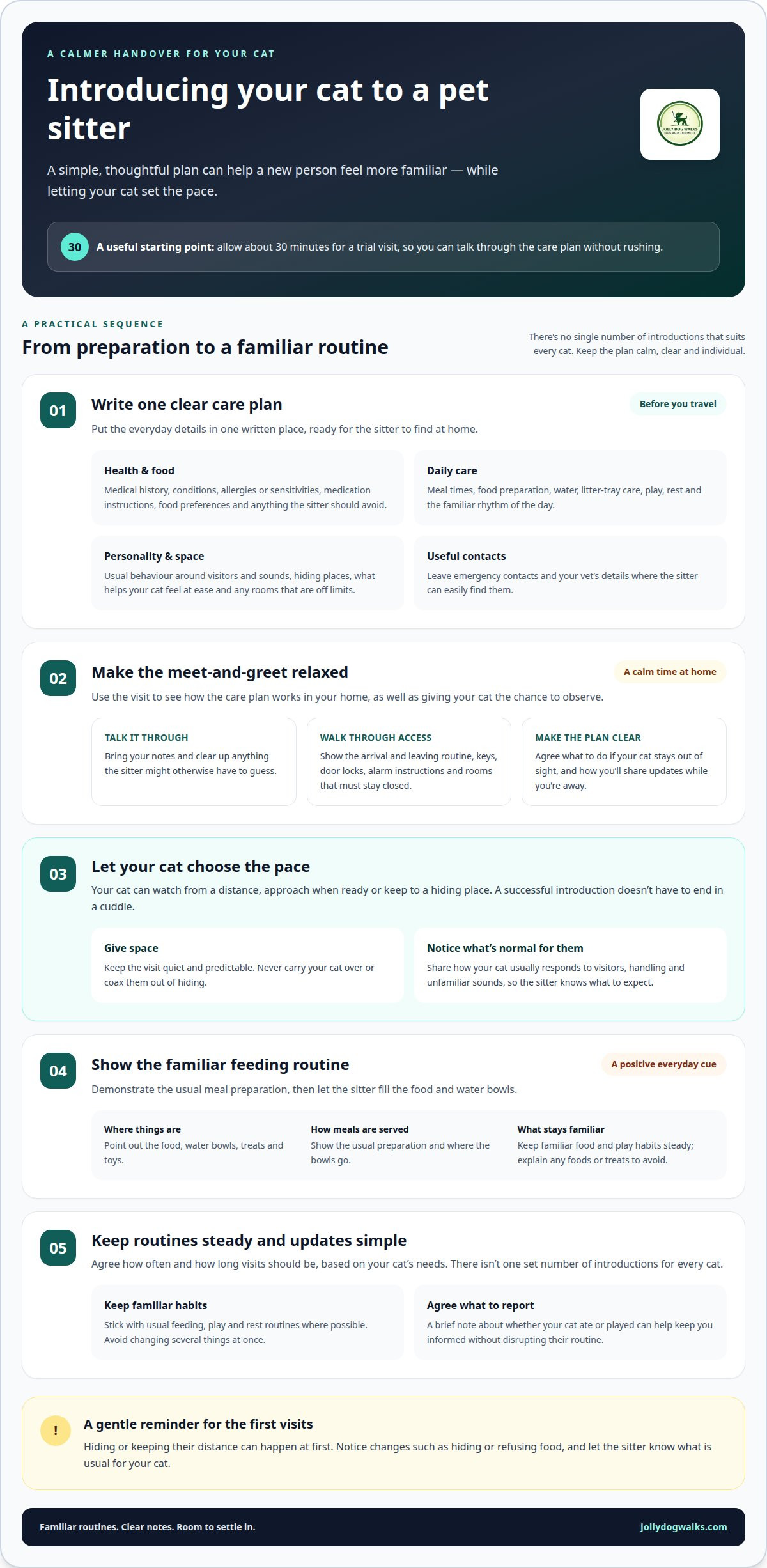
A calm feeding visit can make a sitter feel less like a stranger to your cat. To introduce your cat to a pet sitter, start well before you travel, arrange a relaxed meet-and-greet and let your cat approach at their own pace. Show the sitter how you prepare meals, then let them fill the food and water bowls so your cat can associate them with a familiar, positive part of the day.
It’s natural to worry if your cat hides or keeps their distance at first. A successful introduction doesn’t have to end in a cuddle. A quiet, predictable visit is a good start, and your cat should never be carried over or coaxed out of hiding.
This guide explains what care details to write down, how to plan a meet-and-greet, which signs of stress to notice and how to show the sitter your cat’s feeding routine. Keeping familiar belongings and everyday habits in place can make the change of caregiver gentler for both of you.
Key Takeaways
- Write down your cat’s medical needs, allergies, food preferences and everyday routine so their sitter has clear, practical instructions.
- Arrange a calm meet-and-greet before you travel, giving your cat space to observe or approach in their own time.
- Tell the sitter about your cat’s usual behaviour, hiding places and emergency contacts, including your vet’s details.
- Show the sitter where food, water, treats and toys are kept, and demonstrate your cat’s usual feeding routine.
- Watch for changes such as hiding or refusing food, and keep familiar routines and belongings steady while your cat adjusts.
Collecting a pet’s medical history, allergies and daily routine
Put your cat’s care details in one written plan before the sitter’s first visit. Include medical needs, food preferences and familiar routines that help your cat feel settled.
In the UK, leave the sitter your cat’s medical history, allergies, medication instructions, feeding schedule, food preferences and litter-care details. Note when to clean the tray and where to dispose of waste, so everyday care is clear.
For a shy or anxious cat, keep familiar feeding, play and rest routines steady, and avoid changing several things at once. Write down where your cat likes to hide and what helps them feel at ease, so the sitter can give them space and quiet attention.
-
Gather medical and allergy details
Write down your cat’s medical history, current conditions, allergies and sensitivities. Include medication instructions and the usual way your cat accepts it, such as hiding a tablet in food if that is already part of their care.
Flag treats or foods the sitter should avoid. Ask them to check with you before offering anything outside your cat’s usual diet, especially if your cat has an allergy or reacts badly to particular ingredients. Keep the notes easy to find at home.
-
Discuss individual needs and daily routines
Describe a typical day in order, from your cat’s morning routine to bedtime. Note meal times, play sessions, sleeping arrangements and litter-tray habits, then explain which parts matter most to your cat.
Be specific about behaviour that could affect care. For example, explain whether your cat dashes when a door opens, hides when the doorbell rings or needs quiet before approaching someone new. Tell the sitter where your cat usually retreats and which rooms are off limits.
Keep the routine familiar before you leave. If the sitter will visit at a different time, gradually adjust your cat’s schedule beforehand where possible, rather than changing meal times and play habits all at once.
-
Share feeding and play preferences
Write down what your cat eats, how you prepare each meal and where you keep food, water bowls and treats. Include preferences such as a particular texture or whether wet food is served at room temperature.
Show the sitter your usual feeding routine, including where the bowls go and how you keep the feeding area tidy. Explain when your cat tends to play and which toys they enjoy, such as a wand toy or soft ball. Keep familiar food and play habits steady while the sitter builds a calm, predictable presence.
Agree how you’ll share updates, such as a brief message after a visit. A clear note about how much your cat ate or whether they played gives you useful information without disrupting their routine.
Meet-and-greet with a potential sitter
Use the meeting to see how well the care plan works in your home, not just to make introductions. A trial visit of about 30 minutes gives you time to discuss practical arrangements without rushing.
-
Swap scents before the meeting
Make the visit useful by deciding what the sitter should learn. Before they arrive, choose a calm time when your cat is usually active, rather than scheduling around a noisy household task or delivery. This makes it easier to see how the visit fits into an ordinary day.
Bring your written care notes and clarify anything that could be misread. For example, explain which instruction takes priority if your cat’s routine changes that day. The sitter can ask questions before you’re away, rather than having to guess later.
-
Arrange a relaxed meet-and-greet
Walk through the practical details of arriving and leaving. Show the sitter how the door locks, where to put keys and which rooms are out of bounds. If you use an alarm, explain the entry and exit sequence, then ask the sitter to repeat it so you can catch any confusion.
Discuss how to introduce your cat to a pet sitter in your home. Point out anything that could affect a visit, such as a door that sticks or a room that must stay closed. Agree how the sitter should leave the home, including checking that the entrance is secure.
Keep the discussion focused on clear, workable instructions. If another household member has access, explain how they’ll avoid arriving unexpectedly during a sitter’s visit. Knowing who may be at home helps the sitter follow the plan without surprises.
-
Plan meet-and-greet visits
Decide together how often and how long visits should last, including what the sitter should do if your cat stays out of sight. There isn’t one set number of introductions that suits every cat. Arrange another meeting if you or the sitter still have practical questions.
Before you leave, agree how updates will be sent and what information you’d find useful. For example, ask for a short note confirming the visit took place and flagging anything that needs your attention. This keeps communication straightforward while you’re travelling.
Use the final minutes to check that you both understand the plan. Ask the sitter to describe the agreed arrival routine and where they’ll find the written instructions. A shared understanding is a practical final step in introducing your cat to a pet sitter and helps prevent crossed wires during care.
Recording a pet’s personality traits and emergency contacts
Give the sitter a practical reference for your cat’s behaviour and urgent care. Clear notes help a trusted person respond calmly while you’re away.
-
Record the cat’s personality traits
Describe how your cat usually responds to visitors, handling and unfamiliar sounds. For example, note whether the doorbell sends them under the bed or whether they prefer to watch new people from a high shelf.
Explain what helps and what to avoid. If your cat hides, tell the sitter where they tend to go and ask them not to pull the cat out or carry them over for contact. Your cat can choose whether to approach; a quiet presence is useful even if they stay tucked away.
Include behaviour that could affect safe care, such as door-dashing, guarding food or resisting medication. Describe what brings it on and what response works for your cat. A note like “close the kitchen door before opening the front door” gives the sitter a clear action.
Write down what’s normal, too. Mention whether your cat usually greets people, eats soon after a visitor arrives or spends a visit resting. These details help the sitter distinguish familiar behaviour from a change worth reporting.
-
Prepare emergency and veterinary information
Put your contact details, the vet’s details and a trusted emergency contact in the same written document. Tell your vet who will care for your cat and authorise the sitter to contact the practice if an emergency arises.
Include recent health records, vaccination information, medical conditions and medication instructions. Make the instructions easy to follow, with the medicine’s name, how your cat takes it and any relevant handling notes. Keep this information with the care notes instead of relying on a message buried in your phone.
Explain which signs need prompt attention, including loss of appetite, vomiting, diarrhoea or breathing problems. Add contact details for your vet and emergency contact, so the sitter knows whom to call first. If your cat has a known condition, note any changes you’ve been told to watch for.
For a longer trip, give the sitter a nearby backup emergency contact and your departure and return times. Arrange a backup sitter and confirm they’re available, so there’s a named person to help if the main sitter cannot attend.
Keep the plan current before each trip. Update medication details, contact numbers or travel times that have changed, then show the sitter where the document is stored. This final step makes the information easy to use while you’re away.
Having the sitter fill the cat’s food and water bowls
Let the sitter take part in feeding before you leave. Your cat can start to recognise someone who fills their food and water bowls, making this everyday task a gentle, positive point of familiarity.
- Show the sitter where your cat’s food, water bowls, treats and toys are kept. Walk through the usual meal preparation, including which food to use and where each bowl belongs. If your cat eats in a particular corner of the kitchen, keep that spot consistent. A familiar layout helps the sitter follow your routine without searching cupboards or moving things around.
- Demonstrate the feeding routine while you’re at home. Let the sitter prepare and serve the meal as you normally would, then give your cat room to eat. Point out any detail that matters, such as adding water to wet food or putting leftovers away. Avoid introducing unfamiliar food or changing the meal routine during this first practice.
- Keep food and water instructions simple and visible. Write down what your cat eats, how you prepare it and where clean bowls are stored. If your cat has medical needs or an allergy, make the relevant restriction prominent beside the feeding notes. The sitter should know which treats are suitable and which foods must stay out of reach.
- Ask the sitter to refresh the water bowl and check the feeding area during practice. Show them where to find a clean bowl and how you prefer the area left afterwards. Point out the litter tray, too, so food and water remain in their usual places. These small household details make the visit easier to follow.
- Notice how your cat responds when the sitter serves a meal. They may eat straight away, watch from a distance or wait until the visitor steps back. Let your cat choose; don’t move the bowl closer or coax them into contact. A calm feeding visit can build a positive association, even without a greeting or fuss.
- Agree what the sitter should report after each visit. A short update can say whether your cat ate, whether the water bowl was refreshed and whether anything looked unusual. If food remains untouched, that detail gives useful context alongside other behaviour. Clear updates and familiar feeding routines can bring peace of mind while you’re away.
Keep extra pet food and medication in case travel delays extend your trip. Tell the sitter about behaviour that may affect care, such as food guarding, door-dashing or difficulty taking medication. If your cat is settling into a new home, keep its familiar food and litter, and introduce changes gradually once it has settled.
How should you introduce a cat to a new pet sitter at home?
Start well before your trip, using familiar spaces and calm, predictable visits. Let your cat choose whether to watch, hide or approach, rather than expecting an instant greeting.
- Prepare a quiet place before the sitter arrives. Leave your cat’s bed, favourite blanket and familiar toys where they normally rest. Keep food, water and the litter tray accessible, and avoid moving these items just for the introduction. Familiar surroundings give your cat somewhere comfortable to retreat while the visitor settles in.
- Secure external doors and windows before opening the door to the sitter. Remove anything that could make an escape easier, such as an ajar door or open window. Let the sitter enter calmly, then sit down and speak softly. A predictable arrival is less startling than a busy greeting at the doorway.
- Ask the sitter to let your cat set the pace. They can sit quietly, avoid direct staring and give your cat the choice to observe from across the room. Don’t carry your cat over, reach into a hiding place or put them in a carrier for introductions. Confinement takes away their option to move away and can make the meeting more stressful.
- Keep the first visit short and low-pressure. The sitter can read quietly or sit nearby without trying to touch your cat. If your cat hides, leave them alone and keep the room calm; a familiar, suitable toy or treat can be left nearby. The aim is for your cat to experience a relaxed visitor, not to perform a greeting.
- Build up to a practice visit while you’re away. After a short introduction, arrange a feeding visit, then try leaving for one or two hours while the sitter stays. Your cat can become familiar with the sitter carrying out an ordinary care task without you in the room. Keep the first practice outing simple, and return as planned.
- Use your cat’s response to guide the next meeting. Eating, resting or choosing to stay in the room can suggest they’re comfortable with the sitter nearby. If they continue to hide, arrange more quiet visits instead of increasing contact. Rescue cats, senior cats and cats with medical needs or a history of fear may need several short introductions before a longer absence.
Before the visit, tell the sitter where your cat usually hides and what may prompt them to retreat, so the sitter can avoid startling or disturbing them. Familiar belongings from a previous home, along with a blanket or toys, can help a cat feel safer in a new environment. Explain that hiding is a choice to respect, not a problem to solve by coaxing the cat out.
Agree that the sitter’s first response should be to sit down, speak softly and leave your cat free to approach or observe at their own pace. Interaction should be the cat’s choice; the sitter should not force or bribe contact. A practice overnight stay can help pets become comfortable with an in-home pet sitter before a long trip, letting you see how the arrangement feels before an extended absence.
Jolly Dog Walks: 10-40 minute solo dog walks
Jolly Dog Walks offers pet drop-in visits, which can form part of your household’s care plan while you’re away. If you’re arranging a sitter for your cat and also need support with a dog at home, solo dog walks can help keep your dog’s usual exercise in their routine. The options include 10-40 minute solo dog walks and 60 Minute Solo Walks.
Jolly Dog Walks brings a caring, professional approach to pet care, informed by IMDT training. Share your animals’ routines and individual needs when discussing the care that would suit your household.
Contact Jolly Dog Walks to discuss your pet care.
Make the next trip easier for your cat
After you return, note how your cat responded to the sitter’s visits. Did they eat as usual, spend time nearby or prefer to stay tucked away? These observations can help you adjust the care plan next time, including which introductions felt comfortable and what the sitter should continue doing.
Knowing how to introduce your cat to a pet sitter is also useful when your household has other pets with their own routines. If you have a puppy who needs care too, Jolly Dog Walks offers puppy visits. You can discuss what would suit your dog’s needs and daily rhythm.
Get in touch with Jolly Dog Walks to discuss support for your household. With thoughtful preparation and a plan that respects each animal’s pace, you can make your next time away feel more manageable.
Frequently Asked Questions
Should you let a cat sitter approach your cat or wait for the cat to approach?
Let your cat choose whether to approach, and ask the sitter not to reach towards them. The sitter can sit at an angle with hands resting quietly, leaving a clear route to your cat’s favourite hiding place. If your cat comes close to sniff, the sitter can stay still and let them investigate. If the cat walks away, let them disengage without following.
What are the risks of leaving a cat with an unfamiliar pet sitter?
An unfamiliar sitter may leave your cat stressed or unsettled, causing them to hide or refuse food. Without clear care instructions, the sitter may also miss your cat’s routines, medical needs or safety-related behaviours.

Article by
Victoria Cartwright
Hi, I’m Victoria, the proud owner of Jolly Dog Walks 🐾🐶
With a background in nursing and healthcare, alongside my professional training with the Institute of Modern Dog Trainers, I bring a unique combination of care, communication and understanding to my work with dogs and their owners. After leaving my nursing career, I found my true passion in working with animals, and I’ve never looked back!
❤️🐾
Disclaimer
Disclaimer: The views and experiences shared in this blog are based on my personal and professional experiences. They are intended for general information and enjoyment and should not replace individual advice from a qualified veterinary professional or appropriately qualified canine behaviourist/trainer where necessary.


